





The desert that shapes
Immediately after the baptism in the Jordan, when the voice of the Father proclaimed Jesus as the beloved Son, he retreats into the desert. It’s not an escape or a casual pause, but a necessary time of silenceof emptiness and comparison. The Spirit itself leads him there, to a place where heaven and earth seem separate, where the days repeat the same and time weighsmarked by hunger and loneliness. It is the space in which every choice becomes clear, where the limits of the body and human fragility are revealed without veils.
After forty days Jesus is hungry. And it is at this moment that temptations open up. The first concerns the immediate need: turning stone into bread. It’s a subtle proposal, which seems reasonable: use your power to solve what’s missing. But the Gospel soberly recounts that Jesus responds with the word of Scripture: “Man shall not live by bread alone.” It is not a question of denying the body or need, but of indicating that life is not based only on what it can be consumed: there is a deeper dimension, which gives meaning to existence.
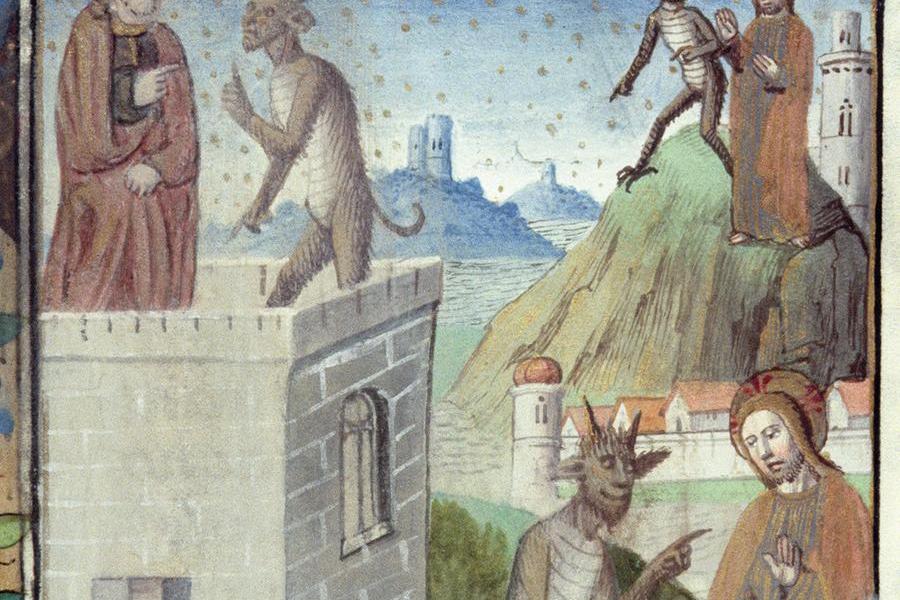
The second temptation takes Jesus to the highest point of the temple, exposed to everyone’s gaze. Here the proposal appears supported by the Scriptures themselves, cited to legitimize a sensational gesture: throwing oneself and trusting in an evident divine intervention. AND the distorted use of the Wordwhich the devil stages as an instrument of pressure and spectacle, transforming what should guide into an instrument to deceive. Jesus also rejects this path: trust is not born from a miracle and is not imposed, but is offered in freedom and in listening.
Finally, the panorama opens: all the kingdoms of the world, with their glory, are offered in exchange for an act of submission. It is the most explicit temptation: choosing the shortcut to power, governing effortlessly, impose good from above. Once again Jesus does not give in. His path is not strength, it is not conquest, it is not visibility. The kingdom he will announce is not born from prevarication, but from love, from fidelity to God and from the freedom of those who follow him.
When the confrontation ends, the desert does not disappear. There is no apparent triumph, but a silent and decisive choice. Jesus emerges with a clear direction, which will orient his entire journey, up to the cross: a faithful, free, poor Messiah, who does not bow to power, does not seek spectacle and does not solve the path of others with shortcuts. The story is not just about him. Every believer, every community, recognizes their daily life in these trials: the hunger that pushes for immediate solutions, the temptation to look for signs that force faith, the seduction of power and security.
Lent calls us to this favorable time, to make space to silence and solitudeto confront what really matters. Through the desert we learn that the test is not eliminated, but crossed. Temptation can become a place of discernment, choice and growth. And Jesus’ answer remains: not strength, not appearance, not conquest, but loyalty, the discretion and freedom to serve God. It is a more difficult path, but one that generates life, because it walks in the truth, within the limits and in the responsibility of what is real and necessary.