


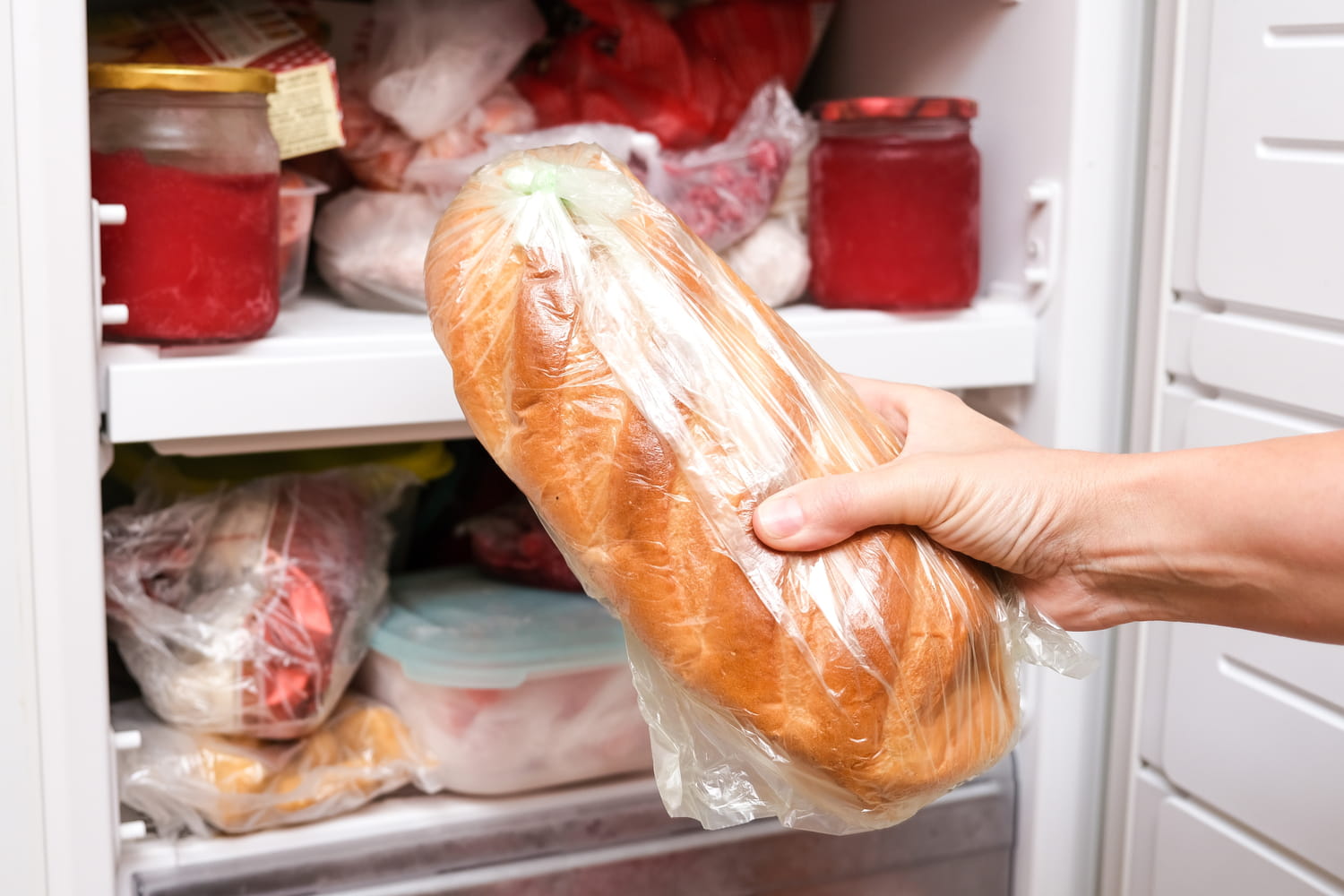



Bread is an institution that few French people could do without. And yet, it has a significant impact on health.
Bread remains one of the basic products of our diet. The French consume around 3 to 4 kilos per month, or half a baguette per day. It’s hard to resist the pleasure of fresh bread, with its crunchy crust and soft crumb. However, eating it every day can take a toll on your health. “The white bread baguette is a “glycemic bomb”. Due to its manufacturing process and its highly refined flour, it behaves in the body almost like pure sugar, causing an immediate insulin spike which promotes weight gain and pancreatic fatigue.“, confirms Dr. Jean-Michel Cohen, recognized nutritionist, in his book “Eat better to live better” (First edition).
Faced with this inconvenience for our metabolism, the solution may be found in a forgotten habit: that of our elders who, for the sake of economy and conservation, had the habit of freezing their bread. And what was initially just a tip to avoid wasting anything turns out to be a true stroke of metabolic genius. The first big advantage lies in the impact on blood sugar levels. A major study published in the European Journal of Clinical Nutrition demonstrated that freezing bread changes its molecular structure. “As it cools, the starch crystallizes and turns into “resistant starch”. This process reduces the glycemic impact of bread by almost 31%. It’s a small revolution on the plate: the bread no longer behaves like a fast sugar, but like a slow sugar“, we can read in the results of the study.
The second reason to freeze your bread before eating it directly concerns satiety level and weight management. “Frozen (then thawed) bread prevents cravings and allows you to feel full for much longer and therefore avoid rushing to snack throughout the day. Freezing your bread is like turning a fast slide into a ladder that is difficult for your body to climb“, tells us the biochemist Jessie Inchauspé, author of the bestseller “Glucose Revolution” (ed. Pocket).
The third benefit concerns intestinal health. The resistant starch created by freezing is not digested by the small intestine: it travels intact to the colon where it serves as a feast for “good” bacteria, indicate American researchers in a study. By fermenting this starch, the intestinal flora produces butyrate, an essential fatty acid which strengthens the intestinal barrier and has powerful anti-inflammatory properties. In short, a slice of frozen bread goes from being a simple food to being a prebiotic, essential for immunity and avoiding bloating.
To freeze your bread safely, the ideal instructions are as follows: buy your fresh bread (preferably sourdough or wholemeal), cut it into slices and place it in an airtight freezer bag, removing as much air as possible to avoid the formation of ice crystals which alter the taste. Do not keep it in the freezer for more than 3 months. Take your slice straight from the freezer to the toaster. The thermal shock of toasting further accentuates the formation of resistant starch, thus maximizing the health benefits while regaining the crispness of the first day.