
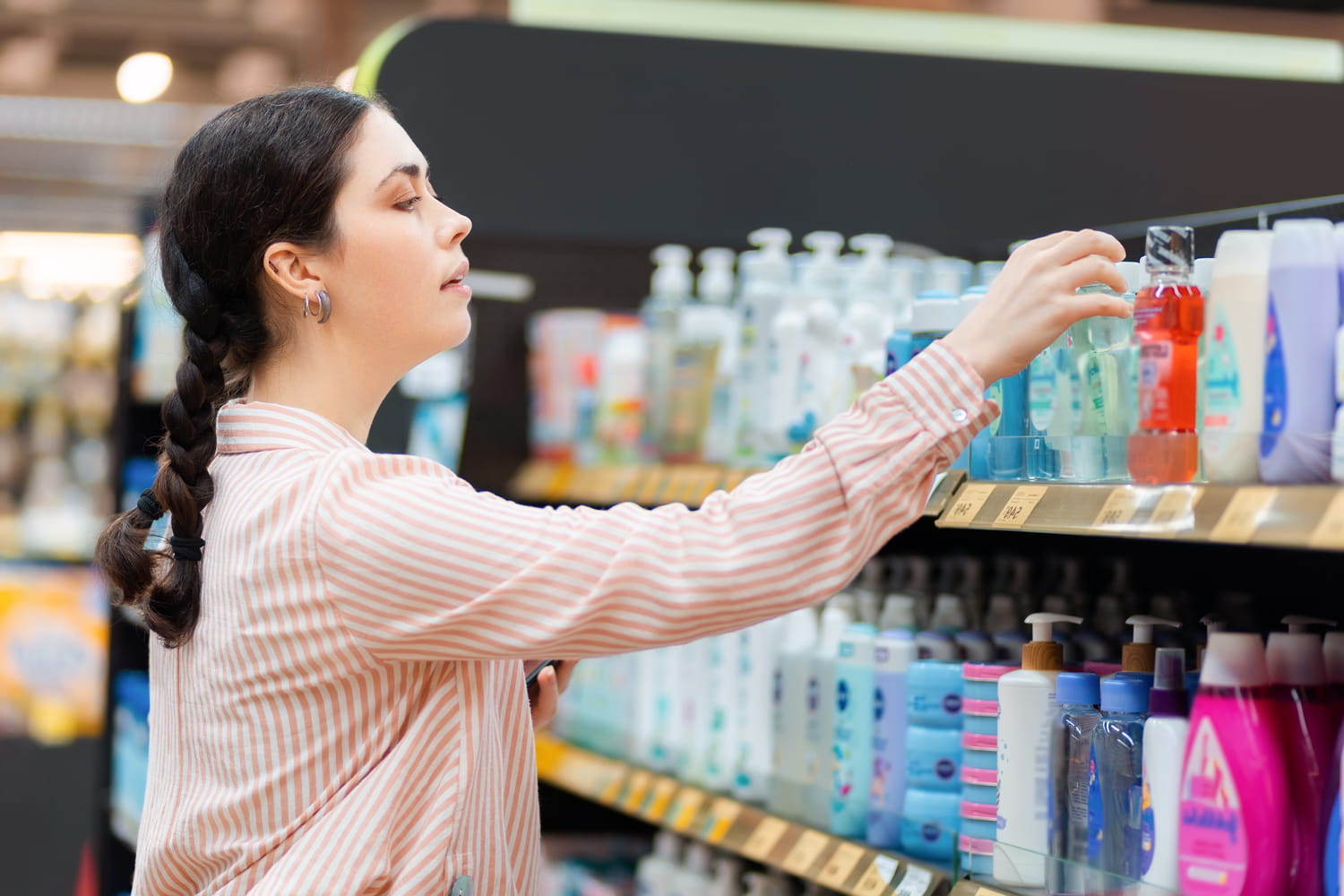



In the shower, on our beauty shelves, in our anti-aging creams… Refillable cosmetics are now part of our daily lives. But behind these ecological advances, there is a side of the coin that is not always brilliant.
This is the new reflex that has invaded bathrooms to combine beauty and protection of the planet: recharging. Lighter, less expensive and above all less plastic-rich, it seems to have everything right on paper. However, behind this promise of responsible consumption lies a less rosy reality. According to an article from the 60 Million Consumers association, this gesture could not only weigh more heavily than expected on your budget, but also jeopardize the hygiene of your favorite products. Between the difficulty of recycling and sometimes misleading prices per liter, the hidden side of eco-refills could make you change your mind the next time you visit the shelves. We take stock of what you absolutely need to know before filling your bottle.
While there is absolutely no denying it: refills can be economically advantageous, the media first points out a blatant lack of choice depending on the brands and ranges. His example? Of its 12 shower gel flavors, Le Petit Marseillais only offers five for refill. Well, until then, even if this point can be annoying, it is not necessarily dramatic. On the other hand, where the refills prove to be more misleading is in terms of capacity. To illustrate its point, 60 Million Consumers uses the example of a major brand eau de parfum where the refill is 150 ml. The only thing is: only the original 100 ml bottle can be refilled several times. “Almost all brands, in perfumeries and supermarkets, offer refills with a larger capacity than the product on the shelf.“, assures the magazine. The other hiccup: according to the survey, most perfume refills can only be ordered online. A point which can prove important, particularly for households without access to the Internet.
Another problematic point: ecology. Indeed, if, on paper, the refills are more eco-friendly, this argument still needs to be qualified. On the packaging, several figures are given: “80% less plastic”, for example. According to 60 Million Consumers, these calculations are made by the manufacturer itself. “Most flexible bags are made of several materials (cap, multi-layer bag, etc.), which makes their recycling complex, if not impossible.“, even writes the media.
Although most of these formats are indeed less expensive, some brands sell them more expensively, especially when the calculation is done per kilo. In these cases, the price differences range from a few cents to several euros. Finally, there remains the question of hygiene. Refilling a bottle without having thoroughly washed and dried it can encourage the development of micro-organisms, especially in a humid bathroom. The formulas contain preservatives, but mixing an old base of product with a new refill or filling a container that is still wet can alter the quality of the cosmetic.