





Lung cancer has sharply increased in women (2nd cause of cancer death). Although the disease often progresses silently, certain signs should attract attention. Cough, pain… Review of the 7 warning symptoms in women.
Lung cancer is the second cause of cancer death among women in Francebehind breast cancer. Nearly 20,000 women discover they have lung cancer each year. Knowing its signs helps diagnose it more quickly and increases the chances of recovery. At the start of the disease, the tumor is too small and does not cause symptoms. As the tumor grows, it usually causes breathing problems And a deterioration in general health (unusual and persistent fatigue, weight loss, loss of appetite, etc.). When they persist, however, certain symptoms may attract attention.
1. A nighttime cough
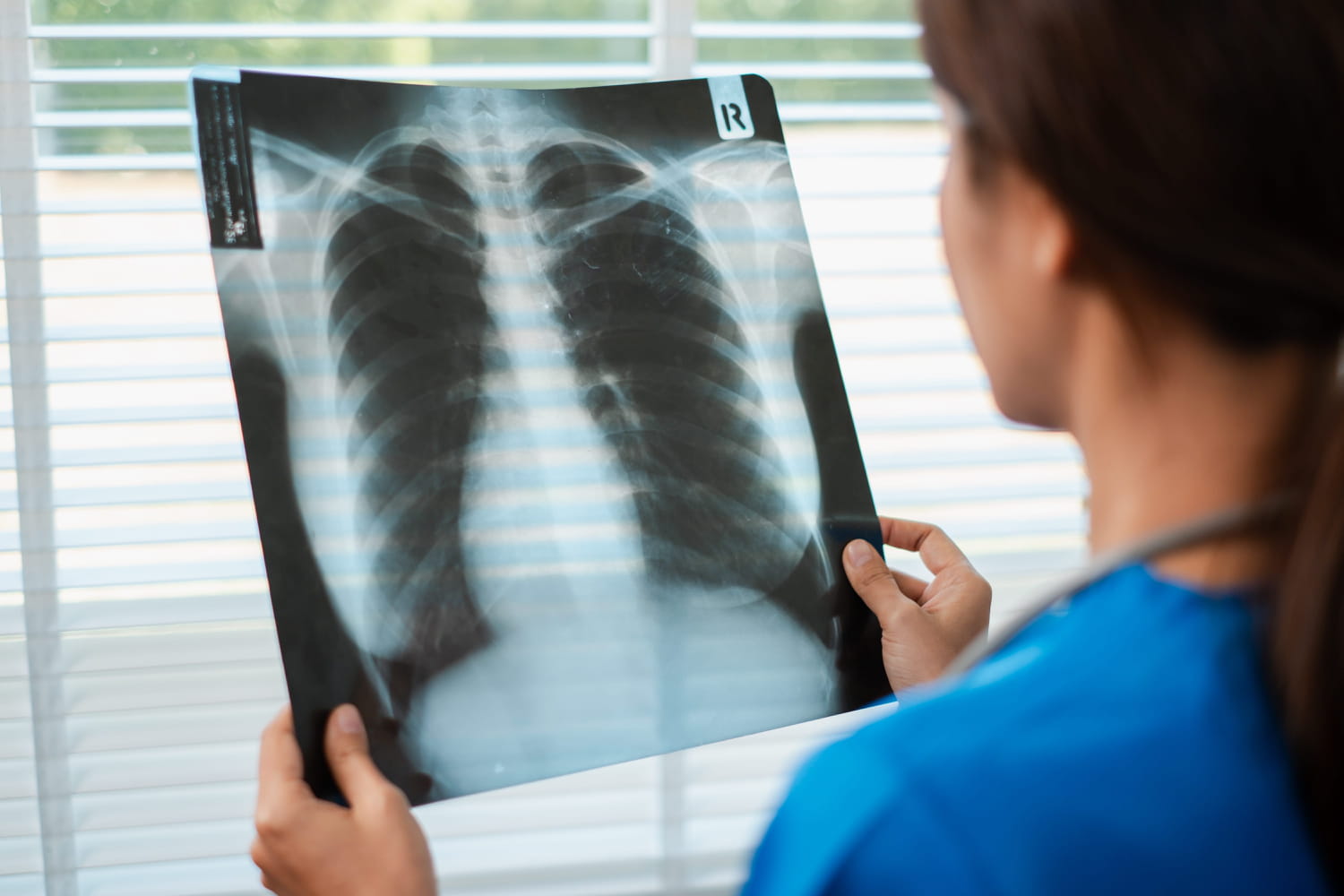
A cough that persists and intensifies is not specifically linked to lung cancer, but should be a warning. Above all, if it is stronger at night or in the morning, when you are lying downand if it is accompanied by other symptoms such as chest or thorax pain, shortness of breath, wheezing, coughing up blood or general discomfort (nausea, fatigue, loss of appetite, etc.). In this case, you must consult your doctor without delay who will carry out a clinical examination and will be able, if necessary, to refer you to a specialist or prescribe tests such as a chest x-ray if cancer is suspected. This examination may be followed by a CT scan or a biopsy.
→ The smokers often tend to think that coughing at night or in the morning is normal. However, this symptom is not trivial and must be subject to medical monitoring. Only the doctor will be able to determine the origin of your cough.
2. Coughing up blood
“Bloody sputum or sputum is never harmless“, warns Dr Maurice Pérol, medical oncologist specializing in thoracic cancers at the Center Léon Bérard in Lyon. In medical language, we call this a hemoptysis. This spitting up of mucus tinged with blood should alert and lead you to consult your doctor quickly. If this symptom is neglected, the disease that causes it can progress and worsen. Coughing up blood is not always a sign of a serious illness and can hide simple bronchitis, but you should keep in mind that it can also be lung cancer or another respiratory tract disease (pulmonary embolism, pneumonia, etc.). Only examinations (a clinical examination followed by an X-ray of the lungs and a blood test) will help guide the diagnosis.
→ Spitting blood when you are a smoker should immediately lead you to consult a doctor.
3. Chest pain
“When the tumor is large and reaches the pleura, it can cause chest pain that gets worse when coughing or breathing deeply“, indicates Dr. Pérol. The pleura is a membrane attached to the lung which is highly innervated and which can cause severe pain when attacked.
4. Difficulty breathing
In the absence of proven heart problems, shortness of breath, unusual shortness of breath or wheezing may suggest lung cancer. If these respiratory symptoms, which are quite banal and not specific to lung cancer, persist, especially if you smoke or if you have smoked (even if you stopped smoking many years ago), consult your doctor without delay.
5. Difficulty swallowing
More rarely, lung cancer can cause difficulty swallowing (medically called a dysphagia). This is the case when the tumor compresses the esophagus. This swallowing disorder is sometimes associated with false food routesthat is to say when swallowed food or liquids pass through the respiratory tract (the trachea) instead of going into the digestive tract.
6. Paralysis on only one side of the body
As the tumor grows and metastasizes to other organs, other physical manifestations may occur. The symptoms are different depending on the organ concerned. For example, metastases to the brain can lead to severe headache, nausea and vomiting, seizuresmental confusion, balance, memory and speech problems and sometimes hemiplegia: paralysis of one or more parts of the body on one side, which can be total or partial. In the first place, you need to consult a neurologist to make a diagnosis and consider appropriate treatment. The diagnosis is first clinical and then it is completed by other examinations in order to clarify the cause of the hemiplegia (stroke, tumor, etc.).
7. Back pain
The vast majority of cancers can spread to the bones. This is the case of lung cancer, which when it metastasizes to the bones, can lead to bone pain particularly in the spineribs, arms and legs. Once they are established in the bone, tumor cells “nibble” at the bone, which can also cause vertebral collapse or bone fractures. These symptoms should alert you and lead you to consult your doctor. The latter will first assess your symptoms, ask your medical history, your risk factors and perform a physical examination. Then, additional examinations such as a bone scan or a PET scan will help look for the presence of possible bone metastases.
Does lung cancer hurt?
“The lung is an organ that has very little innervation for painexplains Dr. Pérol. A tumor can therefore develop in the lung, reach 5 or 6 cm, do not hurt and go unnoticed for a long time“This is why lung cancer is often discovered by chance on a medical imaging assessment carried out to look for another pathology or detected at an advanced or metastatic stage. “These are often the formation of metastases to other organs which will be symptomatic and reveal the disease“, specifies our interlocutor. For example, bone metastases can cause bone pain or bone breakage, brain metastases can cause severe headaches, paralysis on one side of the body or memory problems…
Identical symptoms in women and men?
“The symptoms of lung cancer are identical in men and women. On the other hand, the average age of onset is between 60 and 65 years in women, but a little later in men (67 years on average). Another difference between men and women: we note that a certain type of lung cancer is more common in women than in men: this is cancer due to a genetic alteration called a “mutation” (and therefore which is not linked to exposure to tobacco). We still don’t know why this cancer affects women more often than men.“, concludes the oncologist. Note that cancer due to a genetic alteration causes the same symptoms as cancer linked to smoking.
Thanks to Dr Maurice Pérol, medical oncologist specializing in thoracic cancers at the Léon Bérard Center in Lyon.