




Faced with their dog’s anxiety when alone, many people don’t know how to react, and others have tried everything… In vain. A behaviorist explains how to end separation anxiety.
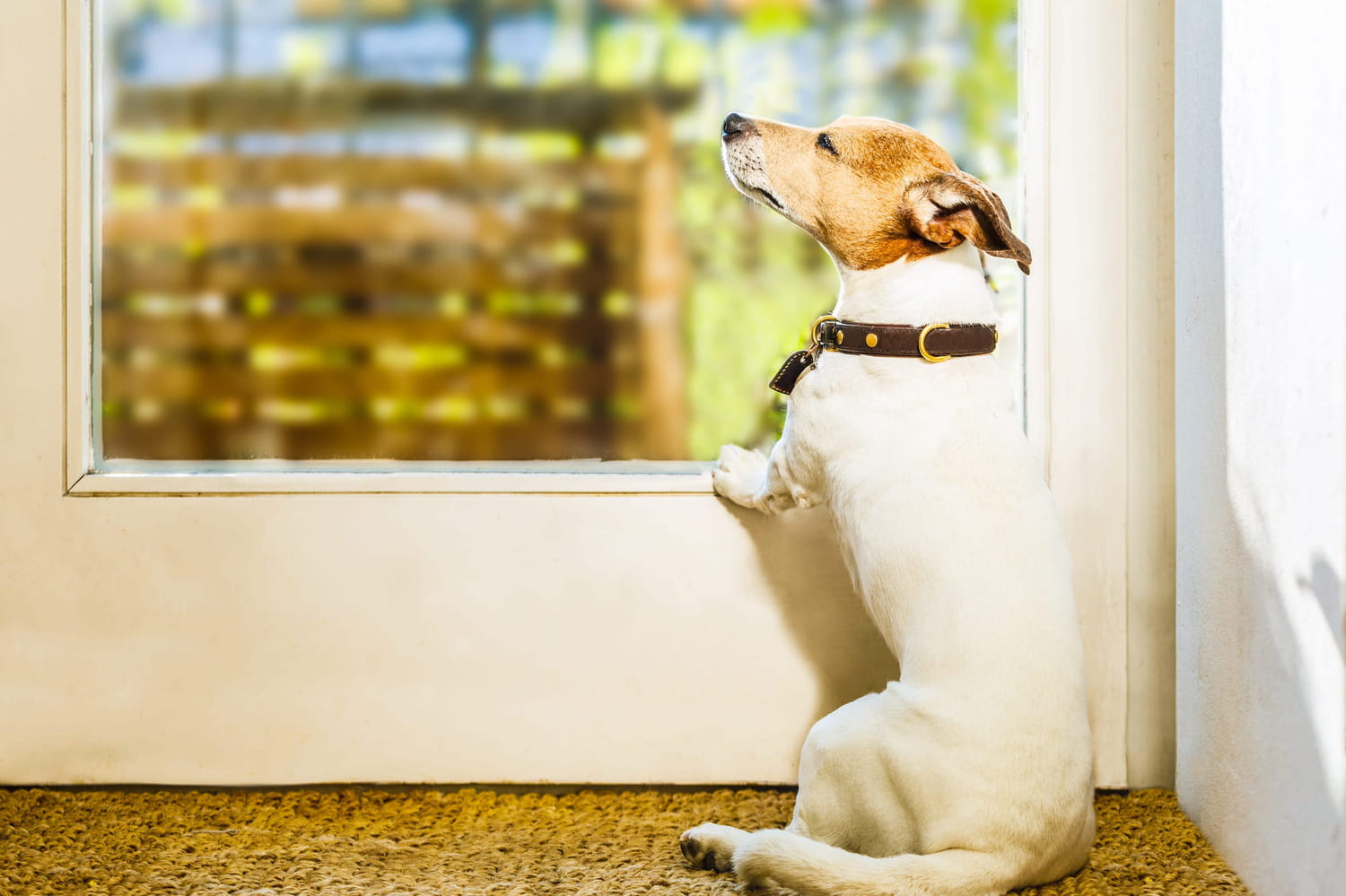
Separation anxiety in dogs is a delicate and difficult situation for everyone. The animal is unhappy, anxious, can hurt itself, destroy objects, while its owner can also feel stress, but also guilt, be annoyed to see damage when it comes home… In short, we have to find a solution so that everyone is comfortable. Be careful, first of all, you need to make sure that this is what it is because the same symptoms can appear in a dog who has a health problem or who is bored.
When their dog has separation anxiety, many people try many tricks that we hear about on the Internet or by word of mouth: leaving the TV or radio on, restricting the space accessible to the dog, offering him even more toys and activities… Except that “These things, in many cases, don’t work“, explains Gabrielle Grela, dog trainer and behaviorist in a YouTube video. According to her, the problem with these methods is that it acts on the environment around the dog, and not on its anxiety directly. It is therefore important to “work on your ability to stay alone and your ability to manage yourself emotionally and physically” in the absence of humans.
The expert recommends encouraging the dog to gain self-confidence and to be more independent. To do this, you have to start with exercises at home… By being present. Gabrielle Grela indicates that before succeeding in being autonomous when he is alone, the dog must learn to be autonomous when his attachment figure is still there: “We cannot ask a dog which is not autonomous, which is dependent on its humans in their presence, not to be so in their absence, it is not possible”. Furthermore, “you will have much more facilities, much more scope for possible actions than when you make false starts or leave directly. There, you cannot do anything whatever the dog’s reaction, since you have already left”she emphasizes.
In other videos, Gabrielle Grela gives ideas for exercises to work on the dog’s autonomy. For example, you can take an object from the room where the dog is, then leave it by closing the room. We wait a tolerable time for him (even if it’s only a few seconds), then we come back with another object, and we put it down as if everything were normal, without trying to have contact with the dog, to reassure him.
The idea is to trivialize the departures and, when the animal has mastered the exercise, we can move on to the following stages, in “demonizing” the front door and by breaking the departure rituals, synonymous with separation, but also by teaching the dog to see what is behind the door as a part of the house and that there is no need to panic when the human passes through it.