
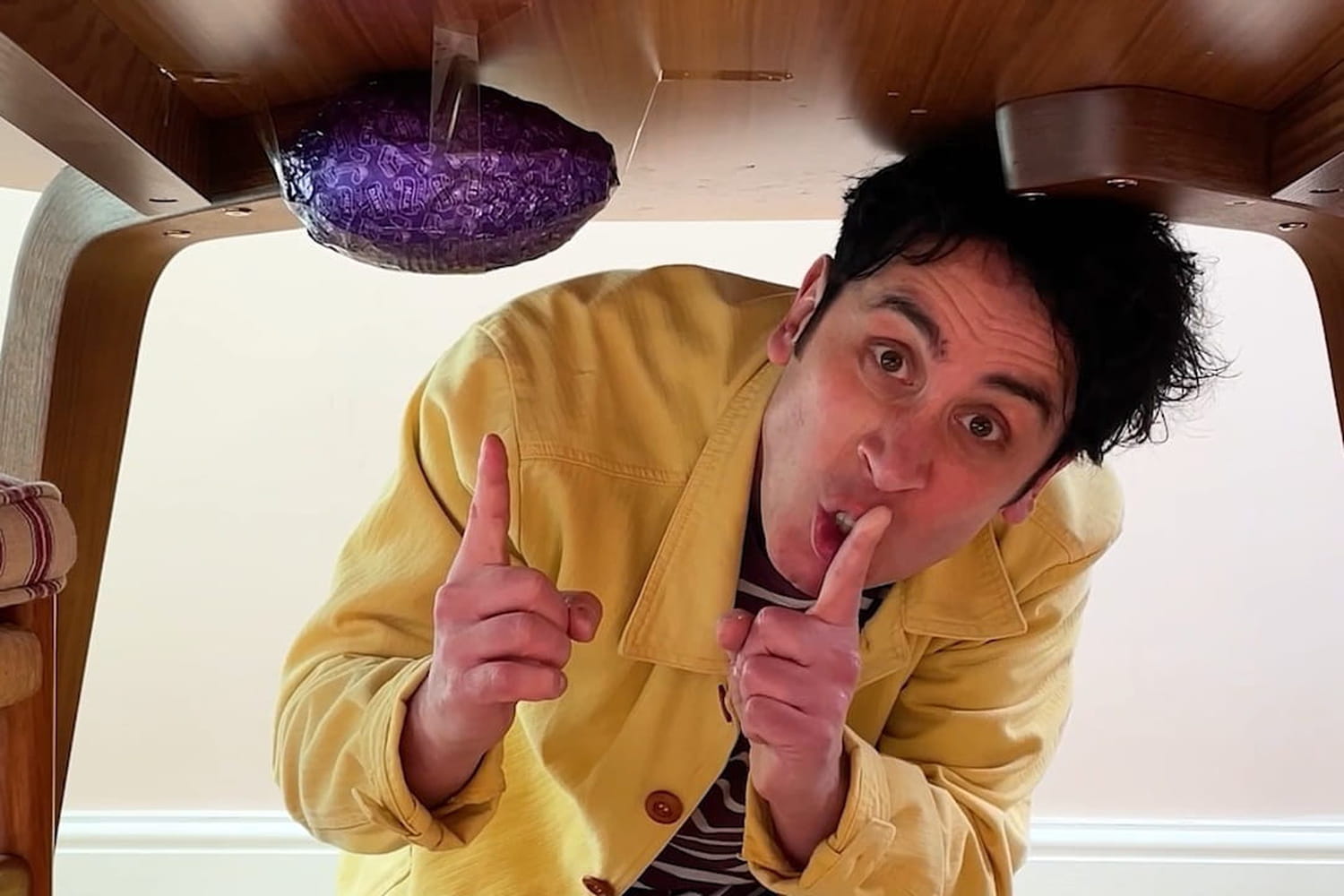





What if we extended the pleasure of the egg hunt with a little less obvious hiding places? British magician Pete Firnin reveals his sleight of hand for perfectly concealed chocolates.
Every year, the Easter egg hunt promises laughter and a good dose of excitement… but it often ends much sooner than expected. A study carried out in the United Kingdom shows that on average, the hunt lasts only 12 minutes. The reason is simple: hiding places almost always look the same. The eggs are slipped behind a piece of furniture, in a drawer, on a shelf or in a flower pot. Places that are easy to spot, perfectly suited for the little ones, but which no longer pose much of a challenge for slightly older children. Result: the hunt sometimes turns into a simple formality, dispatched in just a few minutes.
To bring some suspense back to this family tradition, Pete Firman, a British magician, teamed up with the Cadbury chocolate brand to share his best concealment techniques. “Our egg hunts have become a little predictable“, he explains. His idea is simple: based on the principles used by magicians such as diversion of attention, camouflage or optical effects, he offers a series of hiding places capable of deceiving even the most experienced. Enough to prolong the pleasure of the search.
Among his most effective ideas, some play with the natural environment. In the garden, for example, the magician advises hanging an egg from a tree branch rather than hiding it on the ground. To push the illusion even further, he suggests sticking a few leaves on it so that it blends into the decor: seen from a distance, you can’t see anything abnormal. The gaze instinctively searches on the ground or behind bushes, rarely above the head. This simple inversion of point of view is often enough to prolong the Easter egg hunt.
Other hiding places rely more on surprise. Pete Firman, for example, suggests slipping an egg into the sleeve of a jacket hanging from a coat rack by closing the end with pliers: it remains invisible as long as no one thinks to search the item of clothing. Another fun idea: using adhesive tape, discreetly stick an egg under a chair or table, a place you rarely look at. He also recommends playing with everyday objects: hiding an egg in a pot stacked under other flower pots, or in a ball of wool that you have to unroll to discover the surprise. Even a simple box of tissues can become an unexpected hiding place by creating a space underneath to slip chocolates into.
Ultimately, the success of an egg hunt has less to do with the number of chocolates than with the imagination put into the hiding places. Alternating levels (on the ground, in height, indoors or in the garden) allows you to create real exploration. You can also provide a few clues, mix easy hiding places and more difficult ones, or install one or two “fake eggs” to sow doubt. It sometimes takes a little preparation, but Easter is still slowly approaching: so it’s a good time to start thinking about the best ideas and turn this tradition into a real adventure for children.