Léa, naturally anxious in the face of danger, is aware of overprotecting her son. Result: he doesn’t dare to do things and is afraid of everything. Testimony and advice from Vincent Joly, psychologist.
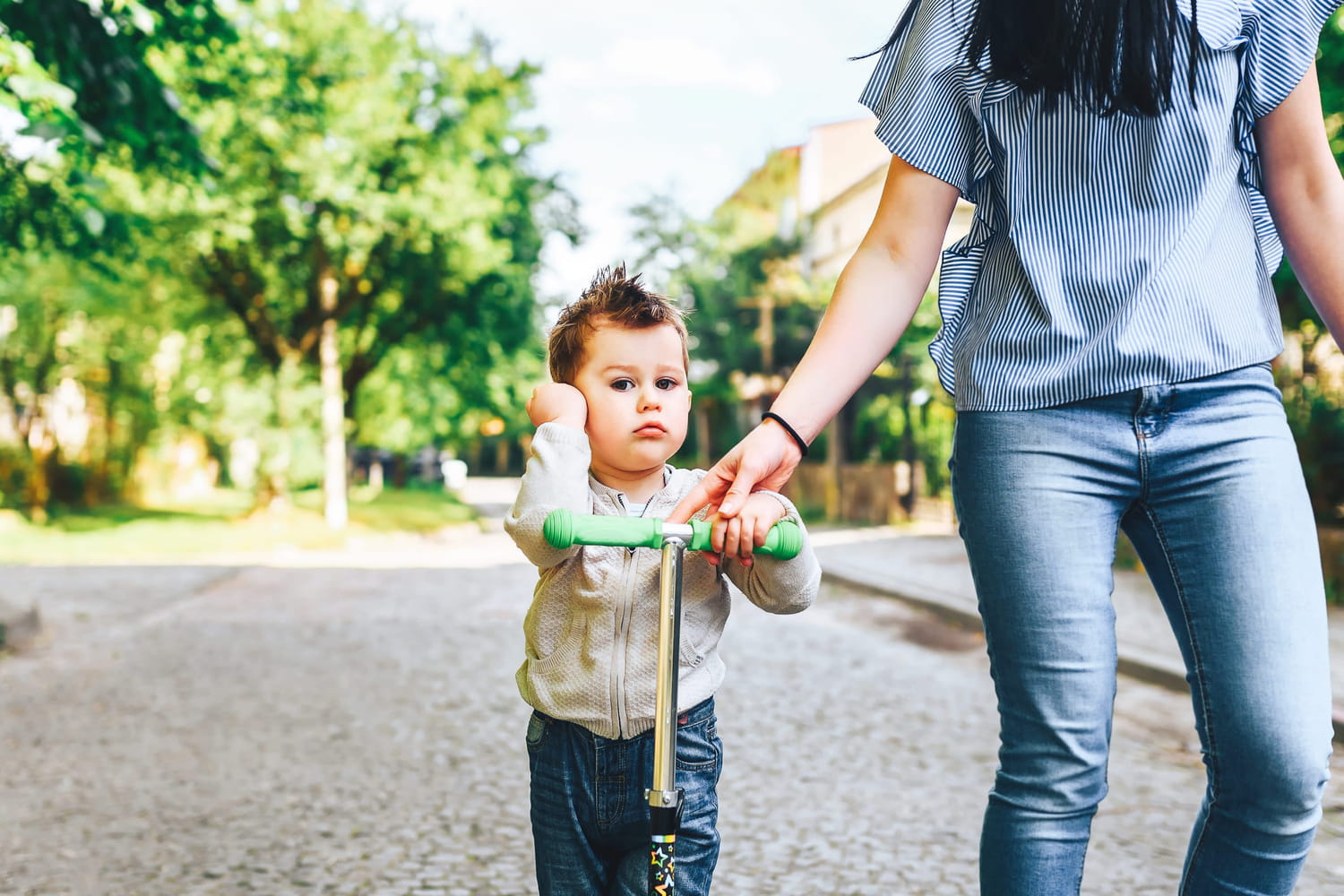
Helicopter parents tend to overprotect their child, like a helicopter hovering above them, ready to intervene at the slightest danger or the slightest annoyance. But this behavior is not really beneficial for the child and this is precisely what Léa, mother of Jules, 4 years old, is beginning to realize. Anxious by nature, she confides to the Journal des Femmes that she tends to always tell him to “be careful“, to avoid small and big injuries. Arms almost permanently outstretched (just in case) to avoid the worst, catch him in time or console him…”I realize that I have communicated my anxiety to him: he is afraid to go down certain slides, to climb, to climb or to swim alone (even with the armbands) while children smaller than him do it without problem. In certain situations, he is downright paralyzed if I encourage him to try things on his own.“, Léa confides to us.
For Vincent Joly, psychologist, “Being anxious is a fact of life, you can only see it, but you can’t change it. Anxiety disorders often have a family origin” which can be passed down for several generations. “If we have an anxious mother and father, this will tend to amplify the fact that the children are also anxious“, explains the psychologist. Indeed, if we are constantly in messages of caution or permanent warnings (“Be careful, you’ll get hurt.”), the child will have the impression that the outside world is too risky and this can result in “phobic disorders, fearful children, who will have difficulty reaching out to others”.
To avoid getting to this point, there are no “36 solutions” but the psychologist’s advice seems to be the most appropriate for these “helicopter” mothers who want to avoid communicating their fear. “To raise a child, you need several adults (mother, father, grandparents, sports instructors, godparents, teachers, etc.) because it is important that the child hears other adult voices who have another relationship with the world.“. If you are afraid that he will go rollerblading or skateboarding for example, let the father or another adult take over for these slightly more dangerous activities. And this is precisely the observation that Léa made: “on vacation with his grandpa, my son went tree climbing, which was impossible with me“, she testifies.
Another important point:the mother’s anxiety must be named, things must be said to her child: “I’m afraid for you, but your father is fine”. So, by situating the anxiety (“it’s me who’s afraid, it’s not the world that’s dangerous”), we will then reduce the anxiety.” advises Vincent Joly. And there is no need to pretend not to be afraid: “it doesn’t work at all”notes Vincent Joly. “We see it immediately, especially children, who hear non-verbal“.
What also matters is “it’s to see if your child has already put himself in real danger, if he often has a broken arm, if there is real risk taking“, but if we feel that there is no reason to be afraid, we might as well let him have his own experiences. Also learn to put things into perspective: “we tend to forget that a child has a low center of gravity and that he does not fall from very high. Most of the time, when a child falls, it’s not a big deal if they have the “parachute” reflex. (putting your hands and arms in front to protect yourself).
So, if you are a mother who is a little too fearful and you feel that your child is afraid to venture into new experiences, “The simplest thing is to pass the baton to another family member or another adult who you trust” recommends the psychologist.
Thanks to Vincent Joly, child and adolescent psychologist.