




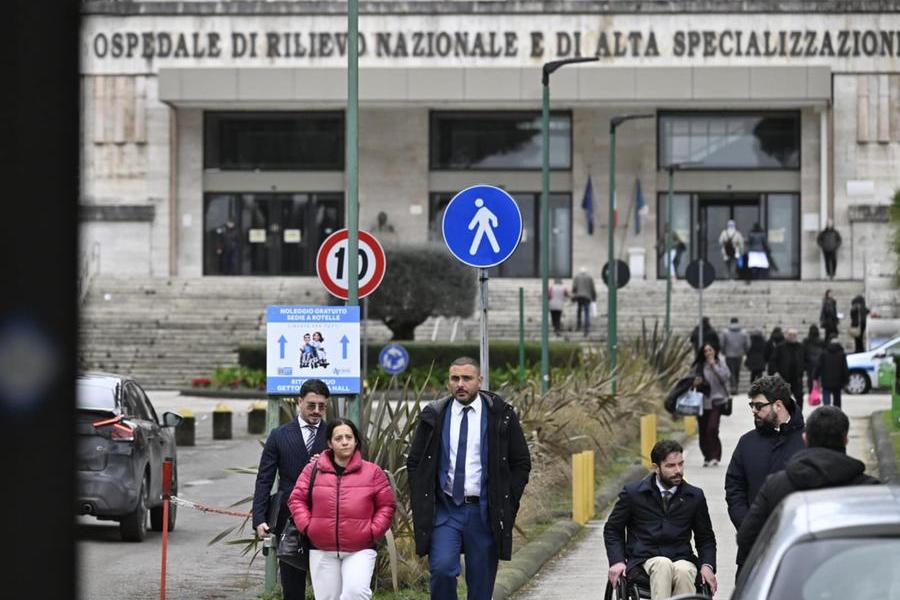
The tragedy of the little patient from Naples, whose transplanted heart never started beating again, shook public opinion, raising questions that modern medicine often struggles to answer. When the most advanced technology stops being a bridge to life and becomes a prolongation of agony, what are the doctor’s duties and the child’s rights? Giada Lonatisocio-health director of VIDAS, addresses the crucial issue of pediatric end-of-life. Far from being a form of euthanasia, accompaniment reveals itself as the last, extreme form of care: a path that does not accelerate death, but protects life from unnecessary pain.
Doctor, let’s start from the basics: why is taking away a child’s cars when there is no hope left euthanasia?
«First of all, a very clear distinction is needed between letting a person die and causing their death. Euthanasia is an active action aimed at interrupting the life of those who have requested it. When we talk about palliative care, however, we are referring to paths put in place when a decision is made to interrupt an inappropriate treatment. This is a fundamental aspect: suspending ECMO – what is simplistically defined as “switching off the machines” – means starting a path that changes objectives, focusing exclusively on alleviating the suffering of a child whose fate is now sealed.
Palliative sedation differs from euthanasia first of all for its purpose: it aims to eliminate pain, not to shorten or interrupt existence. The tools used are also radically different. For palliative care we use sedatives and opioids, while for euthanasia or assisted suicide we use drugs such as barbiturates. Times also change: palliative sedation accompanies the patient for an average of three days, while euthanasia causes immediate death. Finally, sedation is a reversible treatment, while euthanasia starts an irreversible process.”

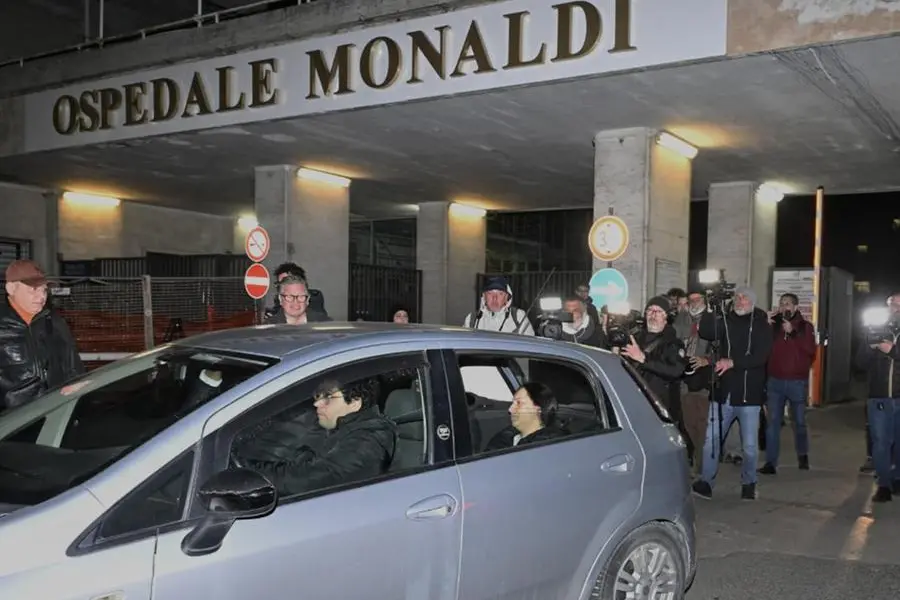
Let’s take the case of Naples. In these moments, where does the attempt to save him end and where does the useless fury begin?
«In the case of this little one, Monaldi’s colleagues are interrupting what we now define as “unreasonable obstinacy in treatment”. It is a more correct definition than “therapeutic persistence”, which is almost an oxymoron: those who treat, by definition, should not be aggressive.
ECMO made sense as long as it served as a bridging treatment while waiting for a new organ. But when the possibility of a new transplant no longer exists and the child’s conditions are no longer compatible with recovery or suffering-free survival, the choice is made to let him die while accompanying him worthily. It is a change of perspective: where healing is no longer possible, the objective always remains to remove the child from any unnecessary pain.”
What do you say to a parent who, faced with a heart that isn’t beating, asks you to continue trying “everything”?
«This is an extremely difficult position. As professionals we are emotionally involved in each other’s pain, but we have a duty to rely on clinical and normative principles. Law 219 of 2017 is very clear on informed consent: if on the one hand it is legitimate for a patient or guardian to refuse a treatment that medicine considers appropriate, on the other it is not legitimate to demand a treatment that science deems inappropriate.
In bioethics we are guided by fundamental principles: self-determination, beneficence and non-maleficence. We must ask ourselves whether keeping this child alive for longer brings him a benefit or, on the contrary, a curse. We have a duty not to commit acts of maleficence. Then there is the principle of distributive justice: in this case there was a single heart for three candidates and it was correctly assigned to whoever had the greatest chance of drawing a real benefit from it.
Parents need to be explained that “doing everything possible” sometimes means doing something other than technical maneuvers. A profound exercise of compassion and empathetic listening is needed to help them understand that medicine is not omnipotent, but moves in the world of limitations. We must guide them to value every moment that remains with their creature.”


In practice, how do you accompany a family through this tunnel? What do you do to not make them feel abandoned by doctors?
«We must recognize the uniqueness of each family unit and legitimize every feeling: anger, desperation, bewilderment. We help parents understand that if clinical awareness happens with the head, acceptance happens with the heart and takes time. For this reason, palliative care does not stop with death, but continues to support family members during mourning.
We provide a team where medical skills are intertwined with psychological ones, also paying attention to little brothers, who are experiencing a profound trauma. Providing palliative care means promising these people that, whatever happens, they will not be left alone. The fear of loneliness, combined with such immense pain, is the element that a treatment group has the task of soothing.”