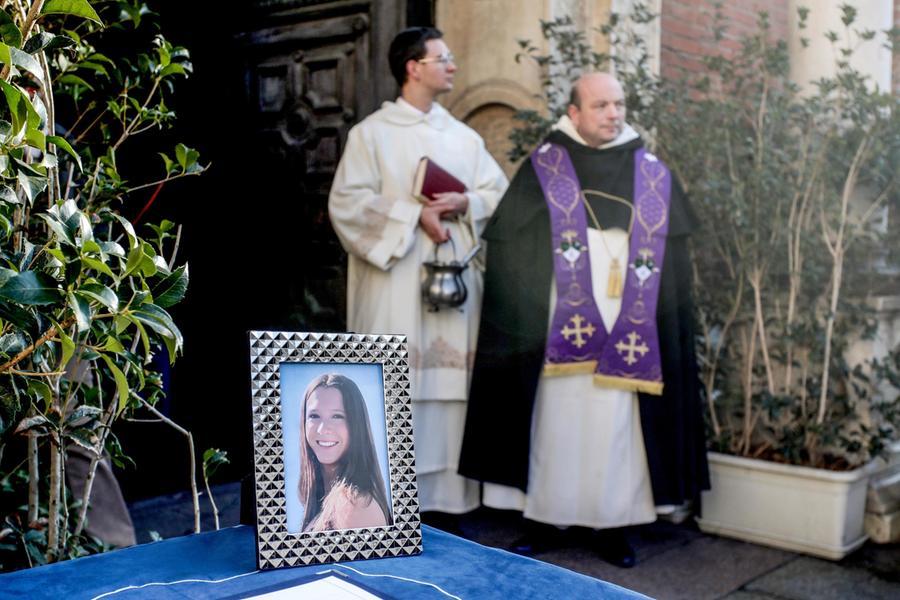




The homecoming of Sofia, one of the girls who survived the Crans fire and was discharged from the Niguarda hospital after weeks of treatment, brings hope back to an event that has profoundly affected her classmates and teachers. At the Moreschi high school in Milan However, we continue to deal with the void left by Chiara Costanzowho died in the fire on New Year’s Eve in Switzerland. The teacher follows the class Laura Spinelli who takes care of Chiara’s classmates alongside other experts, all important reference figures for students, teachers and families.
You have been working at the Moreschi high school for some time. What kind of school has it become for you?
«For almost ten years now this high school has welcomed me as a pedagogical support figure for students, teachers and parents. In this time we have built that network of relationships that constitutes the soul of every educational community.”
When did you find out about Chiara’s death?
«I was alerted during the Christmas holidays, when it became certain that one of our students had died in the tragic fire on New Year’s Eve in Switzerland. The name, the face, his voice in the corridors: everything crystallized in an instant that split time into a before and an after.”
How was returning to school after the tragedy?
«A deafening silence awaited us. The kind that resonates until it takes your breath away. A third year high school class burdened not only by the death of a classmate, but also by the media outcry that accompanied the story.”
Pedagogically, what does it mean to face a moment like this?
«Maybe just one thing: being there. Being there, with the kids, in a circle of chairs next to each other, not in a row. To feel close, tight, united. Only in this way can one pause in the unspeakable without claiming to understand it.”
What did you see in the boys’ gazes?
«Bewildered eyes, full of held back tears, of anger, of a sense of helplessness and disbelief. Eyes of adolescents who are learning too soon that the future is not a certain promise.”
What was the most important work you did with them?
«Help them find a place for what happened. Not an answer or an explanation, but an internal space where conflicting thoughts and emotions can coexist. A mental and emotional place where, at their own pace, everyone can build their own interpretations. Not to give meaning to death, but to continue to give meaning to life.”
How has the school accompanied this journey?
«Our role, as an educating community, was to accompany them day after day as they resumed the path of their lives. Mourning must be integrated and processed at one’s own pace, without haste, showing that one can continue to walk, carrying it with oneself.”
Were there moments or symbolic gestures that helped?
«Yes, small daily rituals. The white cyclamen next to the teacher’s desk, the launch of the white balloons, the photos of the moments spent together hanging on the wall. Simple gestures that say: she was there, she remains.”
What did you learn from this experience, also as an educator?
«That in certain moments pedagogical knowledge does not lie in techniques or protocols, but in the ability to pause alongside the pain without the rush to resolve it. Our expertise is to create safe emotional containers, legitimize all emotions, admit that sometimes we don’t have the answers but we can look for them together.”
And the role of adults in situations like this?
«Being present with authenticity and continuity. Adolescent grief takes a long time and takes unpredictable forms. Our task is to guarantee a stable presence, so that these kids can cross this stormy sea knowing that they are not alone.”