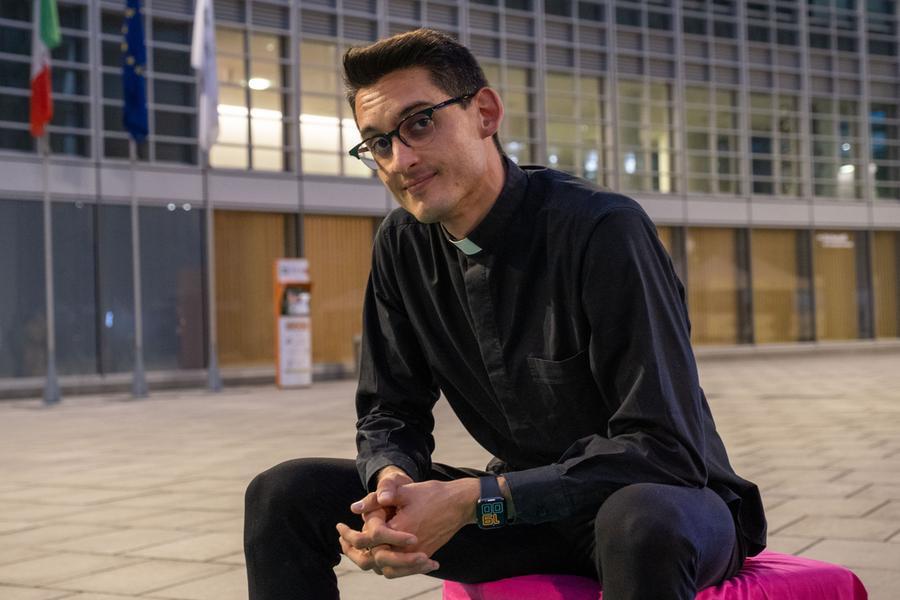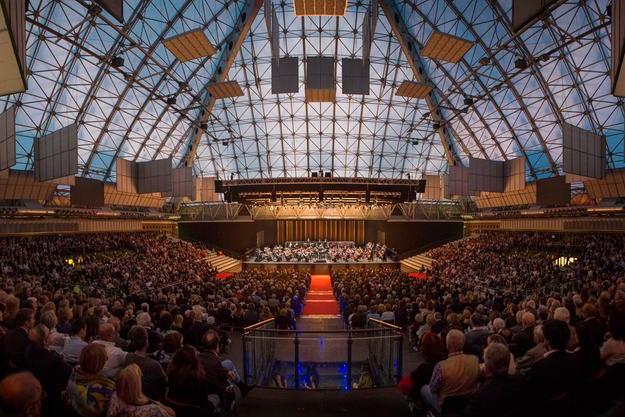





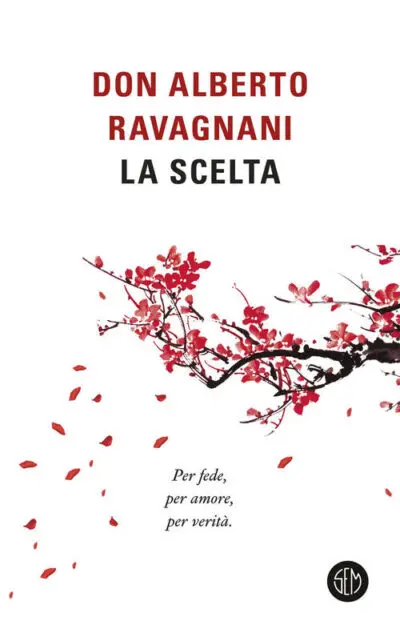
Don Alberto Ravagnani – or rather: Alberto Ravagnani, without the “don” anymore – has written a book, The choice (SEM), and presented it on Monday evening at the Feltrinelli bookshop in Piazza Piemonte, Milan. There was a full book-event crowd, the kind usually given to singers, chefs, entertainers and famous writers. Here, however, the character was a young priest who is no longer a priest.

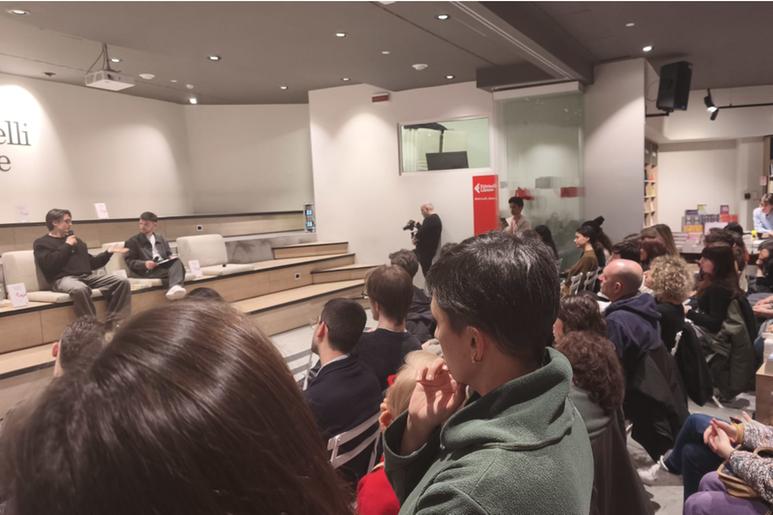
I admit: more than him, I was intrigued by the public. Who on earth spends an evening listening to the testimony of a former priest who announced that he had abandoned the priesthood on social media? Answer: surprising human fauna. Many young people, very many. Those who are not seen in church, or are seen less and less: students, girls and boys from associations and social centres, temporary workers with an eye trained in resistance, lapwings and cockerels with bodies tattooed like emotional maps, earrings, dilators, various accessories which for us boomers remain as mysterious as the Latin of the Tridentine Mass. There were also influencers, rock musicians, highly concentrated gym-goers – more absorbed than certain monks at Compline time – and, mixed in with them, like kind insiders, teachers, pensioners, curious people, seminarians, priests in clergyman and priests in plain clothes. A slightly strange auditorium, more varied than ever and for this very reason interesting.
Ravagnani was visibly emotional. Different from the fluid and casual character of the videos and reels that you see on social media and which attract hundreds of thousands of likes.
He recounted his trajectory as a priest: the seminary, the parish of Sant’Anna in Busto Arsizio – the most complicated, the historic center of drug dealing – then Milan, the fraternity, the “recovered” boys, the conversions. He spoke of Busto’s summer oratory, cheerful and joyful like a festival and deserted as soon as summer ends. In September, he recalled, “there was no one left: they were all out smoking joints, racing motorbikes”. And he, instead of feeling sorry for himself, had gone to take them back one by one. Outgoing church, suburban version, authentic, as Francesco liked.

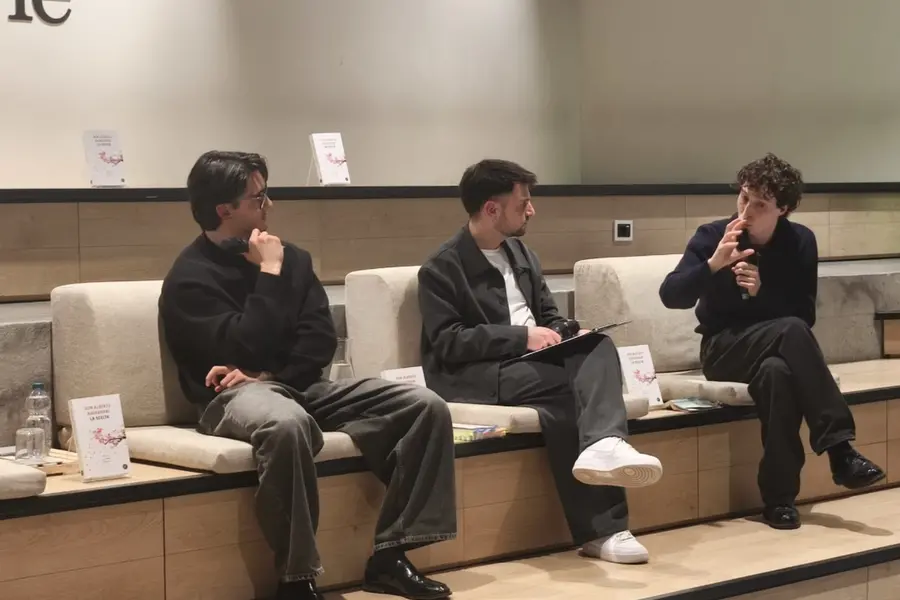
From left, Alberto Ravagnani, Giovanni di Giacomo and Riccardo Pelicone.
during the presentation
Then, after the move to Milan, the restlessness. The doubts. The decision to leave the role without leaving the faith. “I questioned the role, not my commitment and my being Christian.” In short: “I questioned the collar, not God,” he explained. And I swear I heard a girl next to me, with intense and deep green eyes under her glasses, probably from her fraternity, sigh, as if in relief.
In Milan, he says, he met people, lived with seven boys, formed a community. And there, paradoxically, the doubt was born. Not as a seminarian, not as a young provincial priest, but in the midst of a shared experience. Two and a half years of crisis that he defines as “humanization”. Curious term, which sounds like a promotion and at the same time like a wound. As if to say: before the priest I made a mistake in not looking for the man within myself.
I was struck by the testimony of Riccardo Pediconepodcaster and writer, a sweet, profound boy, with red cheeks from shyness, with the makings of a real writer, who says he met Ravagnani on social media and found faith there, through that digital dialogue and then subsequent meetings. First conclusion (obvious, but always uncomfortable) with a provisional moral: social media is not the devil, it is a tool. They can also be used for this. Highways of the Announcement, someone says. Autogrill of the soul, perhaps someone else would say.
Pedicone talks a lot, and he speaks well, he is a profound boy who is not ashamed of proclaiming himself a believer. He quotes Simone Weil, talks about institutions to be reinvented, about dialogue, about beauty against ugliness. The words of Saint Augustine, from the Gospels, bounce around the room. He is young, therefore inevitably perhaps a little confused (at least for us old people), but also inevitably alive. Another boy who I go to browse through the crowd tells me that the Church today should serve more to ask questions than to distribute prefabricated answers. Here too: nothing new: as long as you are restless you can stay calm, said Julien Greene, but hearing it said in that room, from that audience, has a certain effect.
There was no debate. Perhaps out of caution. Perhaps because someone could have asked about the supplement advertised by Don Ravagnani in a video on faith, or photos of a bodybuilder in the gym, better for a fitness magazine than for evangelizing. But looking at those kids I thought that, as a layman, even just one of them was enough, just one who had found an answer to his own question of meaning thanks to Don Ravagnani, to thank him and to say that something – however you judge it – really happened. All those kids had received the gift of faith, do we realise? Miracle in Milan, it makes you want to think.
As for the causes of the choice to abandon the collar, Ravagnani explains that they are multiple, including celibacy. In the end, the inevitable question: “Do you have a girlfriend?”. Answer: no. No scoop. Then, at the end of the meeting, confused among the crowd, before leaving, I opened a copy of his book that was lying on a pile at the entrance. The first sentence associated the Mass with a swear word. I closed it and put it back on the table. Not out of indignation. By instinct. The Sacred still has a meaning, an immense dignity, there is no need to vulgarize it to attract a reader, whether an adult or, worse, a child.