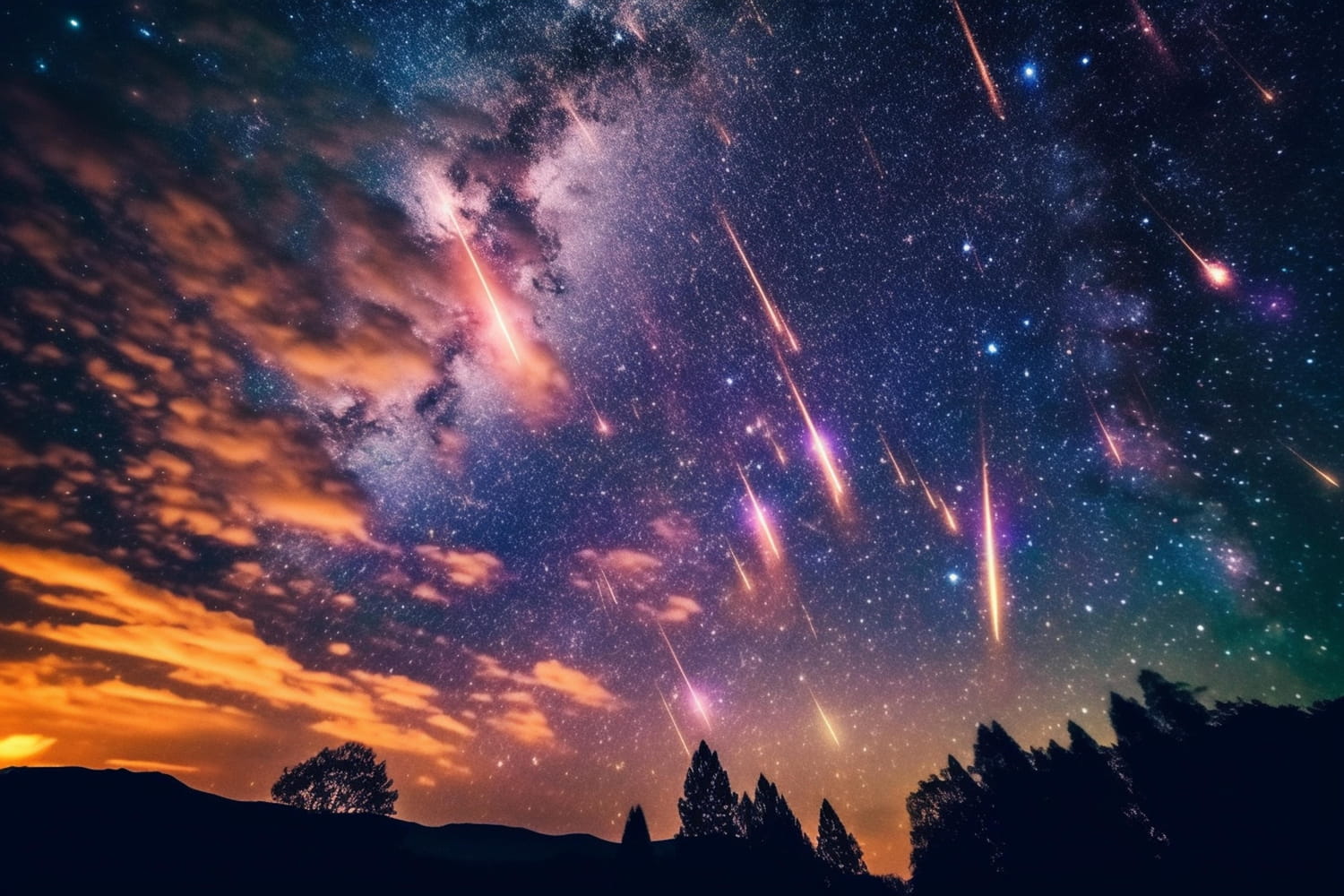





Observers can expect to see fast, very bright shooting stars, sometimes brightly colored bolides.
Meteors, or shooting stars, have fascinated scientists and astronomy enthusiasts since the dawn of time. What makes meteors so captivating is their sudden, stealthy appearance, which creates a rare moment of surprise and wonder in our daily lives. They give the impression that the sky, usually perceived as frozen and eternal, is suddenly in motion. There are several meteor showers each year, but there are generally around a dozen major swarms intense enough to be clearly observed from France.
Coming soon, the Quadrantid meteor shower offers one of the most beautiful celestial shows of the year. This event occurs when Earth encounters a debris stream in space. It is distinguished from other major showers (such as the Perseids or the Geminids) by the nature of its parent body: it is not a comet, but the asteroid 2003 EH1. This unusual origin makes the Quadrantids a relatively rare phenomenon and creates larger particles, which can produce brighter meteors. Additionally, the swarm is famous for the brevity of its peak activity, lasting only a few hours, requiring observers to be perfectly synchronized to enjoy the spectacle.
During its peak, the swarm can reach a Zenithal Hourly Rate (ZHR) of 80 to 120 meteors per hour in ideal conditions, an intensity comparable to that of the famous Perseids. Observers can expect to see fast, very bright shooting stars, sometimes brightly colored bolides. The peak of activity is expected on the night of January 2 to 3, 2026. Observation conditions in mainland France will, however, be very unfavorable and the spectacle could be greatly reduced. The reason is that the swarm peak coincides with a 100% illuminated Full Moon. The lunar light will strongly mask the majority of faint meteors and we will only be able to see the brightest and largest meteors.
To maximize your chances of seeing something, astronomers advise focusing on peak hour, expected around 10 p.m. (Paris time) on Saturday, January 3, positioning yourself so that the Moon is not obscured by a natural obstacle or building, and looking at the sky in the opposite direction to your position (in other words, not looking directly at the Moon).
The next opportunity to observe a meteor shower of comparable magnitude (THZ greater than 80) in potentially favorable conditions in France will be the Perseid shower in August 2026. For a reliable and intense shower, the major event to mark in your calendar will be the Geminid shower in December 2026.