



A start that disarms
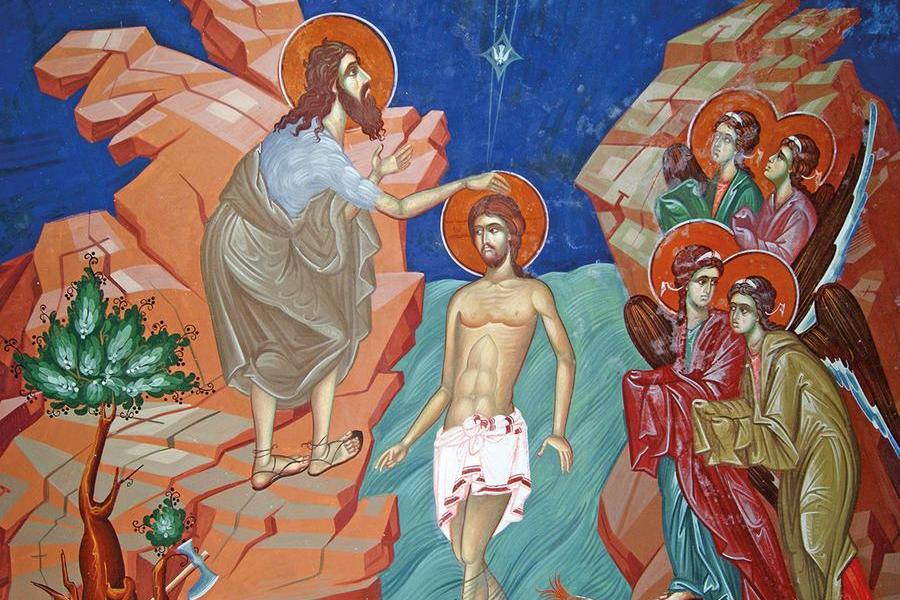
John the Baptist had attracted attention. His preaching, harsh and direct, had made headlines and had set out many people. Around the Jordan, men and women gathered who felt the need to put their lives back in order. In this context Jesus leaves Galilee and goes down to the river. It’s not a chance meeting. Jesus heard about this preacher and decides to leave the life he had lived up to that point in a hidden and ordinary way, for about thirty years. He sets offtravels over one hundred kilometers and reaches the fords of the Jordan to participate in that penitential rite that was marking the wait of many. This choice, however, is by no means a given. When Giovanni sees him coming, he is perplexed and tries to stop him. Warn immediately a wastea disproportion that cannot be explained: “I need to be baptized by you and you come to me?”.
His baptism is a gesture intended for those who recognize their sin and feel the need for conversion. This is why the presence of Jesus disorientates him: he is unable to place him among those who descend into the river to change their lives. Jesus, however, does not enter into discussion and does not try to clarify. It doesn’t shy away, but it doesn’t impose itself either. He only asks to let it happen, for now, as if that gesture were necessary even without being immediately understood. And he indicates the reason: this is how all justice is carried out. A short answer, which does not answer all the questions, but invites you to accept a style.
At this point Matteo concentrates the meaning of the story. “Complete” and “justice” they are decisive words. Jesus did not come to replace, to break or to cancel, but to bring to fullness. And what must be brought to fullness is justice, that is, God’s plan. A project that is not achieved by imposing itself from above or by distancing itself, but by fully embracing the human condition. To be baptized you have to enter the river, lowerdip your head, accept being submerged. It is a gesture that speaks of loss, of renunciation, of exposure. Jesus consciously chooses this path. Not because it needs purification, but because God’s plan passes from there: from sharing and fully embracing man’s fragility, without shortcuts.
Faced with this gesture, Giovanni too must change his gaze. He had announced a strong, decisive Messiah, capable of judging and separating. Now he finds himself faced with a Messiah who it lowers and asks to be welcomed. For John, agreeing to baptize him means entering in a deeper conversion, allowing himself to be corrected by his own expectations and learning a style he had not foreseen. The Gospel, significantly, does not recount the act of baptism. Just tell the story‘exit. Jesus comes out of the water, as in an exodus, as in a liberation that opens a new time. And it is precisely then that the heavens open, the Spirit descends and a voice proclaims: “This is my beloved Son”.
The Son is recognized not when he stands out, but when he agrees to stay where others are. He neither distances himself nor occupies a separate place: he stands in line, he assumes the common condition. Only after, and not before, does the sky open. The story insists on this order and continues to put us in crisis, because it overturns our religious expectations: God does not manifest himself in control, superiority or separation, but giving up trying to escape and sharing the destiny of men.