
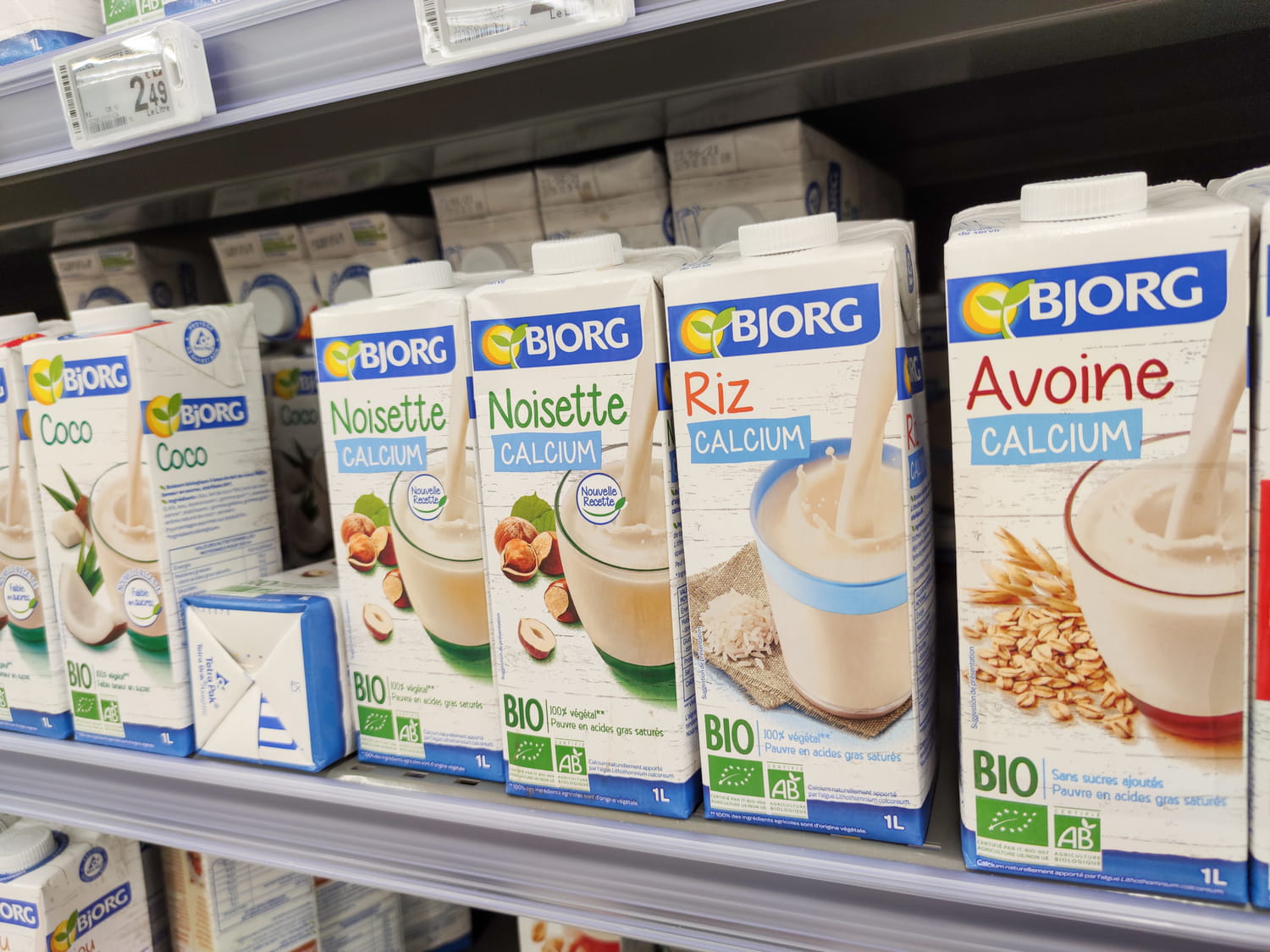





Almond, oat, coconut milk… Contrary to popular belief, these tasty drinks are not always that healthy. Some actually contain a significant quantity of oil, added voluntarily by the manufacturers.
Oats, soy, almond, coconut… Plant-based drinks have conquered supermarket shelves in record time. They are now establishing themselves as preferred alternatives to cow’s milk. Popular for their absence of lactose, their lower environmental impact and their reputation as “healthy” products, they appeal to both vegans and the curious. However, behind this natural image lies a less glorious reality. Looking more closely at the labels reveals that some plant-based milks are actually much fattier than you might think.
If these drinks contain fat, it is because the manufacturers deliberately add oil, most often sunflower or rapeseed oil. It’s not just to annoy the consumer with extra calories, there is a real technical reason behind it, confirms the National Health Safety Agency (ANSES). Unlike cow’s milk which naturally contains animal fats, plant-based drinks are very watery and difficult to “foam” when mixed with coffee. Without fat, the “foam” resembles soap bubbles that burst in seconds. The oil allows you to obtain this creamy and elastic micro-foam essential for making cappuccinos or latte coffees. The fat also brings “body” to the mouth, which avoids the impression of drinking coffee with water. Finally, this prevents the milk from “turning” or coagulating on contact with the acidity of the hot coffee. As you will have understood, adding oil is generally a “cover-up”: the more oil and water there are, the less real oats or almonds there are in the brick.
In France, several key brands use this process, mainly in their premium ranges. We thus find added oil in the cartons of the Alpro brand (notably the Barista versions and certain soy versions), but also at the Swedish giant Oatly which uses rapeseed oil on a massive scale. As the magazine 60 Millions de Consommateurs regularly points out, other brands that are very present in organic stores or mass retailers, such as Bjorg, Sante or even distributor brands (Carrefour Bio, Auchan), also include oil in their “Barista” or “Unctueux” variations.
However, is this problematic for health? It’s all a question of quantity. On average, these milks contain between 1.5 g and 3.5 g of lipids per 100 ml, which remains close to semi-skimmed or whole milk. The major risk is therefore not immediate toxicity, but the regular consumption of refined oils rich in omega-6 (such as sunflower), which can promote inflammation and weight gain if consumed in excess. For example, for a person who drinks several lattes per day, the intake of added fats becomes significant and transforms a drink that is supposed to be healthy into an ultra-processed product with more calories than expected.
To avoid marketing pitfalls, here are the 3 reflex points to check on the label. Firstly, it is better to favor a short list of ingredients. A good plant-based milk should only contain three or four ingredients: water, the main ingredient (oats, almond, soy, rice), a touch of salt and possibly a natural stabilizer like gellan gum. Secondly, favor the words “no added sugars”, this is essential to avoid unnecessary blood sugar peaks, especially in the morning. Third, the absence of oil. Brands like Sojasun, The Bridge or Ecomil meet these criteria. For daily consumption (cereals, cooking, glass of milk), choose versions without added oil, less processed and more natural. From time to time, you can treat yourself to a “Barista” version for the pleasure of foam. The important thing is that this remains an exception rather than a systematic habit throughout the day.