


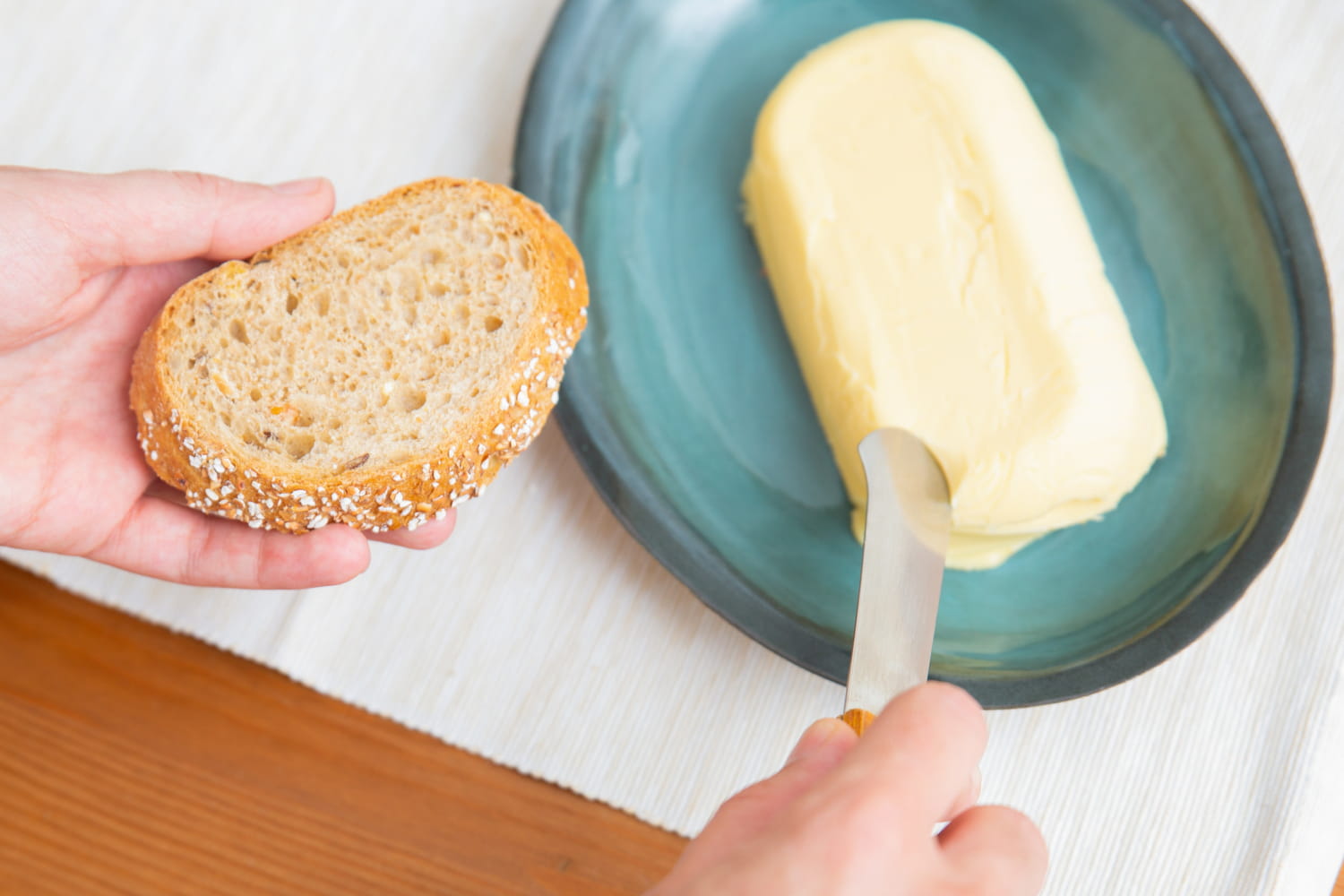



Both butter and margarine are fatty foods. Which one to eat rather than the other? For health? The heart? The weight? A nutritionist Raphaël Gruman responds bluntly.
Butter and margarine wage an endless battle to see who deserves a place on our toast. It’s a food debate that animates family tables as much as medical consultations. “I actually often get questions from my patients about butter/margarine.“, confirms Raphaël Gruman, nutritionist. When it comes to a balanced diet, the choice of fats remains a major concern for reconciling health and pleasure on a daily basis. But beware of the first trap: whether you choose one or the other, they are fatty substances. With around 80% lipids, these two are just as caloric (around 750 kcal per 100g). Margarine is therefore not lighter than butter.
For the nutrition expert, the first advantage of butter is its very simple composition: “Butter is a raw product, made from milk cream”. And it is a real reservoir of essential nutrients. “It is naturally rich in vitamin A (essential for vision and skin) and vitamin D“, specifies Raphaël Gruman, while recalling that “its taste and its stability when cooked gently are undeniable gastronomic assets“. Only downside: its richness in saturated fatty acids which, if it is “consumed in excess, can promote an increase in LDL cholesterol in sensitive people“.
On the other hand, margarine is presented as an emulsion of vegetable oils, often perceived as “lighter” or protective. “Quality margarines (‘Omega-3’ type) are interesting for their contribution in unsaturated fatty acids, which are protective for the heart.“, explains the nutritionist, adding that some are even “enriched with phytosterols to help regulate cholesteroll”. However, vigilance is required in the face of this “processed product”. The expert warns that it is necessary “It is imperative to look at the labels and check that it does not contain partially hydrogenated oils (sources of industrial ‘trans’ fats)“, even if the latter are becoming increasingly rare in supermarkets.
So which butter or margarine wins the match? When choosing a winner, the nutritionist favors authenticity. His verdict is final: “There is no absolute winner, but I still prefer butter!“. For the majority of us, the dose makes the cure: “Butter, in reasonable quantities (10 to 15g in the morning), remains an excellent choice for vitamins and pleasure.“On the other hand, margarine only wins the match on medical grounds:”For a person monitoring their lipid profile (cholesterol): a margarine rich in rapeseed or flaxseed oil, non-hydrogenated, will be preferable on daily basis on toast. specifies our interlocutor. Butter therefore wins points for its natural side and its vitamins.
Beyond the duel with margarine, butter itself is not a fixed product. A secret that few consumers know lies in the seasonality of its composition: “summer butter”, produced when cows graze on fresh grass, is naturally softer and richer in beta-carotene and Omega-3 than winter butter. This natural variation reinforces its status as a living and raw product, where margarine remains a constant industrial formula all year round.