




There are cities that when they dream they do it out loud. New York is one of those. And since she returned to play for the NBA title, the Big Apple hadn’t seen its Knicks in the final since 1999, when Bill Clinton was still in the White House and the internet was still called “the future», the great collective voice of the metropolis became thunder. One of those deep roars that rise from Broadway, bounce off the windows of Midtown and reach the streets of Harlem, where the clove ball has always had the weight of a promise.
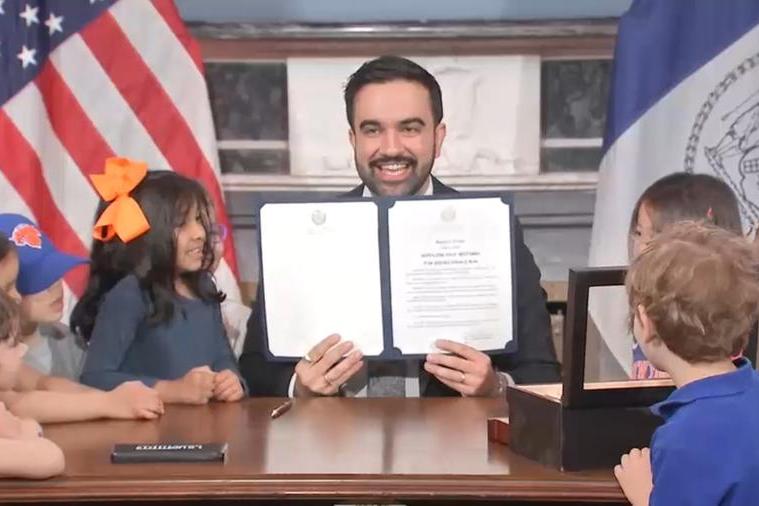
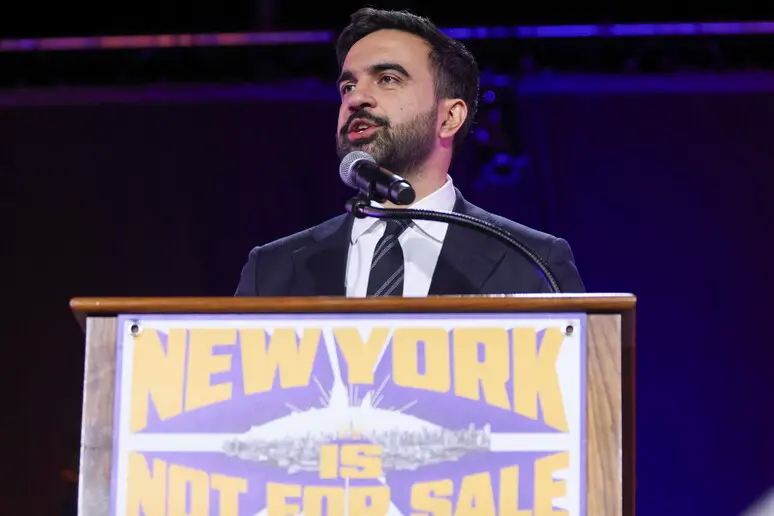
Zohran Mamdani, the young mayor who has made militant sympathy his governing style, immediately understood that the opportunity was too great to let the children of New York miss it in their sleep. And then he did what great mayors do when history calls: he signed an executive order. Not to build bridges or reform taxes, but to suspend bedtime. “As mayor you have to make difficult decisions,” he said jokingly, surrounded by children in orange and blue T-shirts. “This is one of them.”

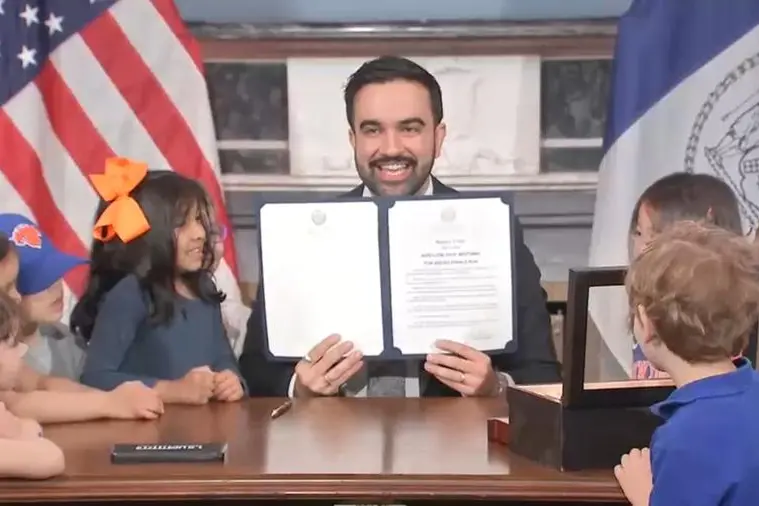
The scene is one that remains: the mayor of the capital of the world surrounded by a small crowd of budding fans, waving the official document as if it were a trophy. The decree, half administrative act, half performance, authorizes minors in New York to stay awake to watch the four games scheduled between June 3 and 10. Possibly also two others, the 13th and 16th. No concessions on school however: despite the sleepless night, the kids go to class the next day. And Mamdani did not negotiate on this. «Training», his administrative silence seems to say, «is not suspended even for the Knicks».
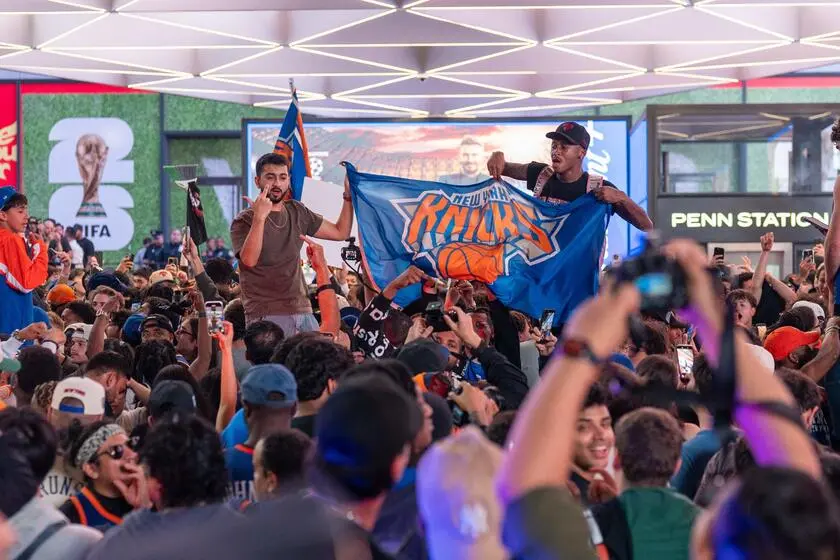
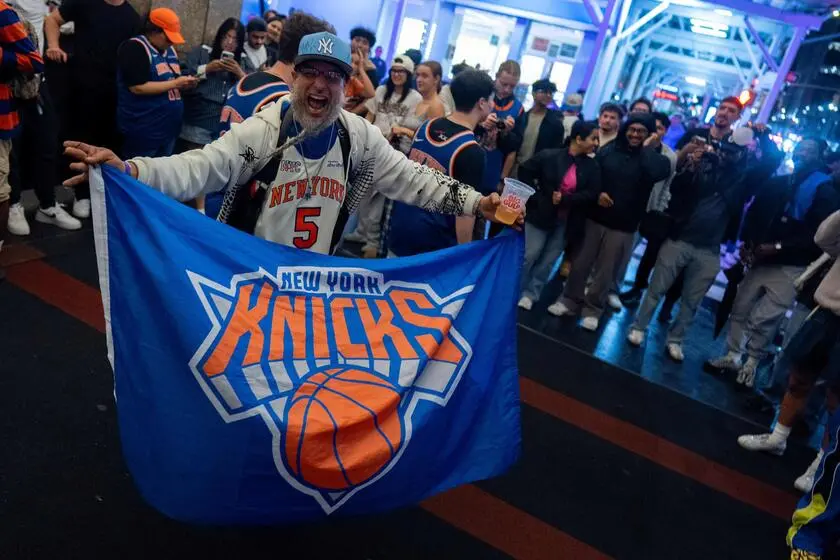
But what are the Knicks to New York? They are something that goes beyond sport, beyond the trajectory of a ball entering the basket. I am the city itself, transfigured in a tank top. I am Spike Lee in the front row at the Gardenfaithful as a priest to his altar, generation after generation. They’re Brooklyn kids playing under the streetlights until someone calls them to dinner. I am Timothy Chalamet who rejoices in the stands of Cleveland next to Kylie Jenner, forgetting for one night his halo as an auteur actor. I am rapper Fat Joe shouting in the middle of the stands. They are the entire neighborhood that looks out from the balconies when the siren sounds. On the night of May 26, when the Knicks closed the Conference East semifinal against Cleveland with a score of 130-93, Manhattan did not fall asleep. She started celebrating.
“Forever Knicks,” Mamdani tweeted at the time. A politically useless and humanly necessary declaration of love. The mayor who comes from the generation of TikTok and civil rights battles, who grew his career between the courtyards of Queens and the halls of city hall, has understood that basketball is the lingua franca of this impossible and wonderful city. The language that the Wall Street banker and the Washington Heights delivery man speak alike.
Madison Square Garden, the arena that rises above Pennsylvania Station like a luxury spaceship planted in the heart of the island, is something more than an arena. It is a secular sanctuary where the great liturgies of American sport have taken place: from Willis Reed who limped onto the pitch in the 1970 final to Knicks champions of ’73, last title in their long and often painful history. Twenty-seven years of waiting, many have passed since the last final, in 1999 against the San Antonio Spurs, have made this summer something special even for those who have never really loved basketball. Because when a city waits this long, emotion becomes contagion.

And children, in all of this, are the purest witnesses. NoThey don’t have the cynicism of adults, they don’t carry the weight of accumulated defeats. For them this final is simply the greatest match in the world, to be watched with mum and dad on the sofa, with pizza on the table and the city trembling outside the window. Mamdani knows this. And for this reason his decree, signed with a color pencil, is almost certainly not a joke, even if the press releases do not say so. It is an act of love towards the family understood in the broadest sense: the one that shares a moment, that transmits a passion, that builds a memory.
Sport seen in the family has this ancient magic. It doesn’t depend on the screen you watch it on, nor the quality of the image. It depends on who is next to you. It depends on the child who asks why that very tall man never scores a basket, and on the grandfather who responds by telling about another player, from another time. It is a narrative chain that crosses generations, and in New York, a city of migrants, of overlapping histories, of identities under permanent construction, this chain has an even deeper meaning. The Knicks are not just a team: they are a thread that holds together the fabric of a place that reinvents itself every day.
Of course, the opponent won’t be the most comfortable. Waiting for the Knicks are the San Antonio Spurs, one of the most successful franchises in recent history, built on fundamentals and tactical intelligence. In San Antonio the schools have already closed on May 26, and Texan children will be able to sleep whenever they want. Mamdani made a different choice: New York kids will stay awake, but they will go to class the next morning. As in life: you rejoice, but then you get back to doing things. Sport is not an escape from reality, it is a small parenthesis within it, experienced with more intensity.
And while the NYPD is wondering about the giant screens outside the Garden, fearing the wave of a city that wants to celebrate before the series even begins, and while the World Cup is approaching with its free fan zones and the MetLife Stadium ready to welcome the final in July, New York has chosen its priority. Not by law. By feeling. Because there are cities that when they decide they love something, they do so without reservations. And the Big Apple has no rivals in this.

The children of New York will stay awake. They will watch the finals with their eyes wide open and their hearts beating. Maybe they won’t understand every offensive scheme, every defensive zone scheme. But they will understand something more important: that their city had been waiting for this moment since they were not yet born. And now it has arrived. And that we watch together.