



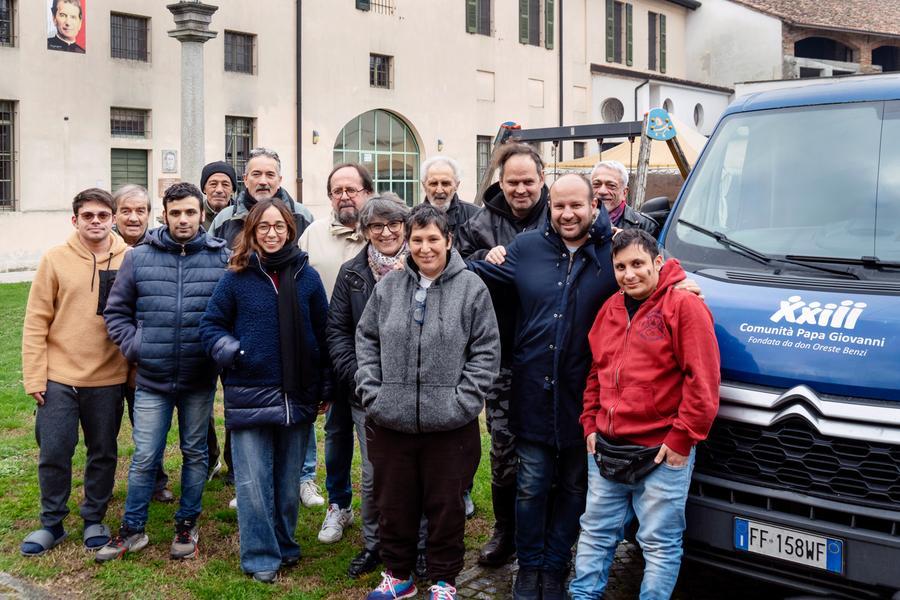
In Montodine, in the lower Cremasca area, the door of the Bethlehem hut creaks softly. There is no sign on the red bricks, no noticeboards, no timetables: just knock. This is where Silvia, Giuseppe, Momo, Laurentiu and Eros they found shelter after years of benches, stations, full dormitories and wrong nights. A place that, after a past on the streets, today everyone calls “home”.
The Hut is like this: a place that cannot be explained, you go through it. “It’s more about relationships, bonds and mutual help, than a roof and a bed,” he says Lodovica Ghezzi, Lombardy manager of the Pope John XXIII Community. “Whoever arrives here doesn’t find a service, but someone willing to learn to really love them.”
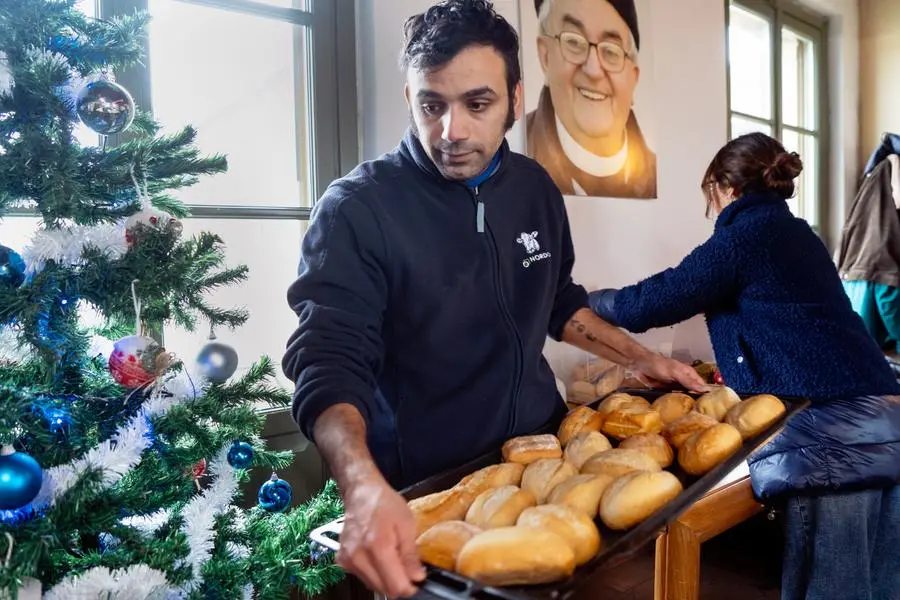
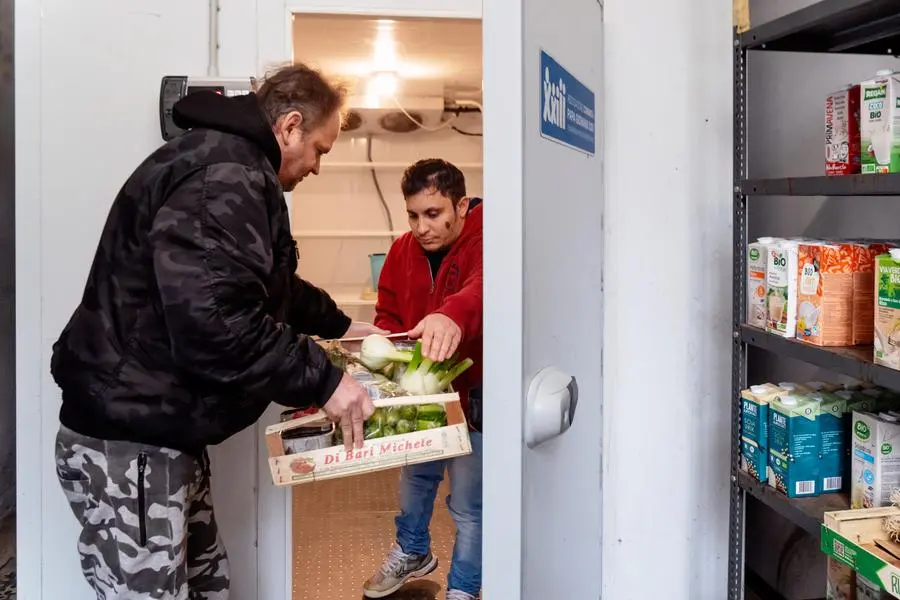
The house was founded in 2017, to give dignity to people who are unlikely to be able to regain autonomy. «A medium-long term place, sometimes for a lifetime», he explains. «For some we are the ones who act as a bridge until the last stretch». But here there is no resignation of welfare: there is work, commitment to the community and the territory. The guests welcomed clean the oratory, cut the grass, open and close the parish spaces, but also collect surplus food in the area supermarkets: twice a week they select, package and distribute the food to the Papa Giovanni family homes and to the fragile families of Montodine.

«From being helped they become helpers», he says Duilio D’Ambrosio, representative of the Community’s activities between Milan and Crema and who lived in Capanna for years. “It’s the simplest way to restore dignity.” Duilio knows well what this means. Ten years ago he was a young university student in the street unit. One evening, hot tea and a blanket delivered to the Duomo in Milan changed his life more than he imagined. «At the beginning it’s just presence: you stay there, you listen, you don’t judge. Trust is born like this. We come back every week, even when they tell us to leave.”
Papa Giovanni’s street units are made up of 20-30 young people: parishes, scouts, volunteers which reach Milan every Wednesday evening. There is no map, only faces. «The road is relationship. When a person says “I’ll try”, you accompany them to the door of the hut. The first day is always an earthquake: fear, shame, hope all together.”
And then, what happens here? «The first word is home», says Gian Marco, who entered through the door of the Bethlehem Hut in Milan one rainy night. «They asked me if I was hungry. Not how long it’s been since I ate: if I were hungry now.” This is the difference. «No one reminds you of your fall. They remind you that you exist.” Even today Gian Marco, who for years has been a member of a family home in the community created by Don Oreste Benzi, continues to lend a hand however he can: shifts in the kitchen, food distribution, small jobs. “They taught me to be seen.”
The Hut is, technically, a residential structure. But in Montodine’s version there is something more: «This is the home of the welcomed», explains Lodovica. «We operators take turns, but they stay. They look after the place.” Two volunteers and a young man from the civil service live permanently with the guests. Every gesture is shared: dinner, the TV, the washing machine. Even conflicts: «A person from the civil service, convinced he was doing a favor, changed the washing machine program… disaster. Shrinked socks, white shirt turned orange. We laugh, but for those who have little it’s important. And this too becomes life together.”
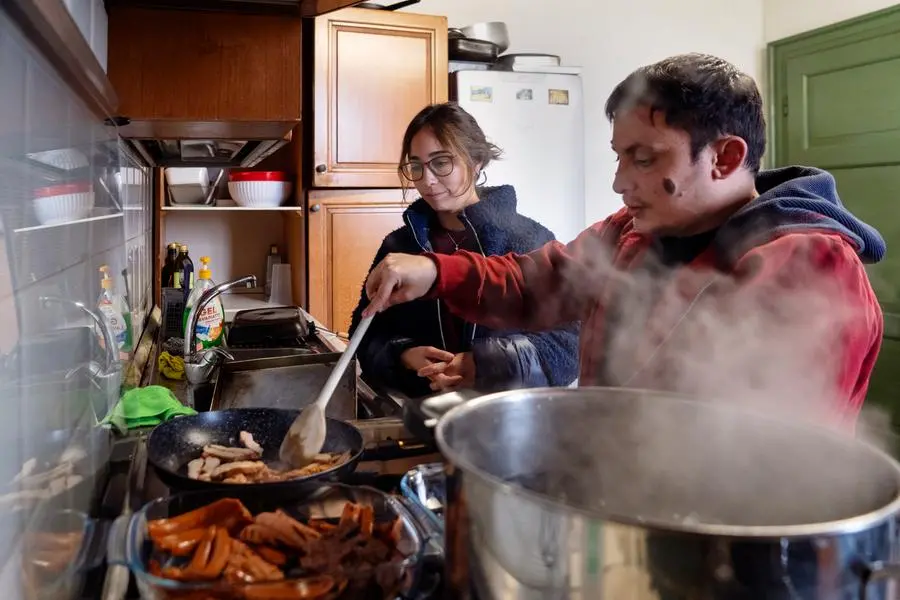
Not everyone can trust, at least right away. Some have been here for fifteen years. “But even if they run away, they come back,” says Duilio. “Because the relationship is true.” It’s slow work: «Those who live on the streets don’t just lose their homes and jobs, they lose relationships. We start again from those.” Elena, the only female guest today, has entered and left the Hut many times: a complex life, bright phases and dark phases. Now he is the permanent center of gravity of the house and has started ironing in a family home in the area: “It makes me feel useful,” he says. «Here we don’t judge you, we wait for you», Duilio comments. The Hut is also this: a fragile and powerful brotherhood, where poverty is not a statistic but a proper name. «We learned real poverty from them», says Lodovica. “Their survival is our prophecy.”
Throughout Italy, Pope John XXIII follows thousands of people who could not do it alone: over 50% of those welcomed remain entrusted to the community for life. “It’s an immense commitment, but it’s the meaning of the work.” Ten people live in Montodine today: nine men and one woman. They range in age from twenty to seventy-four. In the living room there is a cake prepared for Davide’s birthday, 31 years old: candles, off-key songs and jokes. A simple, domestic, normal scene, but which is not normal for those who have spent years in suffering and loneliness.
Also for this reason, the history of the Capanna di Montodine is perhaps the best way to tell the “Christmas of Value” of Christian family: stories that show where the resources made available by the twelve companies involved in the initiative this year come from (Autostrade per l’Italia, Edison, Enel, Esselunga, Generali Italia, Intesa Sanpaolo, Poste Italiane, Snam, Terna, BPER Banca, Coop and Mulino Caputo) and of whom we talk about their commitment to social responsibility in the issue on newsstands this week and on our website.
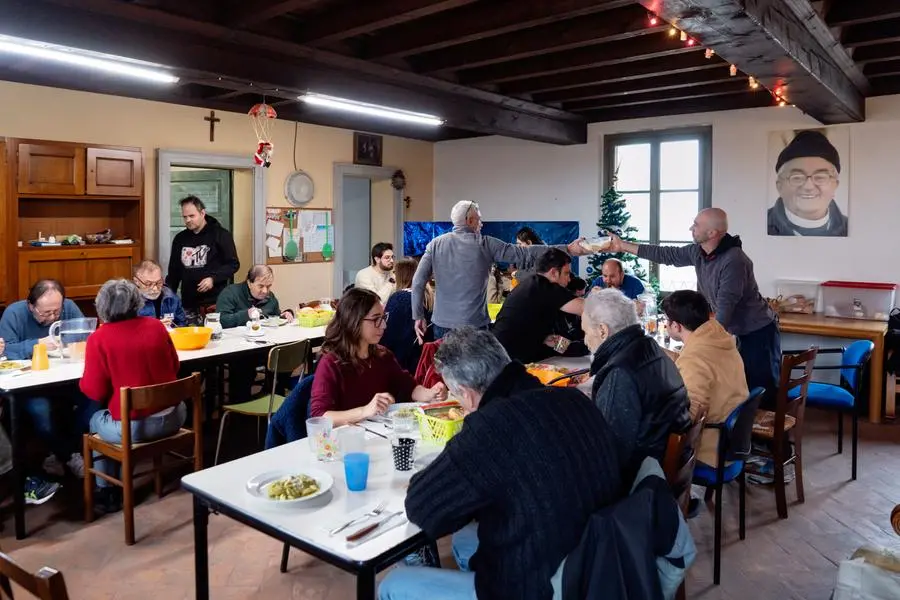
After leaving the hut, the sun lowers behind the oratory. Giuseppe and Laurentiu arrange the food boxes, Davide jokes with a volunteer. This is how a life begins again: from a place that doesn’t judge and from someone who waits for you or comes back to look for you. «It’s always worth being there for them», says Duilio. «Because here hope is not an idea. It’s a door that opens.”
THE 12 STORIES OF “VALUE CHRISTMAS” by Famiglia Cristiana
Enel for social issues, teaming up to leave no one behind
Esselunga, when cocoa is not just a question of taste
Mulino Caputo, where responsibility, art and taste meet
The projects of Edison and the Eos Foundation for young people from the most fragile neighborhoods of Palermo
Generali Foundation and projects to train migrants as caregivers
Post Office, a business without emigrating? A possible dream
The commitment of Autostrade per l’Italia workers to solidarity initiatives
Snam Foundation, supporting communities by networking
BPER Banca, with crowdfunding we can help society’s future
Terna, development passes through care for people
Coop, not just food, but relationships
Intesa Sanpaolo and support for work that “opens” prisons and offers a future