




What France has relegated to the bathrooms of another time returns elsewhere in a modernized version. A change in format that could well transform our planning habits.
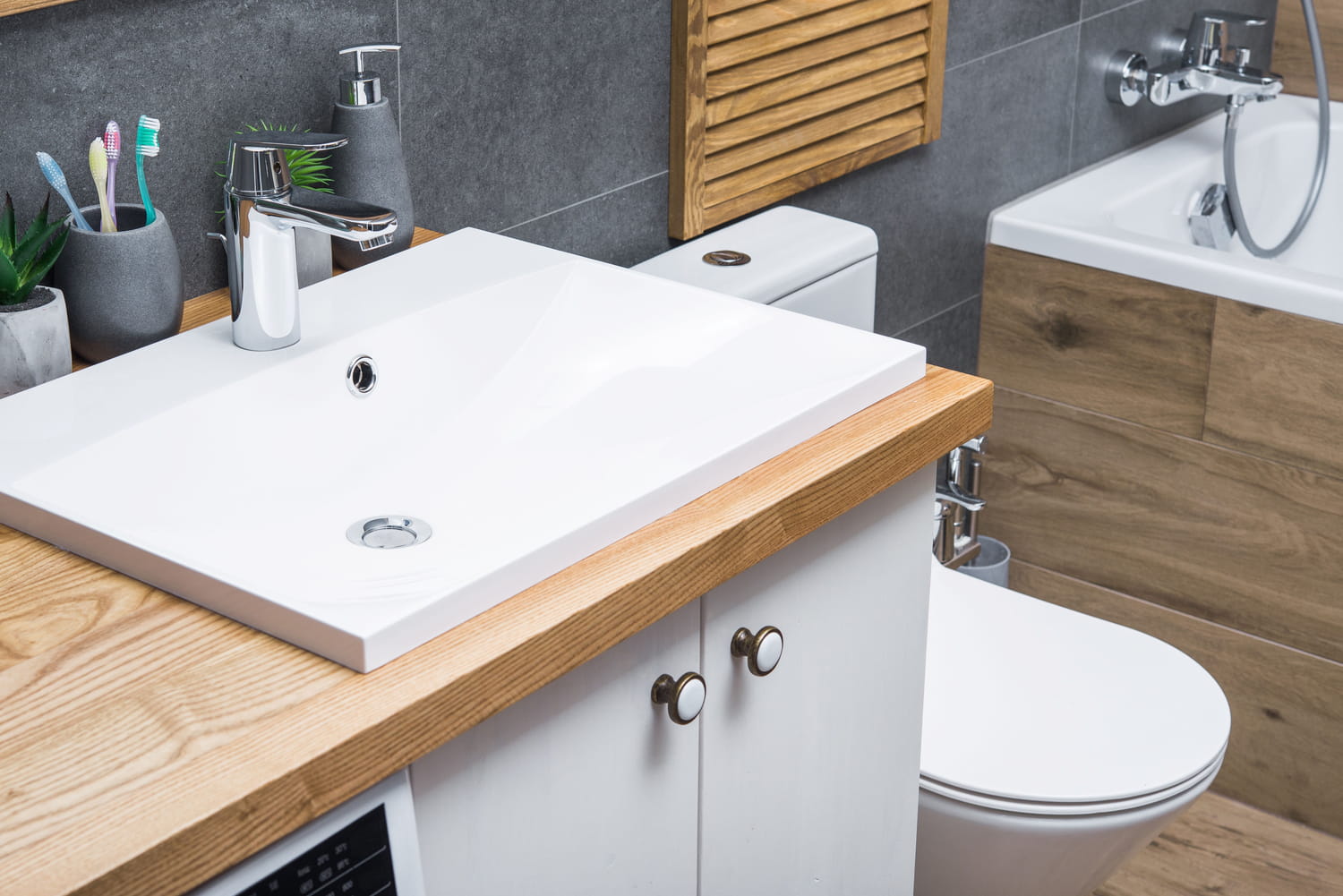
Installed next to the toilets, it evokes old bathrooms and homes from another era. In France, the bidet has become a symbol of the past. Considered cumbersome and impractical, it has gradually disappeared with the reduction of surface areas and the evolution of uses. Today, it is often perceived as old-fashioned, despite a simple and effective idea: clean with water rather than wiping.
Meanwhile, this same gesture is seeing renewed interest elsewhere. In the United States, more and more homes are equipping themselves with water cleaning devices associated with toilets. The arguments put forward are concrete: better hygiene, greater comfort, less paper used. Sales are growing rapidly, driven by a pragmatic and modern approach to intimate hygiene. At first glance, one might believe that the bidet is making a comeback.
But this success is based on a reality different from that which we imagine in France. The bidet as we knew it has not returned to the same: it has evolved. Its principle has been preserved, but its form has been profoundly redesigned to adapt to current uses. The independent basin has disappeared in favor of a system integrated directly into the toilet, in the form of a seat equipped with water jets. Cleaning is now done in the same place, without travel and without additional floor space. This is a transformation: the bidet has been integrated into the toilet.
This modernization comes from Japan, where washing toilets became established in the 1980s. They offer precise, adjustable washing, sometimes supplemented by drying. This model then inspired other markets. In the United States, these systems are attractive for their ease of installation and accessibility. They can be mounted in a few minutes on standard toilets. Their design is discreet. Their use is immediate. Water cleaning becomes an integrated comfort, not a separate piece of equipment.
In France, this development could change the perception of the bidet. The country had widely adopted water hygiene before abandoning it for practical reasons. However, these constraints have disappeared: no more wasted space, no more heavy work since the device fits onto existing toilets. In a context of ecological sobriety and the search for more hygienic solutions, this new generation bidet could find its place. Not as a throwback, but as a modern version of a long-loved idea.