






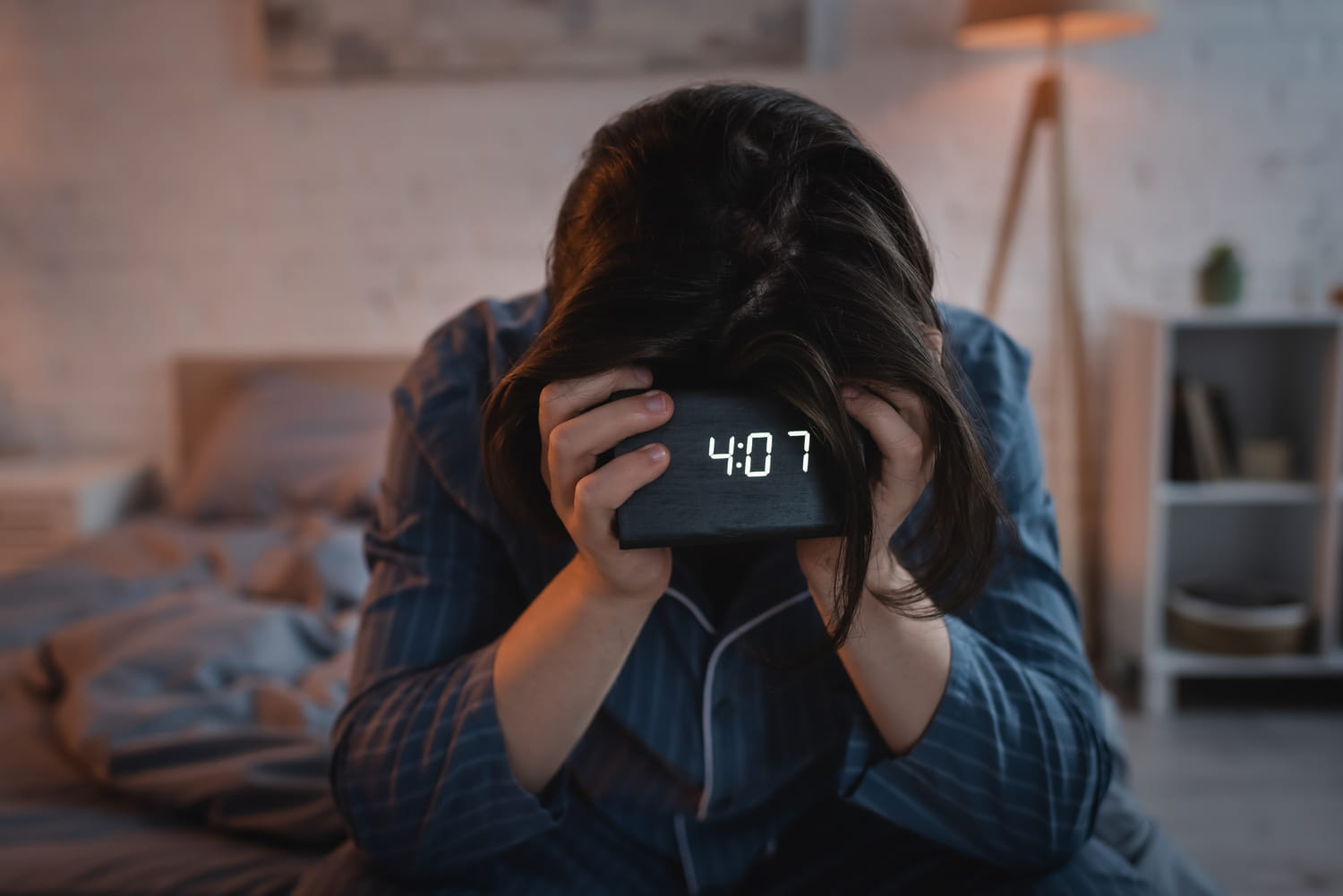
Orthosomnia describes the obsession with having “perfect” sleep. Can’t resist knowing your amount of deep, slow-wave, REM sleep? You are obviously concerned…
4.5 hours of light sleep, 1.5 hours of deep sleep, 45 minutes of paradoxical sleep… Every morning, it’s the same ritual: you check your wrist to see your “sleep score” on your connected watch. You may feel rested, but the app tells you it’s not enough. You may suffer from orthosomnia. This term, popularized by a study by Rush and Stanford Universities, describes the obsession with having “perfect” sleep, an obsession often fueled by the fact of having a connected watch which gives a lot of information… perhaps too much in the end? Ironically, the tool designed to improve rest can become a major source of anxiety. Sleep specialists have been warning for several years about this drift which affects 3 to 5% of the population.
Orthosomnia transforms sleep, a natural and complex biological process, into a performance to be achieved. The quest for the ideal number leads to real nighttime performance anxiety. If the watch indicates a poor sleep score, worry increases, which increases anxiety for the following night and ultimately creates a vicious circle where the fear of sleeping poorly leads to the onset of chronic insomnia (called “psychophysiological insomnia”). But that’s not all. These devices are only estimation tools. They measure sleep cycles and heart rate through movements, which is very different from a medical diagnosis carried out in a laboratory.
Overreliance on this data can obscure or delay seeing a true specialist for an underlying disorder that requires a formal diagnosis (such as sleep apnea or restless legs syndrome). As the researchers point out in the journal Journal of Clinical Sleep Medicinerelying on imprecise data to change habits can further disrupt sleep. In the long term, poor quality sleep can make you irritable, increase depressive or anxiety symptoms and the risk of cardiovascular disease.
Sleep specialists are clear: the best indicator of the quality of your rest is your subjective feeling when you wake up in the morning. In his book “The sleep solution: why your sleep is broken and how to fix it“, Dr Chris Winter, neurologist and sleep specialist, warns against confusing fatigue with “bad score”. You can feel in great shape despite short sleep, or be exhausted after eight hours if the quality is poor. It’s the body that knows, not the algorithm.
To overcome orthosomnia and sleep well, Dr. Winter and other experts recommend focusing on sleep hygiene (regularity of bedtimes and wake-up times, darkness in the sleep room, coolness), not on the percentages displayed by the watch. To trust your feelings. “If you feel alert and functional during the day, you slept well, no matter what the app says“. Finally, if the watch represents stress, you should put it in “do not disturb” mode or in a drawer and only use it to know the time.