






Crans-Montana New Year’s Eve is an endless night. It continues every day, in the deafening silence left by 40 broken lives, in the suffering of the 116 injured, in the bewilderment of the families who ask for at least one thing: justice. This is why the release of Jacques Moretti, owner of the place where the tragedy occurred, sounds today like a wound being reopened, a blow dealt not only to the relatives of the victims, but to the very sense of collective responsibility.
To mark the gravity of what happened, a political and diplomatic gesture without recent precedents also arrived: Prime Minister Giorgia Meloni decided to recall the Italian ambassador to Switzerland, Gian Lorenzo Cornado. A formal and sensational act of protest against the decision of the Swiss judiciary, which takes the matter well beyond the judicial news and places it on the level of relations between states: “I am indignant”, said the Prime Minister, “it is an outrage to the memory of the victims and an insult to their families”. The ambassador’s recall is a strong political signal, which is unlikely to lead to a diplomatic rupture, but which expresses all the perceived disproportion between the seriousness of the facts and the judicial response.
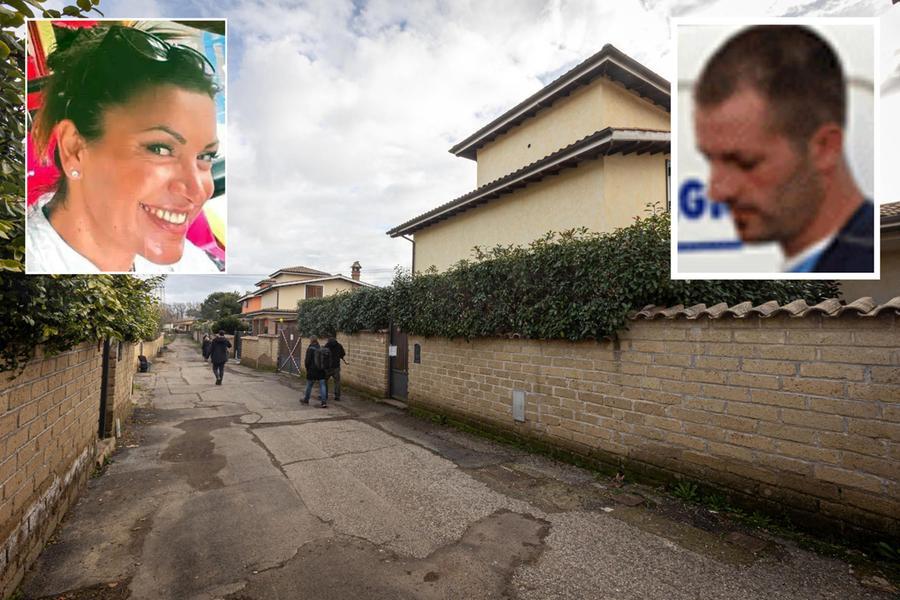
Jacques Moretti was released after paying a bail of 200 thousand Swiss francs (around 215 thousand euros). His wife Jessica, co-owner and manager of the restaurant, never entered prison and was subjected to precautionary measures such as the obligation to sign and the ban on leaving the country. Both are charged with manslaughter and negligent bodily harm. The Swiss justice system has deemed that the risk of escape can be prevented without precautionary custody. A formally legitimate decision, but which on a human and symbolic level appears incomprehensible.
Anger and bewilderment emerge forcefully from the words of the victims’ families. “We are disconcerted, it is a shame for our children,” said the parents of Riccardo Minghetti, one of the young people who died in the fire. And the lawyer Alessandro Vaccatowho assists the family of another victim, Emanuele Galeppini, speaks of a release from prison which “leaves us dumbfounded” and which makes it necessary to “intervene, because it is not possible for it to go like this”.
They are not emotional reactions: they are cries of wounded dignity
Crans-Montana, we have said many times, was not an accident. It was, rather, the massacre of greed. A tragedy that questions the management model of certain premises, the relationship between profit and safety, the superficiality with which rules are too often considered as obstacles and not as tools for protecting life.
The doubts come not only from the families of the victims, but also from authoritative jurists. Adriano Sansa, former magistrate and former chief prosecutor of Genoa, recalled in our newspaper how the institution of bail has ancient origins and a precise function: to balance the needs of the trial with respect for personal freedom. But when freedom becomes a question of economic availability, the risk is evident: bail can turn into a privilege for those with great means, especially if the amount set is not truly proportionate to the seriousness of the facts and the financial capacity of the defendants. The attempt to avoid justice by census, Sansa observed, is only partially successful.
It is no coincidence that our legal system does not provide for this use of bail. And perhaps, for once, we can say it without hesitation: we prefer the Italian system, which does not monetize personal freedom in cases of such extreme gravity. Money can do too much, often, but it should never do everything.
On the institutional level, the Foreign Minister Antonio Tajani he reiterated his respect for Swiss justice, underlining however that the ambassador’s recall responds to his duty to represent the country’s dismay and to stand by the affected Italian families.
This is not about invoking justicialism or demanding exemplary revenge. It is about something deeper: remembering that justice is not just a procedure, but also a question of moral credibility. Without recognition of the gravity of the evil committed, without the perception that human life comes before any economic interest, justice risks appearing distant, cold, even complicit.
In front of the flowers and candles left in front of Le Constellation, almost a month after the massacre, in front of the victims who have never returned home, in front of the wounded struggling in hospital, the question remains open: what value does life have when it comes into conflict with money?