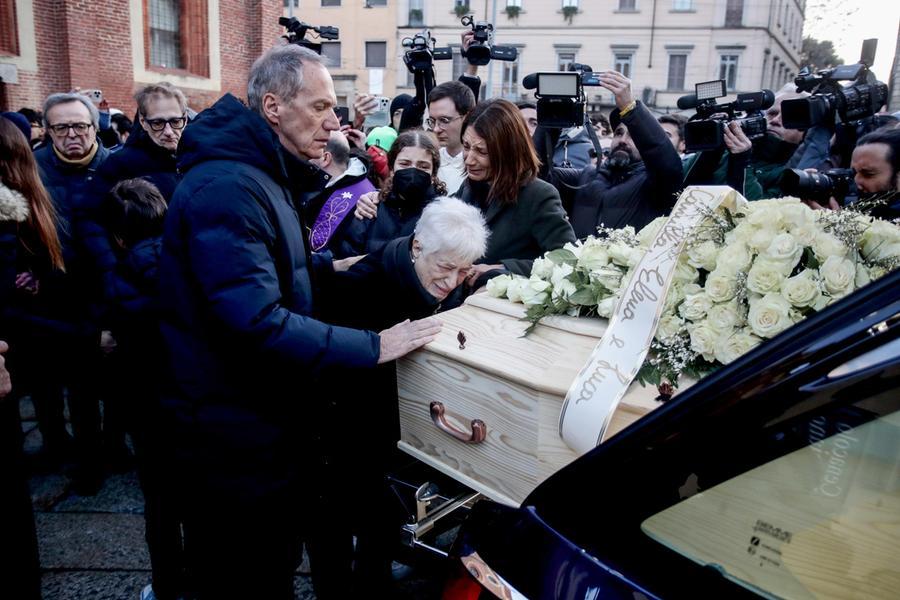


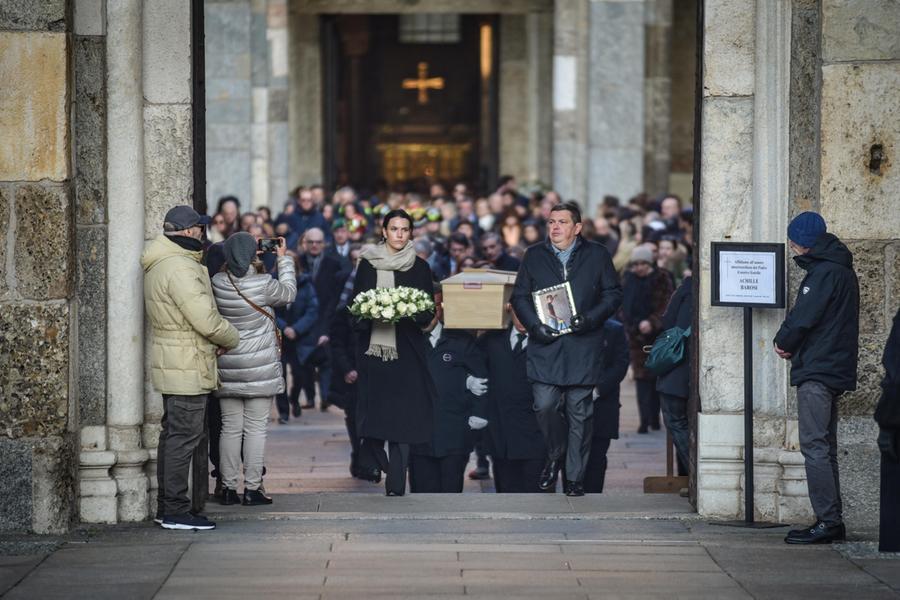


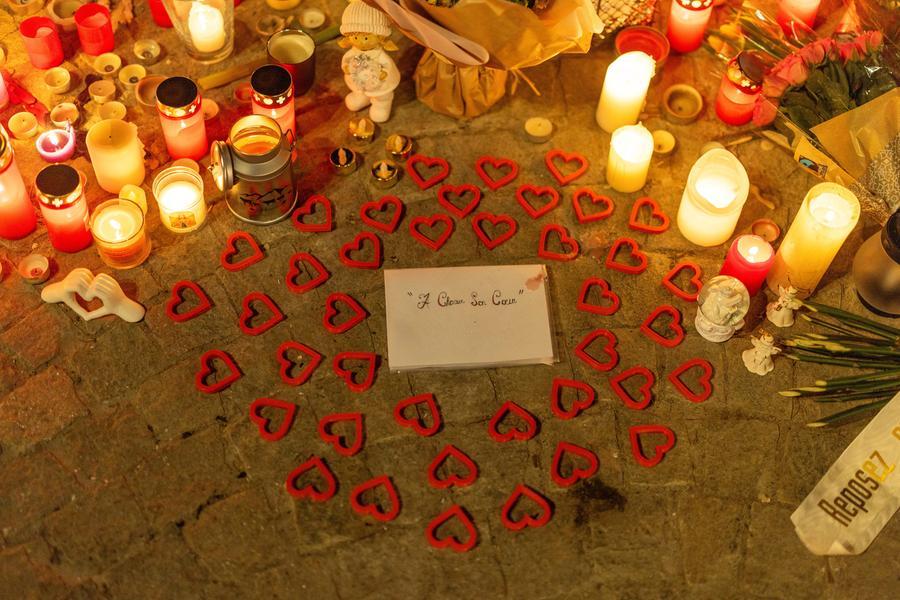
Back to school. After the New Year’s Eve tragedy in Crans-Montana, Switzerland, with the bodies of the six Italian boys who died in the fire returning home, there is a need to support families and classmates in the mourning process. Among the children involved there are also some students from the third D of the Liceo Virgilio in Milan, all sixteen years old, on holiday with friends. A task force of emergency psychologists will enter the institute to support students, teachers and families in the difficult work of processing the trauma. Among the psychologists there is also Ivan Giacomelli, vice president of SIPEm SOS Lombardia, who explains to us why, in these cases, it is essential that psychological support arrives immediately, together with other assistance.
«Trauma», he says, «is not just what happens, but what can stick inside people if it is not welcomed in time. Four third grade students are hospitalized at the Niguarda burn center, as well as other children from various schools. At the same time, we will enter school immediately after the holidays: we will be four psychologists, ready to work both in groups and, if necessary, in a more confidential way with the most fragile children. As SIPEm we operate on the site of the event, what we call “the construction site”, but also on a psychological level, to prevent the pain from crystallizing and becoming a post-traumatic stress disorder. Some colleagues were immediately sent to Switzerland. Our intervention was activated by the Lombard Civil Protection, with whom we collaborate on a regular basis. Together with Dr. Erica Fioravanzo, I coordinate the emergency psychology table “wars and humanitarian crises”, which brings together the main professional realities of the territory”.
When a tragedy like this strikes a school community, what is the first emotional need that emerges among classmates?
«There are two needs: to understand and to make sense. Human beings do not tolerate cognitive emptiness. Knowing what happened, how and why, helps to avoid getting lost in anguish. When answers are lacking, anger, the search for the culprit, and the need to attribute responsibility emerge. As emergency psychologists we do not enter into judgment: that is up to others. We deal with the emotional reactions of victims and classmates. The next step is fundamental: feeling listened to and not alone. Death and loneliness are among the deepest fears of human beings. When a community comes together, it offers one more possibility. Our task is to help recognize it and not waste it.”
What value does it have to intervene within a community, involving students, teachers and families together?
«Our role is not that of the “traditional” psychologist, but of the emergency psychologist. The clinical goal is to prevent trauma. We deal with direct and indirect victims: some will have nightmares, others fear, still others will avoid anything that calls for fire or crowding situations. Many reactions go away spontaneously, but about 15 percent of people risk developing post-traumatic stress disorder if they don’t get help right away. This is why early intervention is decisive: not to erase the pain, but to prevent it from becoming a permanent wound.”
What signs should adults and teachers be able to recognize in the following days?
«The symptoms move across three large areas. The intrusion: thoughts, images, memories that break in in the form of nightmares or flashbacks. Avoidance: the attempt to stay away from everything that recalls the event, not only fire, but also ambulances, sirens, crowded places. And then hyperactivation: insomnia, irritability, nervousness, a constant state of alert. In the first few weeks these reactions are normal. The alarm signal comes when they do not decrease over time. That’s where you need to ask for help.”
How do you avoid the risk of “moving on too quickly” or, on the contrary, staying stuck in the trauma?
«Talking about it. It may seem obvious, but it isn’t. In many families pain becomes a taboo. Yet, if he doesn’t find words, he will find other ways: phobias, anxiety, physical symptoms. The pain must be brought out, even if it hurts. Our culture struggles to deal with death, which is as natural as it is inevitable. Freud had already intuited this, and Ida Bauer, one of his first patients, said: “If suffering has made you bad, you have wasted it.” It is a harsh sentence, which can only be accepted after the first stages of mourning. Elisabeth Kübler-Ross, a Swiss psychiatrist, also showed how pain has times and steps that cannot be skipped.”
What role do teachers have in this process?
“Fundamental. We will also have a meeting with them, because they are reference adults. We all remember our teachers even years later. At this moment their human and educational role is decisive. Pain cannot be avoided, but you can work on resilience. The way in which teachers stay close to the children will play an important part in the possibility of going through this event without being overwhelmed by it.”
What does “being close to” kids really mean?
«Above all, it means knowing how to listen. No words can change what happened, and some can hurt. Being present, available, coming back: this is the real therapy now. Active listening means giving value to every emotion: anger, guilt, shame, even when they seem illogical. We help kids understand that they aren’t going crazy: what they feel is human. These experiences, in adolescence, affect future identity. Our job is to enter the pain with them and move through it together. This is what is needed now.”