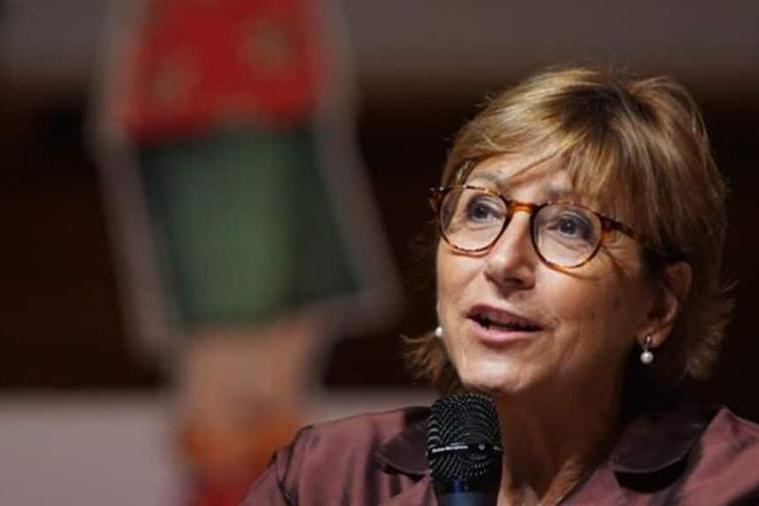






With Milena Santerini, pedagogist of the Catholic University and founder of the Center on Intercultural Relations, we think about the “cultural wars”, which are not only outside societies, but cross them within them. We talk about it starting from “Moral foreigners. War and peace three cultures” (Bollati Boringhieri, 2025), a book that arises from concern for the increase in ethical and cultural conflicts (not just ethnic), in societies that have normalized wars between nations and “clashes of civilizations”. Meanwhile, «low intensity conflicts – writes Santerini – erode community solidarity and facilitate violence, especially at a time when the return of nationalism and populism, with their criticism of representative democracy, constitutes a relatively new and potentially very dangerous element of attrition in 21st century Europe».
Let’s start from the title: “Moral foreigners”, an expression taken from bioethics, to which it attributes a much broader meaning. Who are the “moral foreigners” in our societies today?
«We are used to thinking of “foreigners” only as those who come from other countries or speak different languages. In reality, we can use this term when referring to people who, despite living in the same communities, do not share ideas, visions, mentalities in the moral field, in bioethics, on work, money, sex, education. Let’s be clear, neither one nor the other are truly “foreigners” given that we share a common humanity, but it is we who perceive them as such.”
Another important term: “nature”, should it be contrasted with culture?
«The false contrast between “nature” and “culture” has a long history. In reality, we no longer have an idea of nature as a reference grammar to which to anchor reality, because it increasingly appears to us as an immense field of uncertainties, variations, ruptures. Today, we know that no such contrast exists, but nature also depends on culture. Nature creates culture, and in turn culture shapes nature.”
“Culture wars” is perhaps the central theme of the book: how can we define them? Are they clashes of ideas, or emotional wars?
“Both. In the superdiversity of our cities, not only people from distant countries and languages collide, but close mentalities and ways of living. Ethical wars, not just ethnic ones, based on a distorted idea of culture as something static and immutable that contributes to dividing people, creating sometimes insurmountable barriers. We distance ourselves emotionally by considering the other different from us, while we share the same desire for goodness and happiness.
How did the culture wars end up engulfing the protagonists of Disney films too?
The field of education and storytelling for children represents an area of conflict. On the one hand, producers like Disney offer models that are open-minded to diversity; on the other hand, to please a heterogeneous audience, instead of characterizing the characters as if each of us could recognize ourselves in them, they feature representatives of each category (women, blacks, etc.), risking contributing to the polarization of society. Even in our schools there are culture wars regarding emotional education and the role of the family.”
He writes that “it’s not the internet’s fault”, but that the platforms amplify polarizations. How is the digital ecosystem changing our ability to recognize ourselves as similar?
«We have many good reasons to believe that digital transforms us profoundly, pushing us to side with “our” group against “theirs” (think of the speed of the click, the bubbles in which we are locked up, the anonymity of messages). It is not a question of technophobia, but of the damage of social networks, managed by large capitals that manipulate us, about which the alarm must be raised, on the basis of the objective changes affecting especially the new generations”.
Cancel culture and woke are the perfect accusations when you want to silence an opponent. What is the boundary between the legitimate request for recognition and the risk of new forms of cultural dogmatism?
«Minorities legitimately ask for more space, recognition, dignity and rights. Sometimes, however, they pursue rigid identities, replicating borders and exclusion, risking “erasing” other cultural forms. On the part of conservative circles, and unfortunately often of political power, censorship is also used for those who do not think like them. We must defend universalist thought in the face of all excesses.”
The book talks about conflicts over sex, life and death. Why do these very issues make people so easily “moral strangers” to each other?
«Bioethics is easily a field of culture wars because it touches deep chords in human beings. There are different visions of what “dignity” is. However, despite these differences, in assisted fertilization or at the end of life, for example, we find the same underlying desire to defend human life: we must dialogue starting from what unites us.”
Can particular cultures and universal principles go together? It is the challenge of interculture, to which you have dedicated many studies.
«Dialogue not between cultures but between people who have different visions of life is the only path to peaceful coexistence. The solution is neither relativism (everything is permissible if it is justified by culture), nor identity imposition (my culture is superior). Without this in-depth intercultural dialogue (I remember that differences also arm armies) there is no peace.”
The book ends with a decisive question: not whether we are moral strangers, but whether we want to remain a moral community. What is his answer?
«Our democracies are fragile, and can die due to the division between citizens, which takes away confidence in the desire to live together and in the democratic tools needed to achieve it. We are already a moral community, we need to face conflicts and contrasts without fear, convinced that that mentality, that certain position on ethical issues concerning life, death, violence, sex, education, foreigners, all elements considered as irreducible, are in reality nothing more than the traits of a common humanity. Those differences/similarities are expressions of the same fear of suffering and death and of the same desire for life.”