




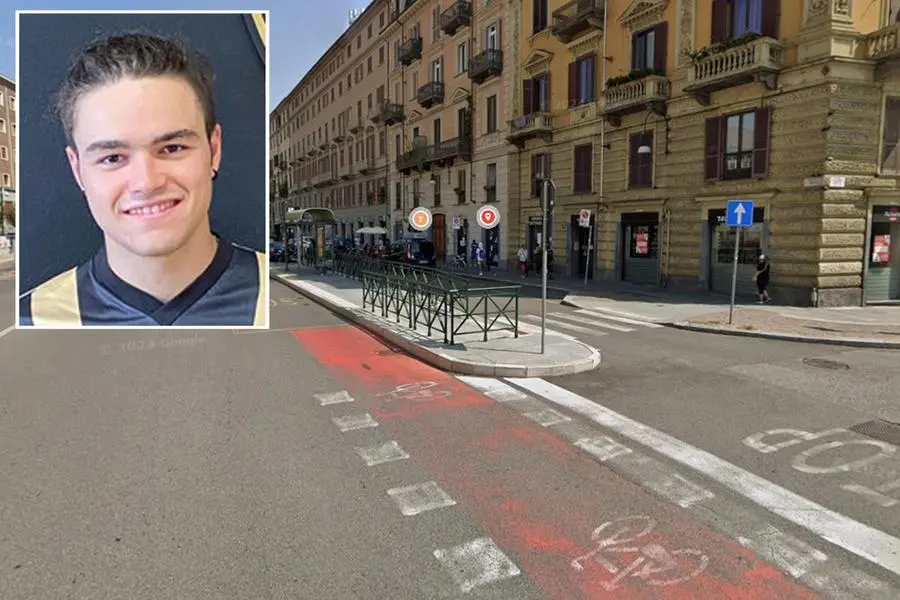
Seeing someone who is ill and deciding not to do anything is a serious act, but it can go even further. What happened to Davide in Turin, to whom our thoughts go out and our condolences to all his loved ones, tells how man can transform into a beast hungry in the face of wounded potential prey. What happened to the conscience of those young people who found themselves faced with a “wounded” peer?
The investigations will reveal the dynamics of the events but what appears clear is that those who were close to Davide not only remained indifferent to the emergency and did not provide assistance, but also decided to plunder his body. Such scenes are seen in war films or post-apocalyptic ones, where survival is threatened and social norms are canceled in order to hunt for what is necessary to stay alive. “Mors tua, vita mea”this famous Latin phrase describes how in contexts of extreme risk or limitation of resources, someone’s disadvantage can represent an advantage for those who survive them. What happened in Turin, however, is a completely different story. The young people who saw him feel bad and who stole his wallet did not act out of survival instinct and their behavior can only be judged cruel and brutal. As for the motorist who hit the body and did not stop, justice will reconstruct how the events happened and define his responsibilities.

We still have the duty to ask ourselves what contributes to extinguishing consciences and the motivation to cooperate, two fundamental acquisitions of human evolution. Dostoevsky wrote: «I feel responsible as soon as someone new lays his gaze on me», a totally different way of interpreting life, a widespread commitment to thinking about others who live next to me. Cooperation has allowed the construction of a civil society capable of living together and is an asset too precious to pass on.
Facts like this are a worrying sign that sparks a reflection on education and the culture in which the new generations build their deepest mental functioning. The first years of life are fundamental in building the foundations of our mind, but then the environment in which we live has a social role. It is there that we build the motivational system of cooperation, which, as Liotti explains well, requires positioning side by side. Doing together, looking each other in the eye, caring, sharing: the family, the school and the educational communities in general must become models of these practices. Cooperating is the most important motivational system for adaptation and peaceful coexistence and survival of the human species. This news story must ignite in everyone the desire to awaken consciences. Let’s go back to walking the streets looking at the people we meet and encourage our children to do the same. Only by feeling the value of life will we be fully men and women.