






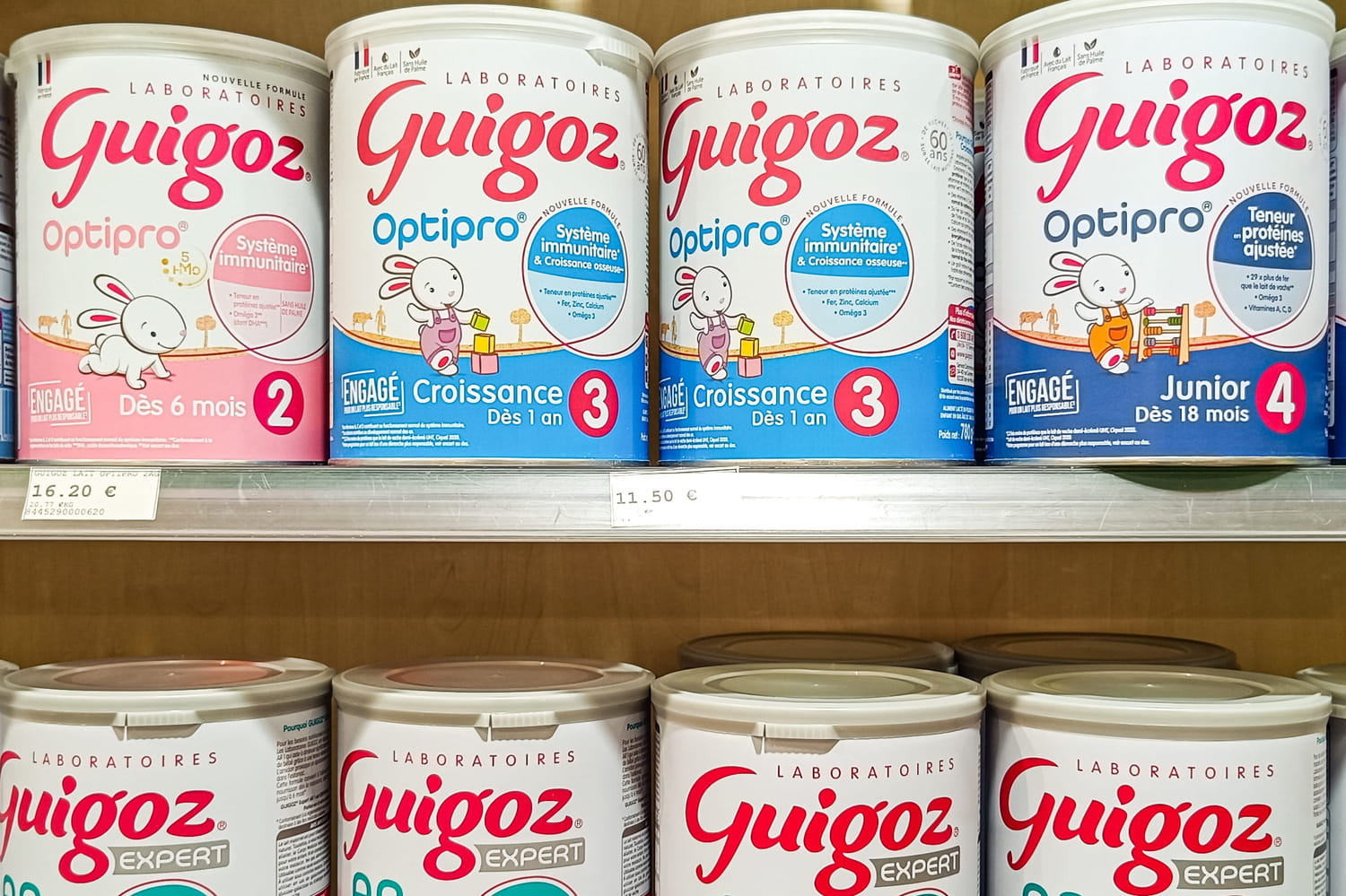
Batches of Guigoz and Nidal infant milks were withdrawn from the market as a precaution at the beginning of January. Several families alerted health authorities after the appearance of digestive disorders in their infants.
At the beginning of January 2026, the Nestlé group carried out an expanded preventive recall of infant milks marketed in France and in several European countries, notably under the Guigoz and Nidal brands. This recall came after the detection of a “quality incident” involving an ingredient that may contain cereulide, a toxin of bacterial origin.
The recall concerned specific batches, identifiable by the references indicated on the packaging, and led to the withdrawal of many products already distributed. According to a Radio France investigation, the death of an infant who consumed Guigoz milk was reported to the health authorities. The Ministry of Health confirms that investigations are underway to analyze the product concerned and assess a possible link with the toxin. At this stage, no attributability has been established between the consumption of milk and this death, and the results of the analyzes are expected in the coming days.
Several families alerted health authorities after the appearance of digestive symptoms in their infants. Radio France indicates that around sixty calls were received by poison control centers, as well as reports sent to regional health agencies. In some cases, medical attention was necessary, and some parents explain that they stopped using the milk as soon as they discovered the recall.
The suspected substance, cereulide, is a toxin produced by certain strains of the bacteria Bacillus cereus. It is known to cause digestive problems such as diarrhea and vomiting. “In most cases, these symptoms appear quickly (30 minutes to 6 hours) after exposure, with rapid recovery. Babies dehydrate quickly, any repeated vomiting after consumption of the batches concerned should lead to rapid medical evaluation, whether cereulide is involved or not. informs Nestlé.
The Ministry of Health recalls that these manifestations can also be linked to frequent infections among young children during the winter period. More rarely, the toxin can cause serious poisoning in infants: septicemia, necrotizing enterocolitis, fulminant hepatitis (liver disease), encephalopathy and cerebral abscess (affecting the brain) according to ANSES. The toxin can persist in foods despite conventional heat treatments. In a response sent to the Radio France investigation unit on January 18, 2026, Nestlé indicated that it had carried out these recalls voluntarily and as a precaution, in coordination with the health authorities, and that it had not identified any confirmed cases of illness directly linked to the products concerned. The group explains that the recall was extended once the traceability of the batches concerned had been established.
The authorities recommend that parents check the references of the infant milks in their possession and not use batches subject to a recall. In the event of symptoms in an infant, a medical consultation is recommended. “In the absence of symptoms, there is no need to worry about long-term health impacts.” informs Nestlé. New information will be communicated as the investigations progress.