



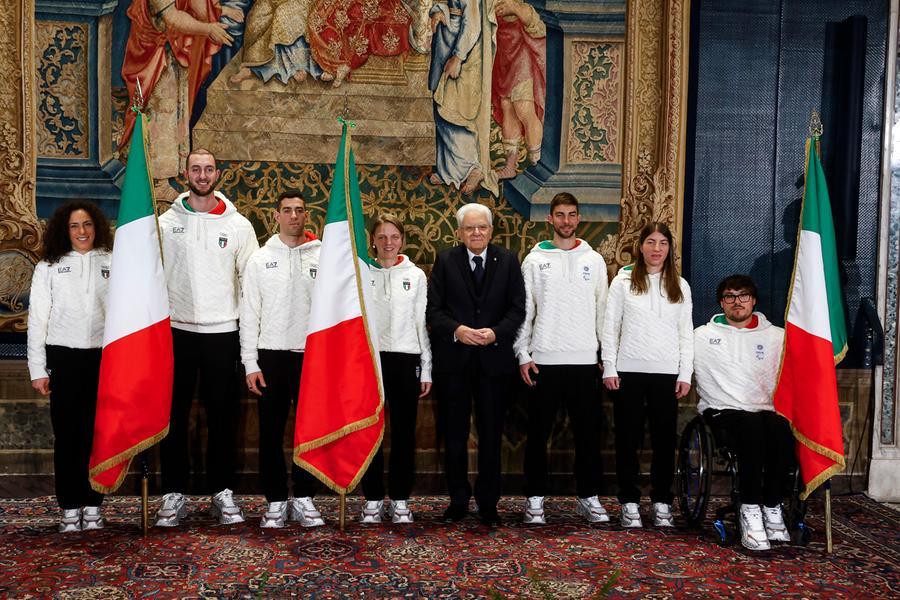
Is there or is there not in the purest version of the national anthem the final “Yes” that is so loved by the athletes who received the Tricolor for the ceremony on 21 December leaving for the Milan Cortina Olympics? And above all, will it really no longer be possible to sing it by decree?
The issue is controversial. Article 2 of the Decree of the President of the Republic which, on the proposal of the Presidency of the Council of 14 March, regulates the performance of the national anthem, we read: «The national anthem is one of the representative symbols of the Italian Republic and must be performed respecting its historical and ideal value.
WHAT THE RULES SAY ABOUT ENFORCEMENT
«During the performance those present are standing, in a composed position, in silence or participating with singing.
In ceremonies in the presence of a war or institutional flag, or of the President of the Republic, as well as on the occasion of national holidays, in Italy and abroad, the national anthem, without the initial introduction, it is performed by repeating the first two quatrains twice in a row and the refrain of the text by Goffredo Mameli twice in a row, as foreseen in the original score by Michele Novaro”.
The references (scores, autographs, official audio reference version of the joint force band) are those indicated on the State Ceremonial website.

«On the occasion of sporting events of national or international importance, in Italy or abroad, in the events or venues of public institutions, or on the occasion of public events, it is possible to perform the Anthem, in addition to the methods provided for in paragraph 2, possibly including the introduction, even in its entirety, or using variations in tones or voices, other instrumental ensembles, or recorded backing tracks. 5. The provisions concerning the forms and methods of execution within the defense, security and public rescue sector are reserved. 6. The State Protocol of the Presidency of the Council of Ministers and the Protocol of the Presidency of the Republic may identify further occasions in which it is necessary to perform the Anthem according to the methods set out in this article”.
Therefore the Decree explicitly talks about the introduction, which is removed in the more formal, serious and official contexts, but granted in the less formal contexts, such as sports podiums, where it is permitted to sing even outside of the composed poses foreseen by the decree which in those contexts, as well as in schools, grants an explicit exemption.
THE REFERENCE TEXTS OF THE STATE CEREMONIAL OFFICE

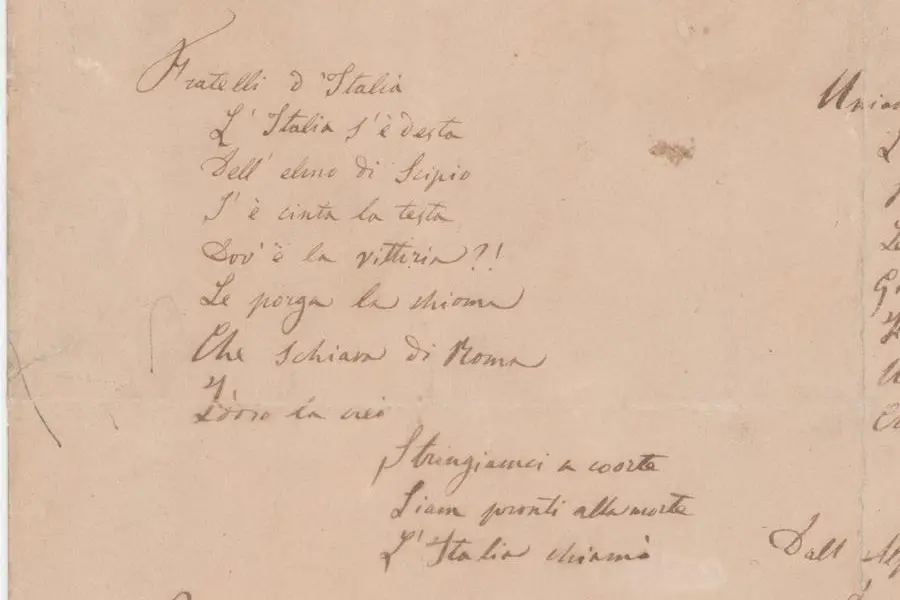
The performance references given are: Mameli’s text, Novaro’s score and the audio of the version performed by the interforce band of reference for the orchestral or band performance of the Hymn. And there the mystery begins: in Mameli’s handwritten text the final “yes” that we are used to hearing shouted with great enthusiasm by the winners of sporting competitions is unequivocally not there. The question regarding the score by Michele Novaro, author of the music, is more controversial. In the copy of the text preceding the score, signed by Novaro, the musician respects the poet and does not put the “yes”, but then adds it to the score corresponding to the last note, a B flat, following the pause after the “chiamò”.

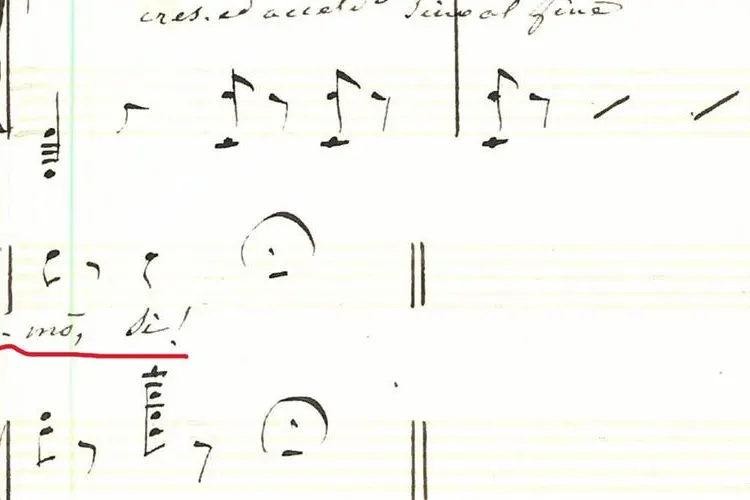
In the critical edition edited by Maurizio Benedetti, Edizioni Conservatorio, Turin, we read that: «the final Yes is an addition by Novaro to the original verse». As for the choice made on the critical text, the curators explain: «On the method of performance of this last “Sì” we once again have important information from Novaro’s daughter through Domenico Alaleona who thus describes the syllable in the score provided to him by Giuseppina Novaro: “On the final apostrophe “Sì”, marked without pitch, there is the indication: spoken, a viva voce” . Therefore the final “spoken” rather than sung Yes takes on the character of a strong rhythmic-percussive accent which concludes the final crescendo and accelerando by truncating it with maximum brevity. Compared to the described absence of the pitch, we decided to maintain it both because even “speech” still requires a reference pitch and because in the author’s autographs the E flat is always noted on the syllable Sì. The indication “spoken, aloud” must absolutely be respected for the authoritativeness of the source and like other explicit and implicit indications that we have highlighted throughout the interpretative analysis of the score, it is one of the many constitutive elements of the Novarian performance practice of which the performer must be aware and participate in his interpretation of the hymn in order to be able to return it to the public at the best of its musical and expressive potential”.

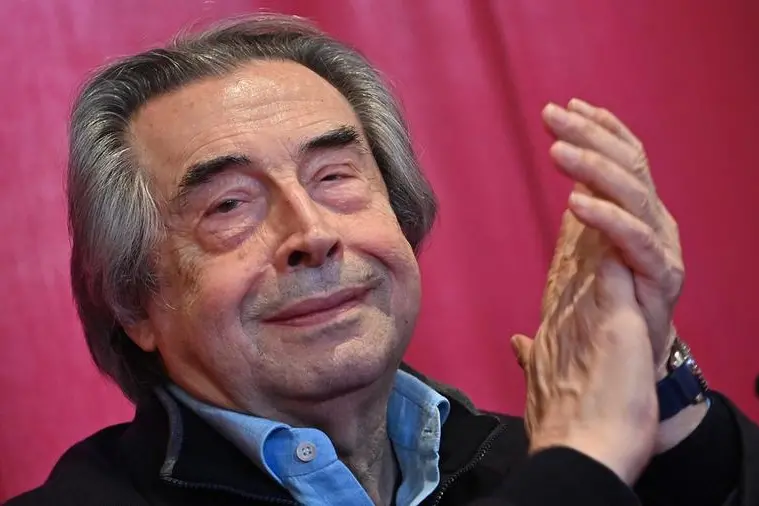
Opinions differ on the advisability of carrying it out: Riccardo Muti on the occasion of June 2nd, Republic Day, conducting the anthem sung by 3 thousand choristers at the Ravenna Festival Cantare Amantis est, at the Mauro De André palace in Ravenna, asked to remove the “final yes”: «Maestro Muti», testifies Lina Palmieri one of the participants, commenting on the Festival’s Facebook page, «made us sing, all standing, (below in the video by Roberto Zichittella, ed.) the Mameli anthem asking to cancel the final “Yes”, because the Master explained it isn’t in the original text and then isn’t it unfortunate to invoke death with a “yes”?”.
It is easy to predict that on the Olympic podiums, a very festive occasion, we will always hear that “yes”, often out of tune and out of time like the rest but very heartfelt and participatedwhich in other sand on solemn occasions we will see formal executions, but it will probably be the director of the moment who will decide whether to obey Mameli or Novaro philologicallydepending on how arbitrary the musician’s addition to the poetic text is deemed to be.
The question is not as simple as it seems, because it is a question of establishing if and when the Song of the Italians as a song it becomes definitive: if it already is when it is still only text, and then Mameli is authentic, or if it becomes fully “song” when it is composed of text and music and Novaro’s text could also be authentic at the point where the lyric line and the musical line coexist. So what? At the next executions the arduous sentence.
Also because the reference version for bands, being only instrumental, does not definitively resolve the singing dilemma, while the Quirinale on its website has chosen the version without “yes” by Mario Del Monaco, which however is not cited by the regulations among the reference texts.