






At first glance it may seem like a provocation intended to divide. On one side the children, on the other the dogs. On one side families, on the other pets. But it would be a mistake to stop at this superficial reading of the proposal put forward a few days ago by Claudio Ruggerimayor of San Giorgio su Legnanomunicipality in the Milanese hinterland with 6,800 inhabitants, 280 children and 850 dogs. The mayor asked dog owners for a voluntary contribution of 20 euros to finance services for children.
The chosen formula is certainly destined to arouse reactions. Even more so after that sentence, entrusted to the municipal bulletin, which went around the web: “Your Labrador won’t pay your pension.” Yet, beyond the media effect, the mayor had the merit of bringing an issue that concerns everyone back to the center of attention: the dramatic decline in births.
The numbers of his municipality are emblematic. Out of 6,800 inhabitants there are around 280 children and 850 dogs. It is certainly not the number of pets that is a problem. Pets, we know well, are a precious presence in the lives of millions of people and often contribute to combating loneliness, especially among the elderly. The point is another: while the number of pets increases, the number of children decreases. And this imbalance tells a lot about Italy today.

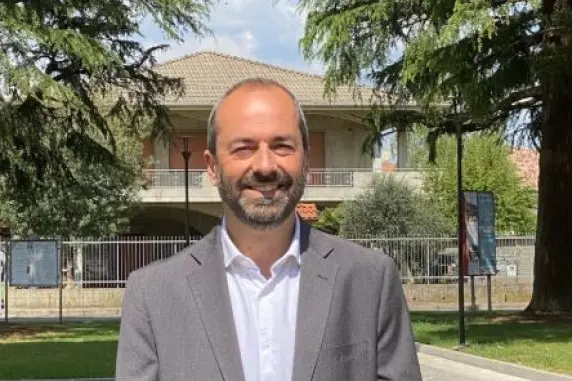
The mayor of San Giorgio su Legnano Claudio Ruggeri
Ruggeri himself explained to Corriere della Sera the meaning of his initiative: “I certainly can’t impose a tax, I appealed to the sense of community of the inhabitants of San Giorgio.” Therefore not a tax, but a call to social co-responsibility.
Behind the proposal there is the concrete experience of a local administrator who has seen the difficulties of families up close. «Last year our council had to increase the cost of the school canteen voucher, from 6 to 7 euros, to cover the costs of the service. It seemed like a small thing and instead many families expressed their discomfort to us.” And again: “We have seen first-hand the difficulties of many parents who want to raise children but often cannot find help.”
These are words that deserve attention. Because the birth rate does not arise, at least not only, from individual selfishness nor from an alleged preference for dogs and cats instead of children. It arises above all from a social and economic context that makes it increasingly difficult to plan a family. The cost of living increases, work is often precarious, a house is difficult to buy or rent, educational services are not always sufficient.
In this scenario, many young couples postpone the choice of having children or give it up altogether. And the result is there for all to see: schools that are emptying, towns that age, territories that lose vitality, especially in the South.
This is why the provocation of the mayor of San Giorgio, although questionable in tone, captures a real point. Italy is immersed in a demographic winter that can no longer be considered a problem of a few specialists or a few family associations. It is a question that concerns the future of the country, the sustainability of welfare, the stability of the pension system and, more profoundly, collective hope.
Pope Francis also remembered this in 2024 when he observed that we live in a culture in which too often it is difficult to bet on children and the future. It’s not about contrasting love for animals with love for children. It’s about understanding whether a society is still capable of generating life, investing in new generations and supporting those who choose the demanding but extraordinary path of parenthood.
In the end, the real merit of the discussion opened in San Giorgio su Legnano is precisely this: having forced everyone to talk not about the dogs but about the missing children.