



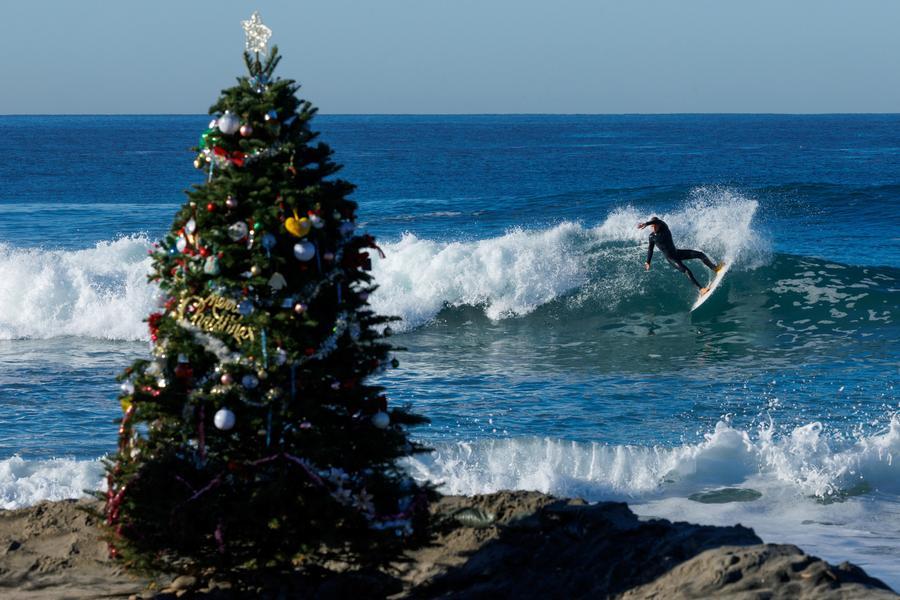
Time to set up the Pope’s Christmas tree as per tradition, including the one that will accompany the nativity scene in St. Peter’s Square: it is a 25 meter long spruce donated by Val d’Ultimo, in the province of Bolzano, cut at five o’clock and sent to Rome. Another 40 smaller decorated trees will brighten up the offices and buildings of the Holy See.
«The tree will remain on display until the end of the Christmas season. At the end, essential oils will be obtained from the green branches of the fir tree by the Austrian company Wilder Naturprodukte, while the rest of the wood “will be donated to a charity for recovery with the aim of respecting creation”.
In choosing the tree, the Governorate of the Holy See specified, “the forestry service made a selection inspired by respect for sustainability, identifying more mature trees, the removal of which represents a natural replacement”.
On the topic of the ecology of the Christmas tree at the time of the arrival of the fir tree, the Bishop of Bolzano Bressanone, Monsignor Ivo Muser, spoke in response to an interview with the Vatican media, explaining that: The cutting of the tree in itself is not an act disrespectful of the environment «but the fruit of careful forest management, where the harvesting is part of an active care that guarantees the health of the forest and keeps its growth under control. On the other hand in Alto Adige, reforestation is not a simple project, but a consolidated practice and a pillar of sustainable forest management, where for every tree cut new ones are planted, guaranteeing healthy and resilient forests for future generations.”

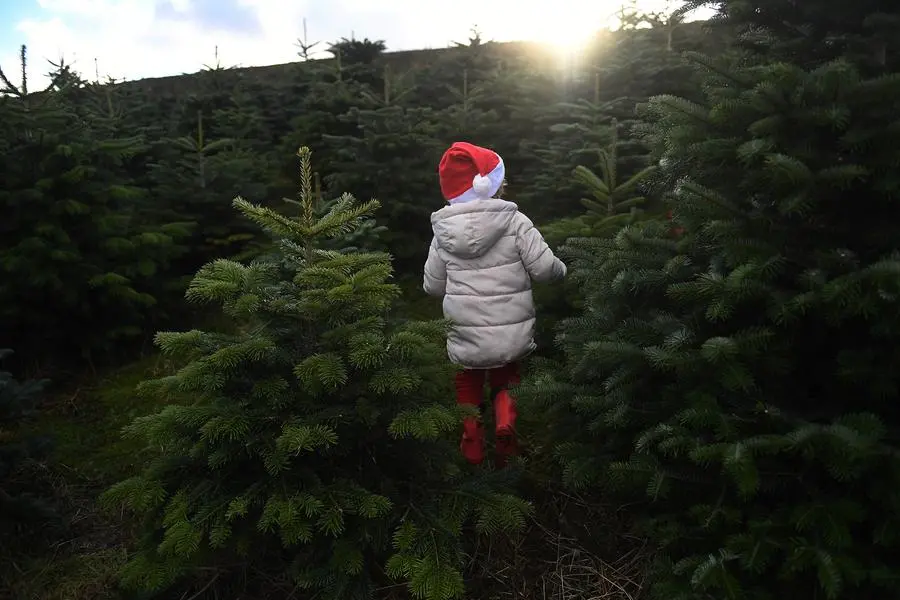
The clarification lends itself to introducing the theme of the sustainability of the Christmas tree. If it’s true as you point out dolomiti.it that «normally the Christmas fir trees do not come directly from the forest, but from open areas, where the trees can best develop their foliage by growing in areas with uniform light and little or no competition with other plants», it is true that «the removal of a single fir tree so often painted as a negative symbol must be contextualized within a territorial area where tens of thousands of trees are removed every year to actively manage the forest in order to produce wood and other ecosystem services. Sustainable management where the harvest, as a whole, is always lower than how much the forest grows. Management implemented through regulations, plans and choices of experts. A positive activity overall, which balances human needs and environmental conservation.”
Real or artificial? The topic has been addressed by several studies and the answer is not as immediate as it might seem, because it requires taking into account various factors on the scales.
According to PEFC Italia, a non-profit association which constitutes the national governing body of the PEFC certification system (Programme for Endorsement of Forest Certification schemes), i.e. the Evaluation Program of forest certification schemes, the natural tree is confirmed as the best choice as long as trees are chosen conscientiously, taking into account five criteria.
ORIGIN – The closer it is to the place of cultivation or to the forest from which it was taken, the lower the impact on the environment due to transport. The label, present on the tree or on the top, which reports the origin, nationality, age of the tree and the non-destination for reforestation (to avoid genetic mixing and therefore damage to native fir trees). According to Coldiretti, 90% of the Italian fir trees available on the market at Christmas come from specialized nursery crops managed by small Italian farms in rural areas. The remaining 10% (the so-called fir tops or tips or young plants intended for cutting), derives, for example, from normal forest management practices of thinning, essential for the development of forests.
CERTIFICATION – The PEFC certification logo on the label is a guarantee of transparency, traceability, legality and respect for the environment. Furthermore, choosing products from certified companies means strengthening a virtuous circle, helping to change the entrepreneurial choices of companies in the forest-wood supply chain.
BEFORE BUYING THE TREE – Check that it is suitable for the spaces, because outside the home it always seems smaller and you might have to wait a few days before decorating it for it to adapt.
HOW TO CARE FOR THE REAL TREE AT HOME – Place it in a bright place, away from heat sources, but also from air currents. If it is in a pot and has roots it should be watered, it should not be covered with colored sprays and fake snow and for better ecology it can be decorated with DIY decorations made from recycled materials.
WHAT TO DO WHEN THE HOLIDAYS END – Cut or potted trees that do not want to be kept for subsequent years must be disposed of correctly: by taking them to ecological islands, they will be transformed into compost, useful for the growth of new plants. Planting the potted trees in the woods again is, however, a wrong choice: if the fir is not part of the natural forests of the plains/hills, it is ecologically an “allochthonous” plant, that is, foreign to the environmental context. Where possible, it is better to choose the home garden, with the recommendation not to place trees too close to buildings, as they tend to grow quickly.
PROVIDED THAT…
According to Geopop, which took the WAP Sustainability Consulting study published in 2018 as a reference, however, three aspects weigh on the natural/artificial choice: the duration of use of the tree, the synthetic one lasts longer, the natural one is replaced every year; greenhouse gas emissions, water use, the polluting impact of disposal.
In the end, the conclusions may also be counterintuitive: sustainability can also go in favor of the artificial tree, but only as long as it is used for a period ranging from 9 to 20 years, because otherwise it is better to rely on natural trees.