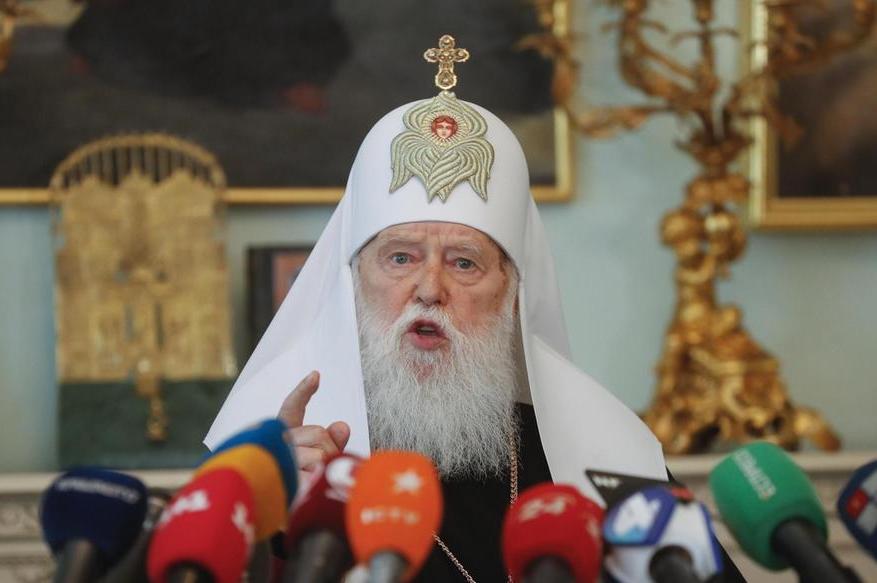
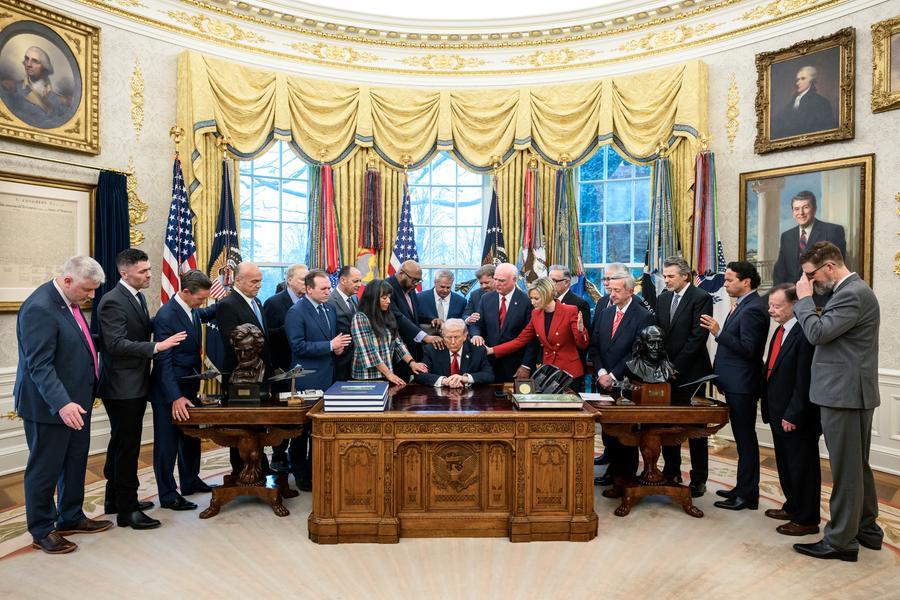




The blessing to Trump, commander in chief, by some evangelical pastors of the Office for Faith in the Oval Room. Netanyahu quoting Genghis Khan and Jesus Christ together. The justifications and religious references increasingly enlisted in the war in the Middle East. Kirill’s role in the Russian-Ukrainian conflict. Macron, who in very secular France, calls for a truce out of respect for sacred holidays. Religions are increasingly called into question in the public space, even secular, even Western. In one way nothing new, even without going to the extreme of “Gott mit uns”, the Teutonic God with us used by Nazism, when Bob Dylan wrote the pacifist song With God on our side it targeted the way God was enlisted in 1960s American culture. But it has been a long time since we have heard supernatural entities mentioned so frequently by secular institutions.

We asked Franco Garelli, sociologist at the University of Turinauthor with Stefania Palmisano of the recent essay Religions in the global world for Il Mulino to help us interpret this phenomenon and its changes.
It has been a long time since religions have been called into question in a political or even military context, even in contexts where this is not at all a given. Professor Garelli, what is happening?
«Religions are, from every part of the world, strongly intertwined with the life of peoples. And they are also so in very secular contexts, I am thinking of France or the Soviet Union, where due to circumstances they have remained “brooding” so to speak “under the ashes”. The same interpretation by which, at least at a Western level, it was believed that we were moving towards a progressive secularization, is in crisis in this historical moment, because those who govern are realizing that secular institutions alone have what I would call a “narrative defect”: they appear weak in terms of capacity for involvement, with respect to people’s lives. This explains the fact that Macron invokes the truce as a form of respect for religious holidays: it is a way of admitting that even the country that has made the radical secular choice to abolish religious symbols in public space must somehow take into account the existing religious component and that it was not enough to remove the signs to be able to ignore it. The Chinese communist government itself, with its references to Confucius and the search for a “friendly” and “tamed” Buddhism, ends up admitting it, after decades of state atheism policies.”
Even more often we see – think of Trump, Russia, the Middle East conflict – religions enlisted. Are we witnessing a return of religious wars or wars cloaked in religion?
«I would say the second: religions are used as a cover, to justify other purposes for which it would be much more difficult to involve public opinion. It must be said that in many contexts, and this is not a positive thing, religions lend themselves to being exploited and used every time political powers and leading figures of religions unite in an identity key: think of the role of the Orthodox Church of Moscow and Patriarch Kirill in consenting to the war in Ukraine and in conveying the myth of Great Russia. But it also applies to the Maga world, for prayer with a group of evangelical pastors in Trump’s Oval Room, which however, in this case, are much less attributable to traditional religions and much more to contemporary sectarianism: but it is still a question of cloaking in value choices that have other, not always noble, objectives.”
But isn’t it a regression compared to the effort to find in the secular nature of institutions a common space in which to try to coexist with respect among different people?
«Where it has been applied very rigidly, as in France, pluralism has ended up fueling identity conflicts, under the radar, while it has worked better in contexts in which there has been more flexibility. Already great thinkers, such as Marx and Weber, had noted that Europe in its time modernized to the detriment of religion, but both of them and not only they recognized how religions were implicated in the life of peoples, and underlined the need for new societies to find ‘secular beliefs’ capable of replacing the religious factor. On the other hand, it is true that today all religions experience a dichotomy within themselves: alongside the components that allow themselves, as we were saying, to be enlisted and recruited, there are transversal instances in religions that are united around common values of dialogue and peace: think of all the work of Pope Francis on ecumenism, on the desire to create a sort of United Nations of religions around the values of peace, coexistence, mutual respect. We find these instances, every time that even in these days we hear someone, as Cardinal Pizzaballa, Latin Patriarch of Jerusalem, did, raising his voice against God’s enlistment in wars”.
Among the words in freedom were those of Nethanyahu who associated Jesus Christ and Genghis Khan in a bold comparison. How should we read them?
«Maybe he said them to justify his political and military choices: to say that morality alone is not enough to guarantee survival and that only by acting with ruthlessness and power can one oppose enemies. But, in fact, these are words in total freedom, spoken in a dramatic context.”