



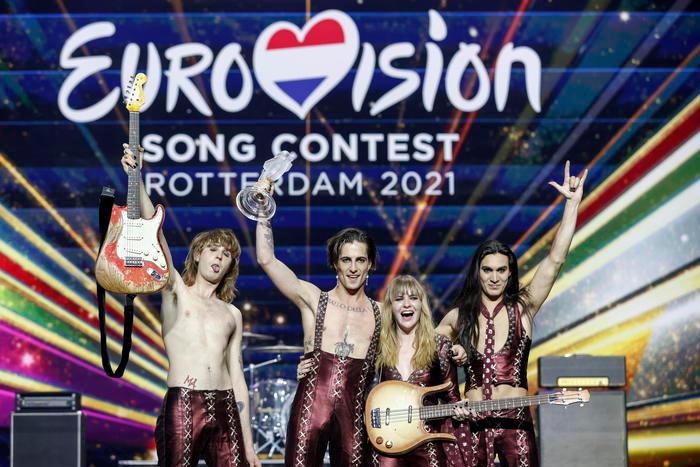
There is something profoundly out of tune in the great media and singing circus of Eurovision 2026 which will be staged in Vienna in May. Not a wrong note, not an out-of-time refrain, but a silence: the one that hovers around the European Broadcasting Union’s decision to keep Israel in the race despite the conflict that continues to bloodied Gaza, while the occupation of the West Bank expands and the number of civilians killed grows even after the truce proclaimed in fits and starts. A silence that weighs more than an official declaration, because it pretends to be called neutrality and instead sounds like removal.
The decision arrived on Thursday, at the end of the meeting of the EBU, the body that brings together European public broadcasters and which since 1956 has organized the most popular music competition in the world. Israel remains in the race. Point. No suspension, no “pausing”, no formal request for reflection. Everything continues as if music could put a white tablecloth over the rubble.
But immediately after the announcement something broke. Not the music: the facade. The Spanish RTVE, the Dutch Avrotros, the Irish RTÉ and the Slovenian RTVSLO have chosen to withdraw, giving up not only to send an artist, but also to broadcast the show. Four countries that have said publicly what many only muttered: that continuing to pretend nothing has happened has become unsustainable. That it is no longer a question of protecting a show from politics, but of asking the show not to look the other way in the face of a war that monopolizes the world’s attention and divides European consciences.
The most emblematic case is that of Spain, because RTVE is part of the “Big Five”, the group of broadcasters which – together with Italy, France, Germany and the United Kingdom – guarantees the greatest funding for the competition and has direct access to the final. A blow that is not only symbolic but structural: the first great founding country to march in protest. Even Slovenia, which had already threatened withdrawal in recent months, reiterated that its position will not change. Other broadcasters have said they will decide within the next few days, a sign that the rift is far from healed.

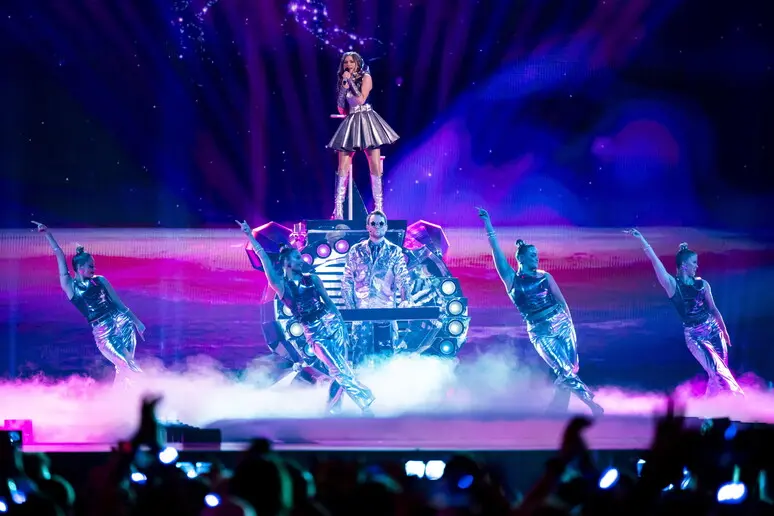
Yet the EBU carries on. Indeed, to defend himself he raises, appealing to the rules. Eurovision, it is repeated, is a competition between broadcasters, not between governments. No ideological flag should fly on stage. The same logic that was invoked to exclude Russia in 2022, after the invasion of Ukrainewhen, however, the argument was diametrically opposed: Moscow was deemed incompatible with the “values of Eurovision” because military aggression made a “non-political” competition impossible. This time those values seem to have suddenly become flexible. Rubber bands as an emergency justification.
The contradiction is evident: either the music is truly neutral, and then no one is expelled for political reasons; or the values matter, and then they should be applied to everyone. The widespread impression, however, is that we navigate by sight, between diplomatic pressure, media fears and the fear of compromising the economic balance of the greatest musical show in Europe.
Meanwhile, Israel continues to be represented as a simple “artistic participation”, stripped of any context. We don’t sing for Gaza, we don’t sing for Israeli civilians, we don’t sing for the children buried under the rubble. We sing as if music were a diving suit capable of isolating us from the unbreathable air of reality. And this is where the real crux arises: it’s not about greenwashingan overused word that has nothing to do with this case.

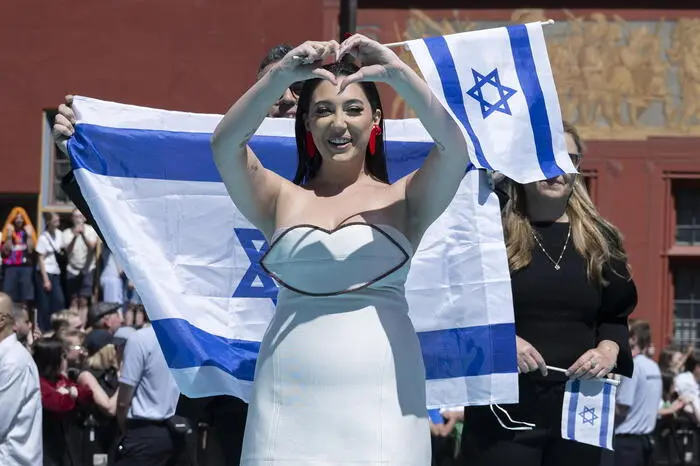
If anything, it’s about warwashing: the use of the show as a symbolic washing cycle to keep blood, pain, injustice away from the public, making everything presentable again under the spotlight.
It is not the first time that Eurovision has found itself dancing on the edge of politics. It has always been a faithful reflection of the continent’s tensions: cold and hot wars, collapses of walls, enlargements of the Union, identity crises. But rarely has the fracture been so clear, with entire nations choosing to withdraw rather than endorse a choice deemed ethically unacceptable.
The paradox is poignant: an event born after the war with the declared aim of uniting European peoples through music today risks becoming the stage of their new moral division. There are those who call for neutrality to all stay together on stage. And there are those who, on the contrary, believe that the only true neutrality possible is that which does not bow to injustice.
Boycotts don’t stop wars, it will be said. It is true. But not even indifference stops them. And if it is true that a singer is not responsible for his own government’s bombs, it is also true that every major international showcase becomes, like it or not, an instrument of symbolic legitimation. Appearing as if nothing is happening is equivalent to normalizing an open tragedy.
Thus Eurovision 2026 already presents itself as the most fragile edition of recent years, marked by the fracture between those who choose to sing and those who choose to remain silent. An event that, even before it begins, forces the European public to ask themselves what “spectacle without politics” really means. Because politics doesn’t always enter through the front door: it often filters from the wings, from those who are absent, from empty chairs and from televisions that decide to turn off.
In the end, a question remains that has no easy answers but demands to be said: is it really possible to celebrate a competition that claims to unite people while a part of the world burns before everyone’s eyes? Is it right to sing as if suffering could be silenced by a refrain, as if neutrality were a virtue even when it turns into indifference?
Maybe music can unite. But only if he has the courage to face reality. Otherwise it doesn’t unite: it distracts. And what is needed today is not a well-tuned distraction, but a clear gaze that restores dignity to the pain that no song should cover.