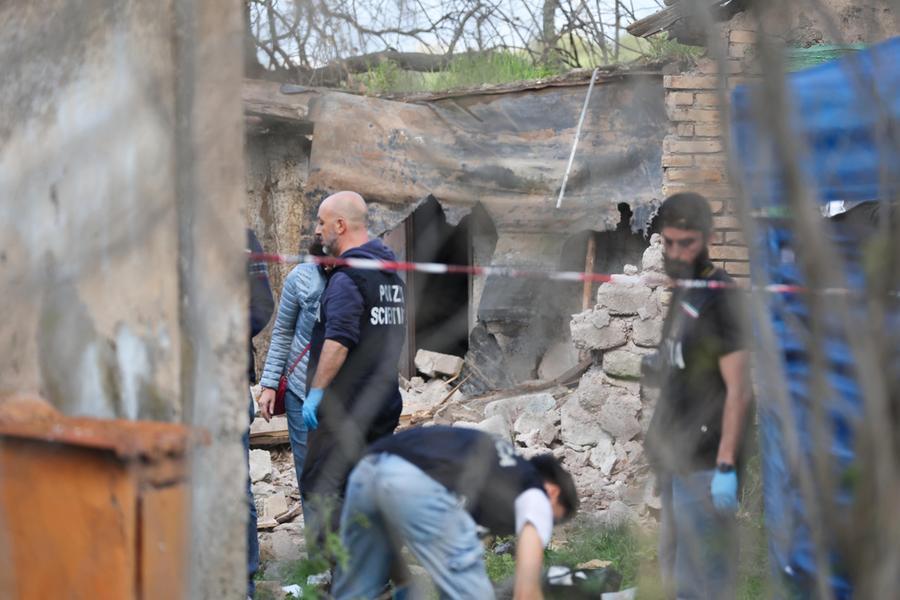

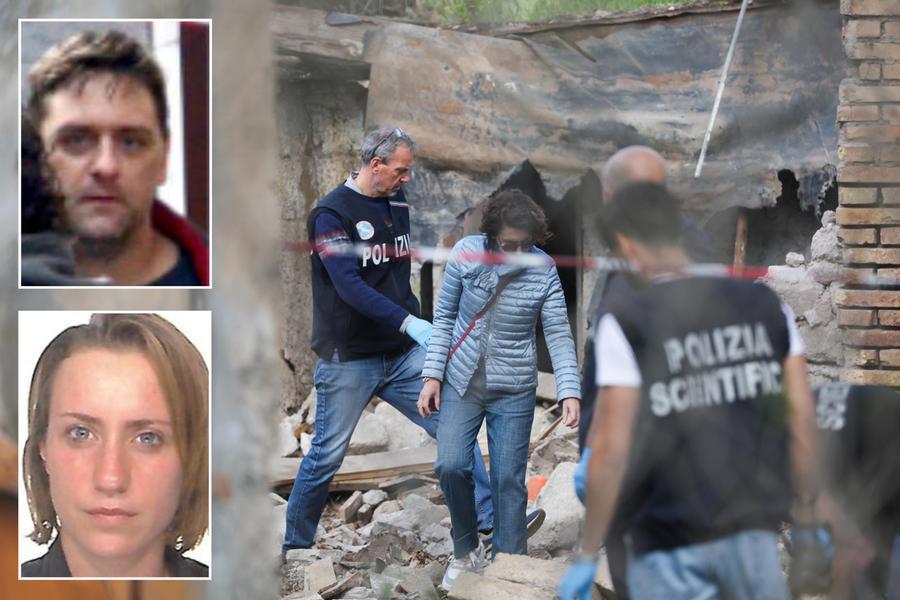




We are talking about the issue again due to the explosion of the abandoned farmhouse in Via dell’Acquedotto in Rome, in which Sara Ardizzone and Alessandro Mercogliano died, a couple in life, well-known names in the area of anarcho-insurrectionism, attributable to the Cospito group.
But who are the anarcho-insurrectionists? How are they distinguished from anarchists? In what context did the explosion probably occur during the manufacturing of a bomb?
WHY DO WE TALK ABOUT “GALAXY”
Literally “without government”, they have a common inspiration that harks back to the historical anarchism of the nineteenth and twentieth centuries: references to Proudhon, Bakunin, Malatesta are found both in the documents of those who express refusal for weapons and in the claims of attacks by those who resort to violence. Contemporary anarchists, refractory to any form of hierarchy, escape classification by definition. It is no coincidence that it is spoken of as a galaxy, alluding to something that aggregates around common instances, only to then disintegrate again into many distinctions of which traces can be found in the very writings of those who define themselves as anarchists.
ANARCHISM AND ANARCHO-INSURRECTIONALISM
The most macroscopic distinction concerns, in pursuing the ideal of a stateless society capable of self-determination in harmony, the theoretical and practical availability to violent actions.
It is on this fault line that those who work to prevent and combat crimes draw the distinction between anarchism and anarcho-insurrectionism: for example, the Fai, an Italian anarchist federation, founded in 1945 and with an official website, rejects them. They are practiced and claimed by those who in Italy and around the world use the acronym Fai (Informal Anarchist Federation)/Fri (International Revolutionary Front). For this reason too, we must be careful not to confuse the two different Fai acronyms, depending on whether the final “i” stands for “Italian” or “informal”. Although this is not a trivial distinction, on a practical level, it does not prevent these souls from finding themselves sharing the square, for example to show solidarity with Alfredo Cospito, even when they clearly write that they do not share his theory and actions.
It is that of the solidarity with the prisoners, also according to the annual reports of the Aise to the Chambers, one of the recurring arguments over time capable of uniting not only the different souls of anarchists in the broadest sense, but also other “dissenters”: from the Marxist-Leninists who demonstrate support for members of the Red Brigades in prison, to various groups, student collectives, committees that deal with various social issues “in which”, as Marco Rosi as commander of the Anti-Terrorism Division of the ROS explained at a refresher course for magistrates some time ago, “the more social current of anarchists – not in favor of the use of explosive packages – fits in, often bringing radical ideas”.
Scrolling chronologically through the Annual Reports, we see how the aggregation reflects from time to time the issues that arouse dissent in current affairs: from No-Tav, to No-Tap, in 2021 also anti-vax, just to give a few examples. In the latest, released on March 4, the references are to opposition to the Olympics and sabotage of high-speed trains during the Games, to opposition to military spending, to the internal repercussions of wars, to technology, including AI considered an instrument of control and repression, to security decrees. If dissent is lawful, the actions with which it is practiced are not always lawful.
DISCRIMINATION IS VIOLENCE
Maurizio Romanelli, now the public prosecutor in Bergamo, who was the coordinator of the District Anti-Terrorism Directorate of Milan when the Adinolfi attack was claimed, some time ago explained to us the idea he had of this reality as follows: «Given that I am referring to a past experience because now I deal with corruption, I can say that the galaxy is very vast and there has always been support for the anarchists detained, even transnationally. The idea I had of this world is that, for the prevention and contrast activity to be balanced, studied, adequate, it is necessary to always maintain the ability to distinguish, partly to effectively prove individual actions in court, more generally because in social anarchism there can also be projects of value that remain within the permitted limits: it is not a crime to debate nuclear power, everything changes when someone, as happened with Adinolfi, moves from the debate to identifying a person as a target, to taking a gun and hitting him. When it comes to passages of more or less high intensity violence, think of explosives with timing techniques, even if not shared by the entire galaxy, there is a danger profile. I am not able to say whether that violent wing within the minority at the time could broaden its consensus in the current situation.”
TRANSNATIONALITY AND FLUIDITY
Transnationality, combined with the speed of contacts via the web, can represent a complication, but not an insurmountable limit to the fight against violent actions. In this regard, Armando Spataro, a former magistrate with extensive experience in anti-terrorism and former professor of Security and Intelligence Policies at the University of Milan, explained to us some time ago that «contacts with modern technologies can be found, but we need to take a different perspective than the one we had with the BR or front line: compact groups with a leader and well-defined roles. In the anarcho-insurrectionist world everything is more fluid: but if it turns out that the motivations are the same, we can hypothesize a connection between an attack in Greece and one in Spain.”