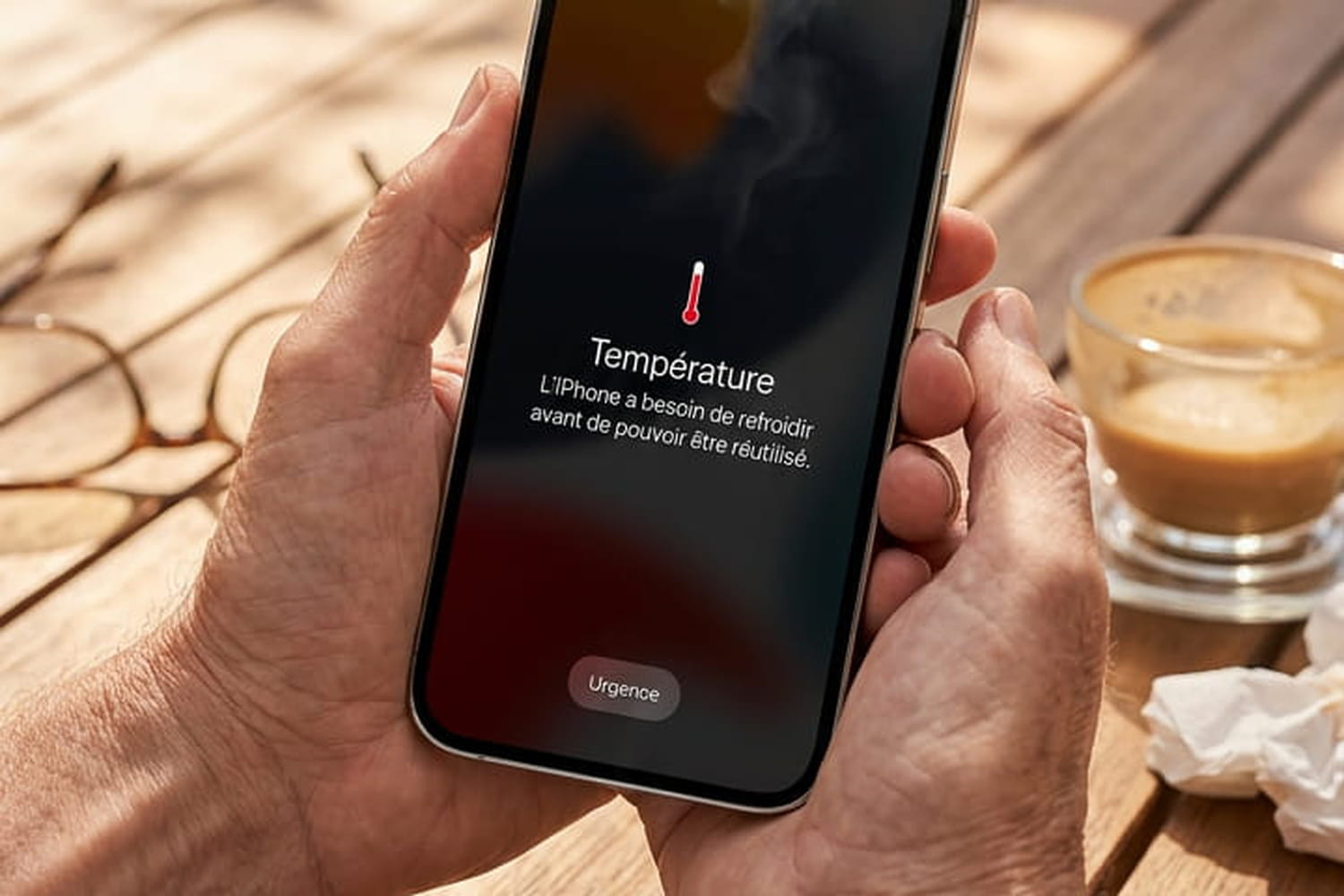
When the thermometer rises, our smartphones come close to overheating and risk damaging their batteries. However, there is a childishly simple gesture to refresh them in the blink of an eye, but almost no one thinks about it.
It’s a phenomenon that everyone has already experienced: when you pick up your smartphone, you suddenly realize that it has become hot. During heatwaves or on beautiful summer days, direct exposure to the sun is the most obvious cause of heatstroke. But the weather isn’t the only culprit. Prolonged use of power-hungry applications (such as 3D video games, high-quality video streaming, GPS navigation) or large system updates place intensive demands on the processor. When the device works too much, it releases energy. The risk? Beyond the discomfort for your hands, repeated exposure to extreme temperatures can cause a permanent decrease in the autonomy and lifespan of your battery.
Fortunately, our technological companions are responding. If you have an iPhone, the device is designed to self-regulate and displays a very clear official alert message when limits are crossed: “Temperature: iPhone needs to cool down”. In this case, Apple’s recommendations are simple: stop using it immediately and place it in a cool place, away from the sun, until the temperature drops. If you were charging your phone, unplug it immediately. But even before looking for an air-conditioned room, there is a reflex that we don’t necessarily think about, a gesture so simple and everyday that it becomes invisible, and which nevertheless changes everything for the survival of your device.
In fact, it is preferable to remove the protective shell. We buy superb cases to protect our smartphones from falls, but in case of high heat or when plugging in the device, these protections transform into real thermal down jackets. Cell phones radiate heat through their back surface. By leaving the device enclosed in a thick shell, sometimes made of silicone or leather, the heat remains trapped inside, creating a miniature greenhouse effect. To allow him to “breathe” and properly evacuate excess calories, get into the habit of undressing him, especially when you put him to work in summer.
To avoid reaching the red alert, some good daily habits are essential during periods of high heat. The key is to keep it cool: avoid direct sunlight and never leave your phone in a parked car where the thermometer can skyrocket in a few minutes. If you are at the beach or on a terrace, the trick is to store your phone in the shade, ideally at the bottom of your handbag, wrapped in a cloth to insulate it from the ambient heat. Also remember to close background applications and deactivate functions that you don’t need immediately (like Bluetooth or location), which make the processor work in the background for nothing.
Finally, did you know that the way you charge your smartphone plays a crucial role in its temperature? To pamper your battery, always choose original chargers or chargers certified by the brand; “Unbranded” low-cost chargers do not always meet safety standards and tend to overheat dangerously. Experts also advise using software options like “optimized charging” (available in your settings), which limits charging to 80% or 85% during heat peaks to relieve the system. Finally, absolutely avoid placing your phone on a bed, sofa or cushion while it is charging: these soft surfaces absorb and retain heat. Prefer a table or a flat, hard surface which will promote a natural drop in temperature. Your smartphone will thank you!