





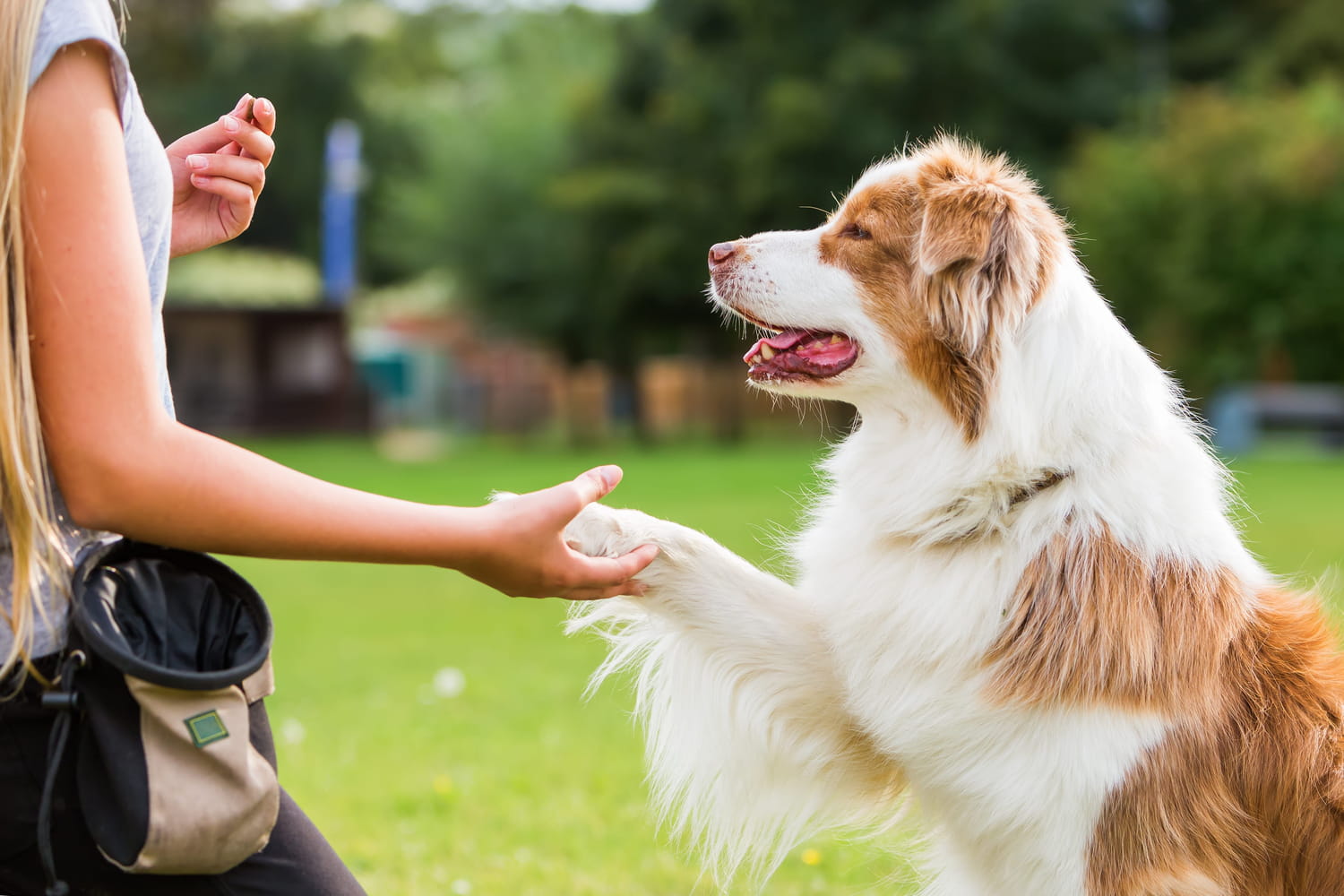
As with a child, you can’t do anything when it comes to naming your dog. An often overlooked detail makes all the difference in his education: the sound of his first name.
Choosing a name is never easy, but the advantage of an animal over a baby is that you can be more creative… without fear of social judgment. It’s a real playground for masters: film references, names of sweets or sporting homages, anything goes. The perfect opportunity to let your imagination run wild, because your dog is less likely to suffer the consequences of an eccentric surname throughout his life. Yes, we wouldn’t imagine calling our children Nala, Zizou, Chocapic or even Tupac, whereas with dogs, it’s adorable!
However, this freedom has its limits. Even when it comes to naming your dog, there are rules to follow, like the letter of the year for example. Choosing the first name of your four-legged companion should not be done at random: although originality is essential, dog trainers recommend a few basic principles. To educate him as best as possible and teach him obedience as early as possible, certain details can make all the difference upon adoption. Because we must not lose sight of the essential: the name is above all a communication tool.
Dog behavior experts are unanimous: for your dog to really listen to you, you need to give him a short first name, preferably one or two syllables. It will in fact be easier to remember and assimilate than a long first name, which is also more difficult for the teacher to pronounce on a daily basis. Because in an emergency situation, shouting “Archibald, come back!” is much less effective than “Max, here!”. Of course, nothing prevents you from giving a long first name for the official register, but it will be better to favor a shorter nickname in everyday life.
The other precaution to take is not to choose a first name that resembles an order or that of someone else. Phonetically, dogs do not distinguish vowels and consonants in the same way as us: a first name that rhymes with a common command, like “Sissi” which rhymes with “sit” for example, or “Léon” which rhymes with “no”, can be more difficult to understand. The same goes for a first name that is too similar to that of a family member: a dog called “Alan” could confuse his first name with that of an “Alain” who lives in his home. Dog trainers also agree that certain sounds are more effective in attracting the animal’s attention. This is the case for strong consonants like “K”, “B”, “T” or even “D”, which are very distinctive to the ear.
These rules are explained by the fact that dogs are especially sensitive to intonation: the shorter a first name is, with very marked sounds, on which we involuntarily emphasize the pronunciation, the more easily it will be identifiable by the dog. A name like Kit-Kat, short and punchy, should be easy to digest. Or, for those who plan to adopt a doggie in 2026, B names like Biscotte, Balto, Betty, Buzz, Bambi, Bart or even Bisou will be just as effective!