




One year after Bergoglio’s death we publish the reflection of the Jesuit Father Antonio Spadaro, former director of La Civiltà Cattolica, today Undersecretary of the Vatican Dicastery for Culture and Education, collected in the special Pope Francis. The revolution of love
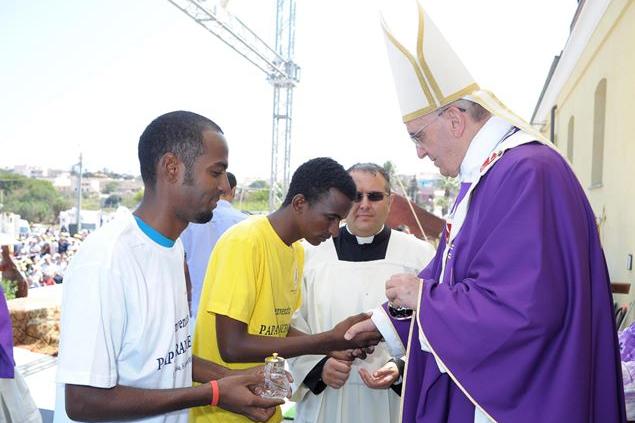
Words. Silence. And gestures. Once Jorge Mario Bergoglio became Pope Francis, it didn’t take him long to show the world what he meant by diplomacy. Not even four months after the white smoke, on 8 July 2013, in Lampedusa he celebrated Mass on an altar made with the wood of the boats used by migrants to cross the Mediterranean. A very clear message. Neither right nor left. Simply human. Biblical, if anything. “We have fallen into the globalization of indifference,” he denounced loudly. «We have become accustomed to the suffering of others, it doesn’t concern us, we don’t care, it’s none of our business! “Adam, where are you?”, “Where is your brother?”, are the two questions that God asks at the beginning of the history of humanity and that he also addresses to all the men of our time, including us.”
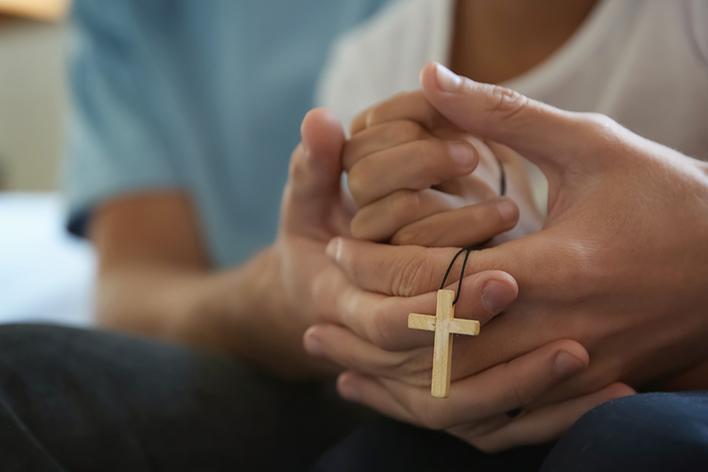
In the following weeks, in the interview I did with him Catholic Civilizationof which I was director at the time, he spoke of the Church as a “field hospital after a battle”. He didn’t mean to use a nice, rhetorically effective image. What he had before his eyes was already a “piecemeal world war” scenario, which starting from February 24, 2022, with the Russian invasion of Ukraine, took on the features of a challenge to the international world order up to the distressing threat of the atomic bomb. A situation of widespread conflict, reaffirmed, if necessary, by the bloody exacerbation of the Middle Eastern crisis, from 7 October 2023 onwards. But there is a third moment that is worth recalling, the seal of diplomacy according to Bergoglio. It was September 7, 2013. The Holy Father summoned women and men to St. Peter’s Square: a vigil for peace in Syria and throughout the world, from 7pm to 11pm, four hours spent partly silent in front of the Blessed Sacrament. Or by reciting the Rosary.
In short, the geopolitics of Pope Francis – which, let’s not forget, wanted to create a new section of the Secretariat of State from scratchthe third, dedicated to the apostolic nuncios, that is, to the representatives of the Holy See in the countries with which it maintains regular relations – was a patient canvas made up of relationships between often conflicting powers, negotiations and agreements, but also of faith, prayer, mercy, humility, popular networks to listen to and encourage, messages entrusted to images more powerful than many speeches. The most eloquent symbolic photo is perhaps the one of him on his knees, on 11 April 2019, at Casa Santa Marta, kissing the feet of Salva Kiir Mayarditpresident of the Republic of South Sudan, a bloody corner of Africa, and to the designated vice presidents present, including Riek Machar and Rebecca Nyandeng De Mabio.
There are some fundamental traits that are worth keeping in mind when drawing Bergoglio’s atlas. First: he has always openly presented himself as a person at the school of Jesus. When Francis intervened personally in the international political debate, he did so with strength and in innovative ways that generated amazement. For some, real dismay. I had the opportunity to ask him a question about his projects in the ecclesial sphere: «Do you want to reform the Church?», I asked. His answer was candid and direct: “No.” And he continued: «I just want to put Christ more and more at the center of the Church. Then He will be the one to make the necessary reforms.”
Even in the international political context, Francis attempted to do the same: to put Christ at the center of the world. An art
diplomatic, his, refined on his knees in front of the tabernacle. Second: Jorge Mario Bergoglio was certainly a world leader, but I would add the only moral leader of global value. For him, the Church’s task was not to adapt to the dynamics of the world in order to shore them up and make them survive as best as possible. Nor, on the other hand, has he ever taken sides against the world in the name of a longed-for apocalypse. Evil, knowing that it cannot be eradicated here, now, has tried to neutralize it in every way.
Without ever coming to terms with it, of course, but by dialogue with everyone, especially with the “bad guys”: Putin (4 July 2019), Erdogan
(5 February 2018), Burmese general Min Aung Hlaing (27 November 2017). All this explains the many positions taken, often against the grain, on burning current issues (migration, wars, arms race, predatory economy). Consider, furthermore, how he was essentially the only voice to interpret the anguish of billions of people during the scourge of Covid. His slow walk on 27 March 2020 in a deserted St. Peter’s Square, beaten by the rain, became history: «From this colonnade that embraces Rome and the world, may the blessing of God descend upon you, like a consoling embrace. Lord, give health to the bodies and comfort to the hearts. You ask us not to be afraid. But our faith is weak and we are fearful. But You, Lord, do not leave us at the mercy of the storm. Repeat again: “Do not be afraid”.
And so we arrive at the third characteristic: crises. Sinking of the Arab Spring, Isis, Syria, Sudan, Myanmar, pandemic,
Russia-Ukraine, the Middle East, just to limit ourselves to a few examples: dealing with crises was daily bread for him.
Francis cultivated an evangelically dialectical vision of history. For him the term “crisis” had no connotation
necessarily and exclusively negative. «The crisis affects everyone and everything», he said on 21 December 2020, «it is present everywhere and
in every period of history, it involves ideologies, politics, economics, technology, ecology, religion». Therefore, it is a fundamental human experience and is “an obligatory stage in personal history and social history”. It cannot be avoided, and its effects are always “a sense of trepidation, anguish, imbalance and uncertainty in the choices to be made”. But the crisis does not erase hope, on the contrary it contains it and can unleash it, if one moves carefully. These constitutive traits of his thinking and actions shed light and give a harmonious meaning to his personal geopolitics. The defense of rights is essential; fundamental freedoms, those of expression and worship, first and foremost. And then the three “t” (tierra, techo y trabajo, “land, home and work”) capable of embracing the elementary needs of every creature, everywhere. Bergoglio certainly promoted them in the three meetings with popular movements held in Rome (27-29 October 2014; 2-5 November 2016) and in Santa Cruz de la Sierra, Bolivia (7-9 July 2015).
There has been a constant search for a model of sustainable development, inspired by integral ecology, an alternative to financial capitalism
speculative that creates ever greater inequalities. Furthermore, the relationship between brotherhood and democracy was central.
Francis continually spoke of social friendship and universal brotherhood, without borders. He pushed everyone to overcome
the fracture between the individual and the community to think and generate a hospitable world. The goal pursued since the beginning of
pontificate was summarized to the members of the diplomatic corps accredited to the Holy See on 10 January 2022 and reaffirmed on 9
January 2023: «The multilateral system needs a profound rethink in order to adequately respond to the challenges of our time», Francesco said that day. «This requires a reform of the bodies that allow it to function, so that they are truly representative of the needs and sensitivities of all peoples, avoiding mechanisms that give greater weight to some at the expense of others. It is therefore not a question of building blocks of alliances, but of creating opportunities for everyone to dialogue». Concepts already expressed before and after: “Giving each his own, according to the classic definition of justice, means that no individual or human group can be considered omnipotent, authorized to trample on the dignity and rights of other individuals or social groups”, he had put in black and white in the encyclical Fratelli tutti of 3 October 2020. “More than saving the old multilateralism”, he specified some time later, in the apostolic exhortation Laudate Deum of 2023, “it seems that today the challenge is to reconfigure and recreate it in light of the new global situation. I invite you to recognize that many aggregations and civil society organizations help to compensate for the weaknesses of the international community, its lack of coordination in complex situations, its lack of attention to human rights… In the medium term, globalization favors spontaneous cultural exchanges, greater mutual knowledge and ways of integrating peoples which will lead to multilateralism “from below” and not simply decided by the power elites. The distances that emerge from below all over the world, where committed people from the most diverse countries help and accompany each other, can be able to put pressure on the factors of power.”
This universal scope led him to promote a new humanism in Europewho needs “memory, courage, a healthy and human utopia”, as he said several times starting from the speech given to the Council of Europe, in Strasbourg, on 25 November 2014. It pushed him to pay particular attention to the Amazon, a place of strong ecological and political contradictions (the 2019 special Synod for that area was not born by chance and was not in vain). He encouraged him to do everything he could to bring the Church closer to China (but also vice versa). Final seal: the commitment to silence the weapons wherever there has been fighting in recent years. A delicate exercise suspended between pietas and potestas.
The sacred must not support power, he continually repeated. The lucid and courageous dialogue with the Islamic world led him to proclaim the need to form a common front against all forms of terrorism in the name of religion. His embraces with Ahmad al-Tayyib, Grand Imam of al-Azahr, the beating heart of the Sunni world, with whom he signed the Document on human brotherhood for world peace and common coexistence on 4 February 2019 in Abu Dhabi, were historic. Just as historic was his visit to Najaf, Iraq, where on 6 March 2021 he held talks with the Shiite leader Al-Sistani. «After all, this is the purpose of diplomacy: help put aside the disagreements of human coexistence, promote harmony and experience how, when we overcome the quicksand of conflict, we can rediscover the sense of the profound unity of reality». The words spoken by the Pope to the diplomatic corps on 10 January 2022, in addition to offering an effective summary of Francis’ geopolitics, remain very relevant.