





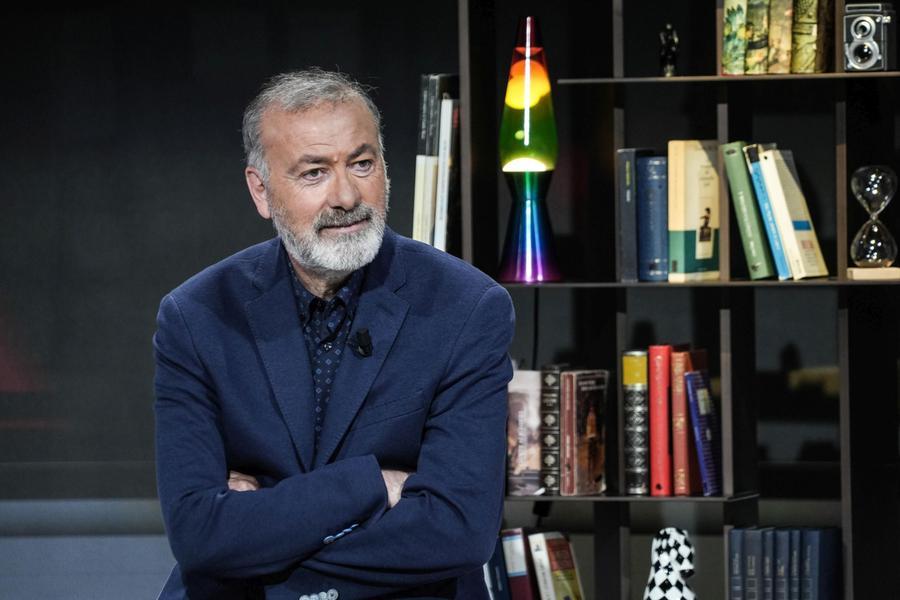
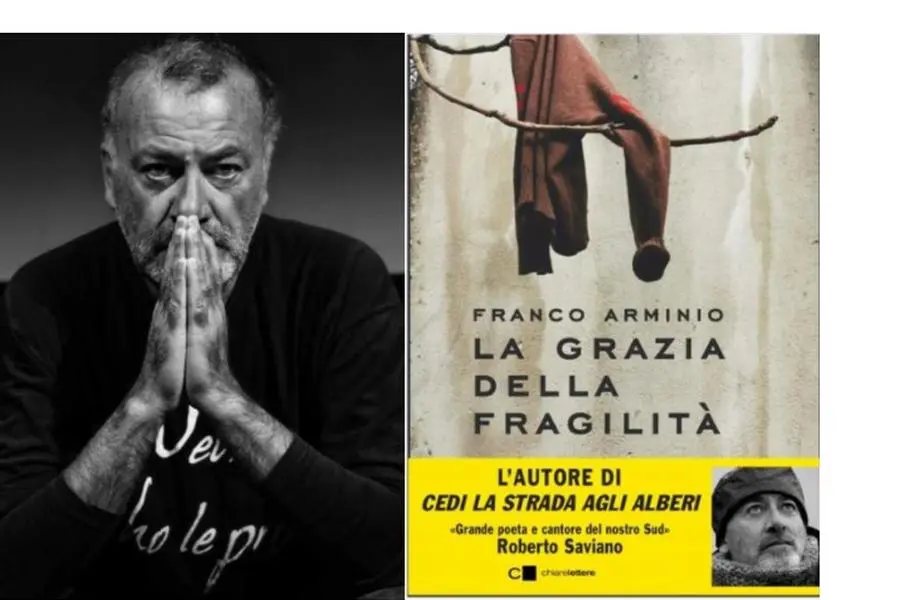
In a society obsessed with performance, where showing one’s weaknesses is considered taboo, Franco Arminio chooses to go against the grain. With his latest book, “The grace of fragility”the poet and landscape expert invites us to stop pretending to be invulnerable and to recognize the value of our cracks. Starting from his experience as a former primary school teacher, Arminio launches a concrete proposal for today’s school: establishing a moment dedicated to listening to emotional experiences, to combat performance anxiety and rediscover contact with the real world.
In your latest book, The Grace of Fragility, you overturn the dominant narrative that always wants us to be successful and high-performing. What are we missing by trying at all costs to appear invulnerable?
«Ostentatious invulnerability makes us more inattentive, more arrogant and less sensitive to the pain of others and the reality around us. Even places can convey this grace: I come from a walk in Garbatella, in Rome, a less frenetic neighborhood than others, where I perceived precisely this feeling. Be careful, I’m not saying to look for illness or mourning, but when these inevitable situations happen, the work to do is to extract grace from misfortune. It is the common thread of my books and my life.”

You launched the proposal to establish an “hour of fragility” in schools. Can you explain to us concretely how you imagine it?
«I was an elementary teacher for many years and I saw the evolution of school: on the one hand there is the quantitative and performance obsession, on the other a more relational idea. I support this second model. The hour of fragility does not necessarily have to be a mechanical appointment, institutionalized on Saturday morning; it can be a quarter of an hour, a moment taken out of the day to pay attention to emotional experiences. Today there is no space to talk about one’s wounds: it is not done within the family, nor among friends, nor online, where the attack often prevails. We need to bend society towards a true reflection on intimate life, to recognize our fragility and be company to each other.”
Kids today are immersed in a digital showcase where mistakes are stigmatized. Can giving an institutional space to say “I’m scared” or “I feel alone” be an antidote to bullying and youth malaise?
«In my opinion, yes. If this space is missing, it is an invitation to hide the “crack”, which however does not disappear: it transforms into aggression. Many attacks arise from unexpressed pain. If we don’t give the opportunity to say “I feel bad”, we end up projecting evil onto others. It is a paranoid system that today dominates not only relationships between individuals, but also international ones.”
If you were Minister of Education, in addition to the hour of fragility, what other subject would you introduce to teach children to “feel” and not just do?
«I would establish a daily geography lesson, understood as physical exploration of the world. School must not be a closed place: you need to go out, go to the market, on the street, to develop your perceptive aptitude. How can you stay closed in class in May, with nature blooming? When I was a child they took us for walks; today bureaucracy and the obsession with security prevent this. But life is inherently dangerous. The school must come out of itself to look at the world, because we learn from reality, not just from books.”