



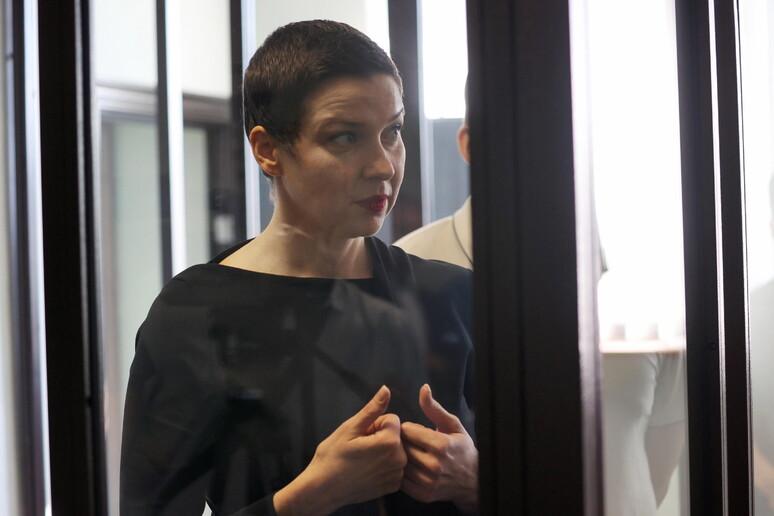
After more than five years in prison, Belarusian opposition leader Maria Kolesnikova has been pardoned by President Alexander Lukashenko, along with Nobel Peace Prize winner Ales Bialiatski and 121 other political prisoners, in what is the largest release of political prisoners during the Lukashenko era. According to media reports and confirmed by international organizations and agency sources, it is a gesture that mixes elements of real human relief with political and diplomatic calculations of international scope.
Who are Kolesnikova and Bialiatski
Maria Kolesnikovanow 43, became one of the symbols of democratic resistance in Belarus during the massive protests against President Lukashenko after the disputed 2020 elections. Arrested for her role in the opposition movement and then sentenced to 11 years in prison on politically motivated charges, Kolesnikova refused to leave the country forcibly, tearing up her passport at the border with Ukraine and remaining in her country so as not to abandon the fight for freedom.
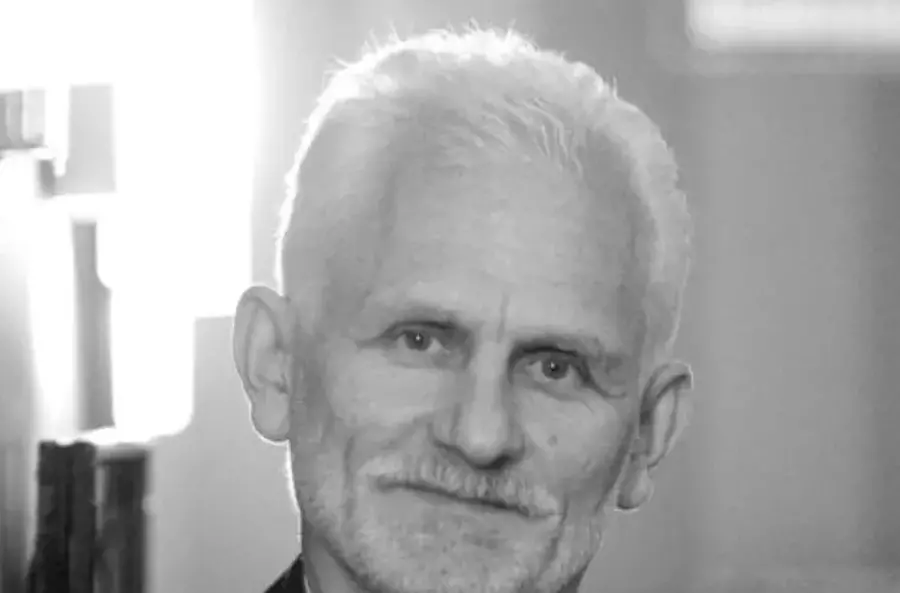
Ales Bialiatski is a human rights activist and founder of Viasna, the historic Belarusian civil rights organization. In 2022 he was awarded the Nobel Peace Prize for his tireless defense of human rights and political prisoners, while he was already in prison under very harsh conditions, where he had been sentenced to a ten-year sentence for charges considered largely political by international observers.

A gesture with a strong symbolic meaning… but also political
The release of Kolesnikova, Bialiatski and 123 other prisoners comes amid diplomatic negotiations with the United States, which have led to the easing of some US sanctions, particularly on key economic sectors such as potash, an important Belarusian export. This agreement shows Minsk’s willingness to reduce the international isolation created after the violent repression of the protests in 2020 and support for Russia in the war against Ukraine in 2022.
For the Lukashenko regime, in power since 1994 with authoritarian control over the country and systematic repression of the oppositionthese types of concessions serve a dual purpose: to re-establish more stable diplomatic relations with the West and to alleviate the economic pressures generated by sanctions, all while maintaining domestic political control.
For almost three decades Lukashenko has dominated the Belarusian political scene with a regime defined by many governments and international observers as authoritarianism. Elections are repeatedly contested for irregularities, the media and civil society are severely restricted, and security forces have persecuted, arrested or forced into exile opponents and activists. Even after the massive protest movement of 2020, which involved hundreds of thousands of citizens, the government responded with mass arrests, threats and judicial practices against anyone who opposed the power.
Despite the releases, human rights groups warn that the repression and culture of political control are not over: many people remain jailed on political charges, while the opposition remains under pressure and many leaders continue to live in exile.
What future for Belarusian society?
For many in Belarus and the international community, the pardon represents tangible human relief and a symbol of the resilience of civil rights defenders. However, the crux of the underlying political transformation remains: a real democratic opening cannot be replaced by tactical moves in the diplomatic or economic sphere.
In rediscovering faces like those of Kolesnikova and Bialiatski, those seeking justice and freedom in Eastern Europe bring with them the hope of profound change. But the country’s recent history calls for caution: today’s liberation may not automatically translate into a future of greater freedom for all.