




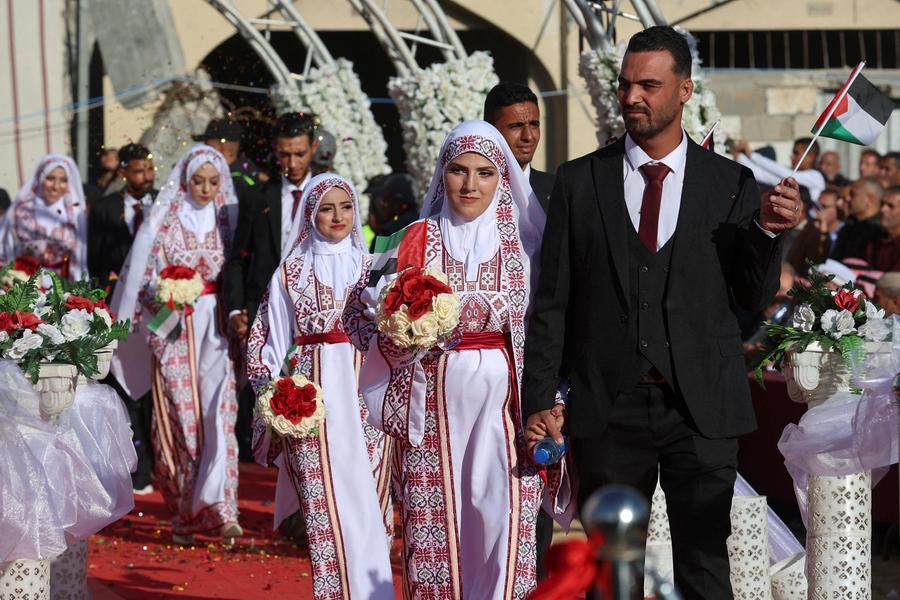
On Tuesday 2 December in Khan Yunis, in the Gaza Strip, 54 Palestinian couples got married. The ceremony was attended by over 21,000 people, including families, local elders, cultural coordinators and humanitarian workers. Some of them followed the ceremony from the ruins of a building destroyed by Israeli bombing. The number of couples united in marriage was not random. Each of the 54 pairs symbolized a year of the Union of the United Arab Emirates, which declared its independence from the United Kingdom on December 2, 1971.
The UAE’s decision to host a mass wedding for Palestinians on the occasion of the 54th Union Day reflects its ongoing humanitarian commitment to Gaza. The wedding is part of Operation Chivalrous Knight 3, a broader initiative aimed at providing support to Palestinians in the context of the ongoing conflict. It should be remembered that the UAE has committed to allocating at least 15% of its total foreign aid to humanitarian purposes, which would make the UAE one of the most generous donors in the field of humanitarian assistance.
Getting married in Gaza today means making a bet on the future, but what is the future of Gaza today? Trump managed to convince both Israel and Hamas to sign a ceasefire agreement in October, after rallying the international community around his 20-point plan to end the war. However, the separate document of October 9, signed by the parties, only covered the points relating to what was defined as “phase one”: the initial truce, the withdrawal of the IDF, the terms of the exchange of hostages and prisoners and the provisions relating to humanitarian aid. No formal agreement was reached on the “phase two” points regarding the post-conflict management of Gaza.
The fragility of the truce was evident from the beginning. The ceasefire faltered as Hamas remained the most dominant Palestinian force in about 50 percent of Gaza not controlled by the Israeli military. There have been almost daily deadly IDF attacks targeting what Israel calls Hamas members, although the victims of the bombings have included women and children. According to a calculation by the Qatari television channel Al Jazeera as of December 3, Israel carried out attacks on 44 of the 55 days of the so-called “ceasefire”.
Israeli attacks in Gaza have killed more than 70,000 people in more than two years of war, according to the Palestinian Ministry of Health, as the death toll continues to rise despite the ongoing ceasefire.

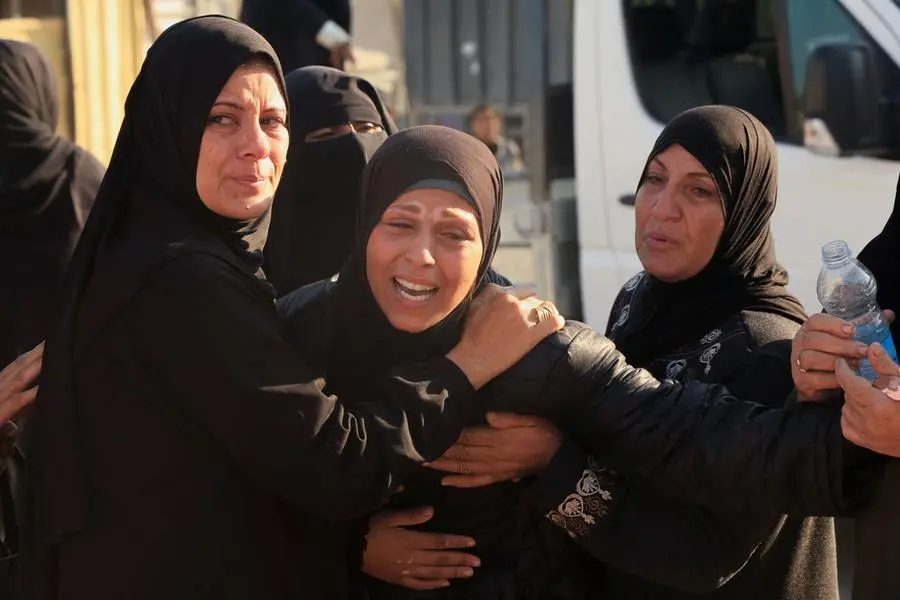
The funeral of Palestinians who, according to doctors, were killed on Wednesday during the Israeli attack on Khan Younis, in southern Gaza
(REUTERS)
Five Palestinians, including two children, were killed on Wednesday evening in the southern Gaza Strip during an Israeli raid, as announced in a statement from the Kuwaiti field hospital located in the Al-Mawassi area of Khan Younès. According to Gaza Civil Protection, a relief organization that operates under the authority of Hamas, Israel “hit the tents of displaced people with several missiles” in the Palestinian territory.
On Monday 17 November, with 13 votes in favor and abstentions from China and Russia, the UN Security Council gave the green light to the resolution presented by the United States approving the plan designed by Donald Trump to bring peace to Gaza. The provision authorizes the presence of an international force for the stabilization of the area, the disarmament of Hamas, the protection of civilians and the creation of a Palestinian police force.
This resolution, however, was rejected by Hamas, because “it does not meet the level of demands and political and humanitarian rights of the Palestinian people”. Hamas added that “resisting the occupation by all means is a legitimate right.”
The feeling is that of stalemate. Although on December 3, chased by reporters’ questions, Trump assured that the next phase of his peace plan for Gaza “is progressing and will take place very soon.” Somewhat generic statements, without further details. Meanwhile, the president of the United States telephoned the Israeli prime minister. According to an official statement, “The two leaders underlined the importance and obligation of disarming Hamas and demilitarizing the Gaza Strip, and discussed the expansion of the peace agreements.”