

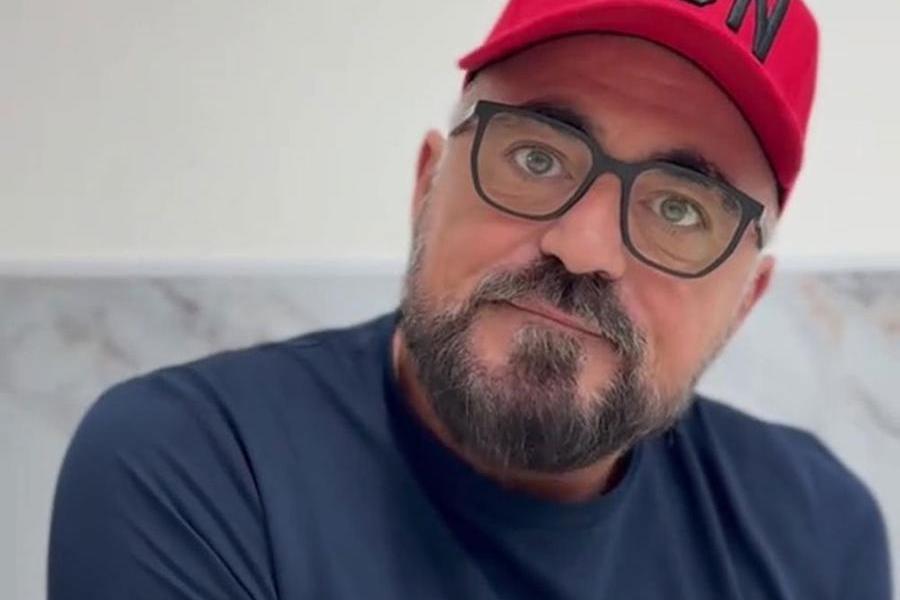


NoIn his first life, Gennaro Panzuto, known as Genny Terremoto, was a leading figure in the Torretta clan. Arrested in 2007 in England, he served 14 years. Returned to freedom, after having collaborated with justice, he had built a second life as an “anti-Camorra influencer” on Tiktok: he talked about his past, the negativity of his past, so much so that some schools invited him. On March 17, the news came out that Panzuto had been arrested again to serve the remainder of his sentencean eight-year or so sentence that became definitive due to a drug trafficking affair from the past.
It is known that for some time on Tik Tok there has been content linked in some way to organized crime and the Camorra in particular, a topic that has been dealt with for some time, Marcello Ragveduto, director of the Ri.Ma Observatory. (Observatory for Research on Mafia Imaginaries), Department of Political Sciences and Communication of the University of Salerno. We asked him for help in framing the topic.
Professor Revised, how to interpret the figure of Panzuto on Tiktok?
«Its dimension was that of the “exemplary” story in some way for the young generations strongly implicated not only in the use of Tiktok, but also in the use of violence and exposed to manipulation for the purposes of building a Camorra language on social media, capable of speaking to young people through the construction of a lifestyle that leads them to think that with the Camorra you can earn money, achieving a luxury that normal life does not allow».
Panzuto set himself as an example not to be followed, how does he fit into this?
«Only the magistrates, perhaps, can say whether he had really reformed his ways, but with his activity Panzuto built an image that I would define as ambiguous, because his message was “don’t do like me”, but in the meantime he told the public without intermediaries what his collaborators would once have told only to the magistrates and, in this way, he ended up fueling reaction mechanisms: many Camorra creators entered TikTok to attack him, saying that he used social media to clear his conscience from the crimes, others, however, entered to defend him: a back-and-forth that ended up contributing to fueling what is now the social genre of the Camorra told from the inside.”
What are the effects of this narrative: how can we distinguish where the denunciation ends and where the exaltation begins?
«I would say that the first negative effect is normalization: a process in which the story of the mafias on social media, connected to the mechanism of trends, leads the imagination to incorporate reality to the point of clearing it as a possible story on social media like a theme like any other: the real “revolution” lies in the fact that the representation of the mafias here becomes a self-representation: while previously they were talked about in a mediated way, through cinema, journalism, analysis, which gave an account even of the dramatic dimension, today it is organized crime directly, through the rear camera of the smartphone, that shows itself: it shows the baroque furniture, the vulgarity of women, the ambition of young people for the unbridled consumption of luxury. What is worrying is the life model, all centered on making money, presented as successful.”
How difficult is it to counter all this, fed to a very young audience who have no self-defensive filters?
«A lot, because the logic is that of the algorithms, which distribute content on the basis of followers, likes and time spent on content that now has a standardized audience: not only that of the mafiosi but above all that of the so-called “mafiophiles”, those who are fascinated by the story from within: Giovanni Falcone said over thirty years ago that the true propagation of the mafia mentality occurs through those influenced by the mafia, and the normalization is now such that we find on social media a story by narrative subcategories that enter into the trends and they appeal to young people who are fascinated once by the smile, once by satire, once by trash, they are contents that “pierce” to the point of pushing us to coin the term “mafiasphere” for this way of the mafias of being in the digital sphere”.
What challenge does it represent for fighting mafias?
«It is necessary to distinguish, there is a dimension that concerns the fight against real crime generated within the dark web with cybercrime and there is the aspect that we deal with: the social representation of the mafia phenomenon and the ability to counter its algorithmic diffusion. Like all the others, these contents also spread because they have “likes”, followers, sharing, which make them attractive to the algorithm which has more signals, the more it distributes. The only way to fight this “post-truthful” representation of reality which aims to make people believe that mafiosi are the positive model, the “good” ones, is to make it a “media war” in which all those who believe in social anti-mafia create content capable of increasing the algorithmic wave on that side. Unfortunately there is still snobbery in the social anti-mafia: there is a lot of work to be done regarding the use of social media for civil campaigns, capable of building an engagement that makes them visible on the platforms”.
Most social users are not as aware that they contribute to the way the algorithm brings them content. Is this a problem?
«It’s the reason why we worry so much about the “toxic” use of social media. People risk living unknowingly exposed to bubbles of parallel realities for which they unknowingly create the conditions with their likes and shares, simply by following the flow of content arriving on their platforms. In the cases we are talking about, it involves being exposed to a self-narration of the mafias that is the opposite of reality, in which the wives of prisoners for serious crimes, such as drug trafficking, for example, describe them as respectable people and exemplary fathers. Panzuto’s case presented ambiguity because it straddled the two worlds, between the world of the law and the regular society with which he had collaborated, and that of the mafia company that justifies itself on social media. The question is: what do the kids who use the Joker as their symbol on Tiktok indirectly communicate: that if they identify with him, and we, the regular world, are Batman, do they consider us the enemy?
How high is the risk that the mafias end up hooking kids who don’t feel like they belong in the real world in this way?
«There are no direct recruitment risks, because organized crime is not naive enough to go and get affiliates it doesn’t know through a digital platform. What can happen is that an attitude of attention, a look to the clan as a point of reference, is strengthened in young people who are already borderline, who already experience uncomfortable conditions. It is necessary to take into account the fact that in the vast majority of cases the network of followers of these contents is territorial: it is located in the same neighborhood where the clan that spreads them operates, as emerged from an investigation by the Naples Prosecutor’s Office into the Amato Pagani clan. Where there is economic difficulty, where there is hardship, a “winning” model that makes you believe that even if you are nobody, if you haven’t studied, by being on the street you get designer shoes, it offers an attractive model, in sociology an “aspirational” model. It’s a shame that this representation gives space to a desirable imagery, removing the fact that it is based on violence.”