







She wore a pink blazer, a #hustle coffee cup, and the knowledge that the world was her oyster. The girlboss ruled for an entire decade. Then she fell, and no one really mourned her. But behind the fall of an icon, a whole redefinition of female success is being written. So, what do women really want in 2026?
The girlboss: autopsy of an icon
It all started in 2014. Sophia Amoruso, founder of Nasty Gal, published #Girlboss: The incredible adventure of a school dropout who became the boss of an e-commerce empire. A book sold in 500,000 copies which propels a word, an aesthetic, an ideology.

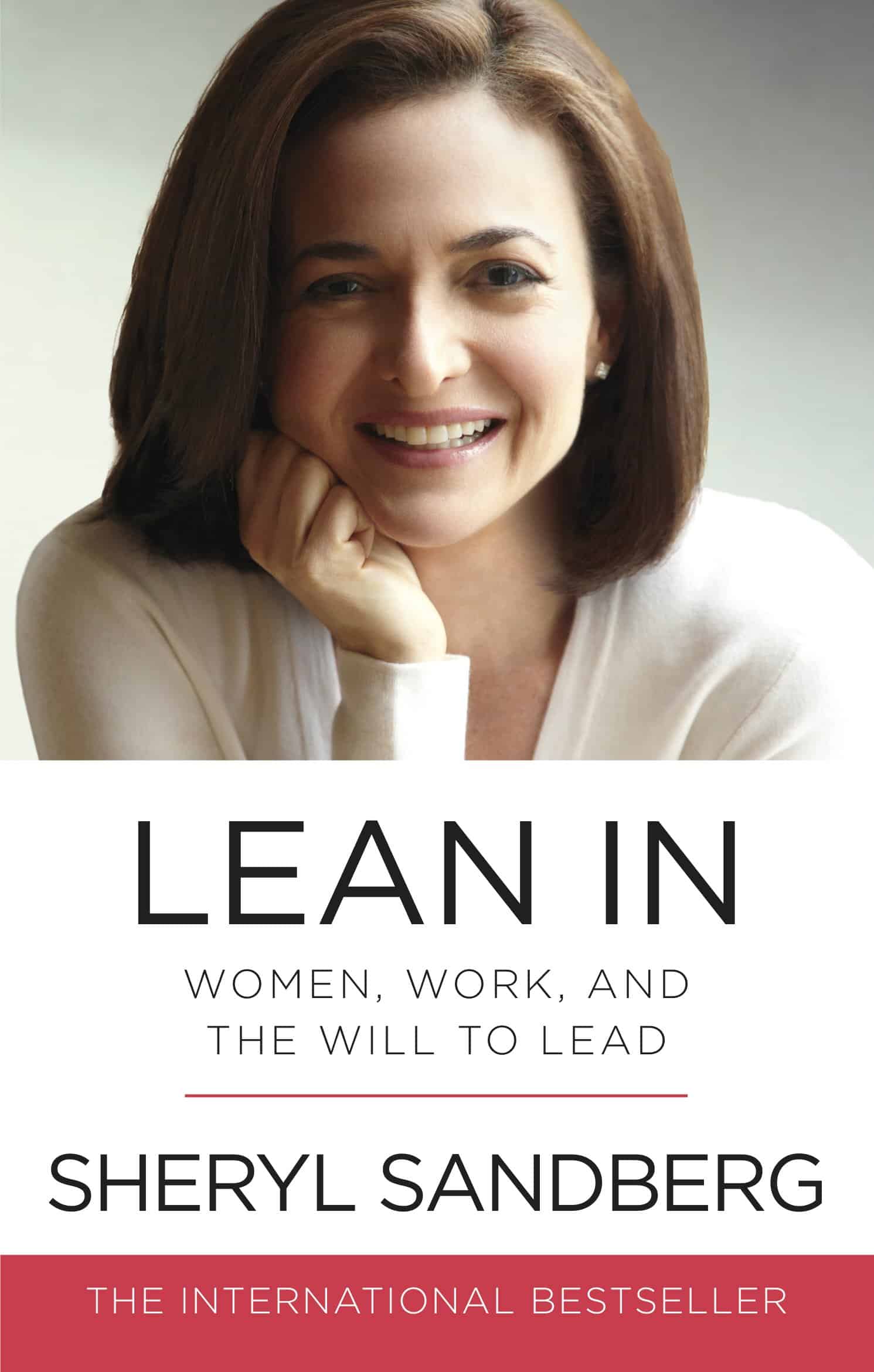
A year earlier, Sheryl Sandberg had laid the theoretical foundations with her book Lean In : to succeed, women must stop holding back their own ambition and “ sit at the table“.


The idea is attractive in its simplicity: the glass ceiling is not only a systemic obstacle, it is also a mental limit. Work harder, be assertive, be bold, and you can have it all.
The problem ? It was fake.
Or rather, incomplete. Partial. Reserved for a few.
By 2025, women will occupy 46% of entry-level positions, but only 25% of management positions. Proof that motivational mantras and millennial pink aesthetics aren’t enough to dismantle structural inequalities. The girlboss has become a warning about what happens when capitalism co-opts feminism to produce a sanitized, Instagram-friendly version of it.
And then the scandals completed the edifice. Sophia Amoruso herself, accused of unfair dismissals of pregnant employees. French feminist figures singled out for toxic management. Elizabeth Holmes, celebrated as a visionary before being convicted of fraud. A study published in the Journal of Business Venturing in 2025, which analyzed more than 2,600 news articles published between 2014 and 2023, shows how the media first constructed and then deconstructed the girlboss: a cycle of hype and backlash that says as much about the impossible expectations projected onto women as it does about their actual failures.
The girlboss did not die of excessive ambition. She died from a lack of honesty about what the system really allows, and to whom.
After the girlboss: the void, then the mutation
Data from the UK’s Office for National Statistics in 2024 shows that more than a fifth of working age adults are not looking for work. Online, many young people describe themselves as less careerist and ambitious, decentralizing professional success in their lives.
Social networks have amplified this disillusionment. “Lazy girl job”, “soft life”, “girl math”: so many micro-trends which sound like a collective rejection of rise and grind. A recent study shows that 73% of Gen Z workers would take a pay cut in exchange for working fewer hours.
But be careful: confusing this movement with a resignation would be a serious error of analysis.
Girlboss isn’t completely canceled, it’s just rebranded. Gen Z remains ambitious, but their ambition is gentler, more protective of their own peace. It’s not less ambition. It’s a differently oriented ambition.
What the numbers really reveal
The 2025 data paints a nuanced and fascinating portrait of new female aspirations.
The money-meaning-well-being “triforce”
The 14th edition of Deloitte’s Gen Z and Millennial Survey, conducted among 23,482 people in 44 countries, reveals that these generations are looking for a “triforce”: money, meaning and well-being. And for women in particular, these three dimensions are inseparable.
Only 6% of Gen Z cite reaching a leadership role as their primary career goal. It’s not a renunciation, it’s a repositioning. Among those who report good mental well-being, 67% of Gen Z and 72% of Millennials believe that their work allows them to have a positive impact on society. Success is no longer just vertical. It is contributory.
Female entrepreneurship, reflection of a profound transformation
In France, the figures for female entrepreneurship tell the same story. According to the French Entrepreneurial Index 2025 by Bpifrance Le Lab, conducted among 5,000 representative people, 8 million French women have a close link with entrepreneurship: i.e. 3 out of 10 women engaged in an entrepreneurial dynamic.
This is not the quest for an empire. It is the quest for autonomy. A France Active study reveals that among the main motivations for women to create their business: the desire to give more meaning to their professional life (45%) and for 32% of them, to escape a precarious professional situation. We undertake to free ourselves, not to reign.
Inequalities, still there, despite everything
Let’s be honest: the death of the girl boss does not mean the death of inequality. As of March 1, 2026, 72% of French companies still have less than 40% women among their senior executives, and 63% have less than 40% in their management bodies.
THE Gender Pay Gap Report 2025 of Payscale shows little or no progress in several areas. The context in which women redefine their ambition is not a context of equality. It is a context of creative resistance to a system that has not yet changed quickly enough.
The 4 new female ambitions in 2026
#1 – The ambition of meaning before the title
The woman of 2026 doesn’t just want a job. She wants to understand why she gets up in the morning. Nearly 9 in 10 Gen Z and millennials (89% and 92% respectively) consider meaning at work to be important to their satisfaction and well-being.
This quest for meaning is particularly strong among women, who were the first to pay the price of “success at all costs”: to the detriment of their mental health, their personal life, their body.
#2 – The ambition for real economic independence
This is what sets 2026 apart from the girlboss era: women no longer just want “a seat at the table”. They want economic independence that does not depend on the benevolence of an employer.
The opportunity to earn more money is the first motivation cited by women who want to start their business (54%). This is no coincidence: in a context where the wage gap persists and where women’s careers remain more precarious, entrepreneurship is becoming a strategy for economic emancipation.
#3 – The ambition of the collective rather than the individual
This is perhaps the most radical reversal of girlboss ideology. Where the latter celebrated the individual success story, the women of 2026 are increasingly attracted by collective models: cooperatives, mission-driven businesses, social and solidarity economy, support networks between women.
The real question today is not how to avoid becoming a girlboss meme, but how to go beyond individual empowerment towards collective liberation. This involves fighting for concrete public policies: parental leave, accessible childcare, salary transparency.
#4 – The ambition of duration over speed
The girlboss generation wanted everything, right away. The women of 2026 are playing another game: that of the long term.
Assumed reconversions, poly-rhythmic careers, deliberate stage phases. Gen Z and millennials are not lacking in ambition, they cite learning and development among the top three reasons to choose an employer, but they are redefining what “progress” means. Progress, yes. But in a direction that resembles them.
The girlboss is dead, but her ghosts still roam
It would be naive to believe that the world of work has learned all the lessons from the girlboss fall. Its mechanisms persist, in more sophisticated forms.
The new girlboss of the social media era presents young, white, rich and famous women as leaders, without ever addressing the reality of building their success. Their platforms are often built on inherited privilege or influencer notoriety.
The “wellness girlboss” has replaced the “hustle girlboss”. The blazer has given way to yoga leggings. But the injunction remains the same: be perfect, be inspiring, be everything, just in softer packaging.
Let’s beware of rebranding. Changing the aesthetic of success without changing its structures is like selling a mirage with a new label.
What this transformation requires of businesses
If women are redefining success, organizations must follow, or risk losing them.
Concretely, this means:
Stop measuring ambition by visibility. A woman who doesn’t apply for every promotion is no less ambitious. She may be making strategic choices that traditional evaluation systems cannot read.
Integrate meaning into employer value propositions. Gen Z and millennials who have positive well-being are significantly more likely to feel like their work contributes to something bigger than themselves. Meaning is not a “nice to have”, it is a major retention lever.
Create conditions that make success sustainable. Real parental leave, real flexibility, real mental health policies. The 2026 report of the Gender Equality Index shows that despite a strengthened regulatory framework, many companies are mainly seeking to reach the regulatory threshold, more to preserve their image than to transform their practices. The difference between the two is visible. And women see it.
The girlboss is dead. Long live feminine ambition: free, plural, honest.
Not the one that imitates masculine codes with pink glitter. Not the one who sacrifices everything on the altar of success. The one who builds, collectively and at his own pace, a meaningful success.
It’s less photogenic. It’s infinitely more solid.
You may also like:
Quiet ambition: the new way to be ambitious without shouting it
2026 Barometer: 1 in 4 women want to start their own business in 2026, despite persistent obstacles
“Poly-rhythmic” careers: when women reinvent professional life


