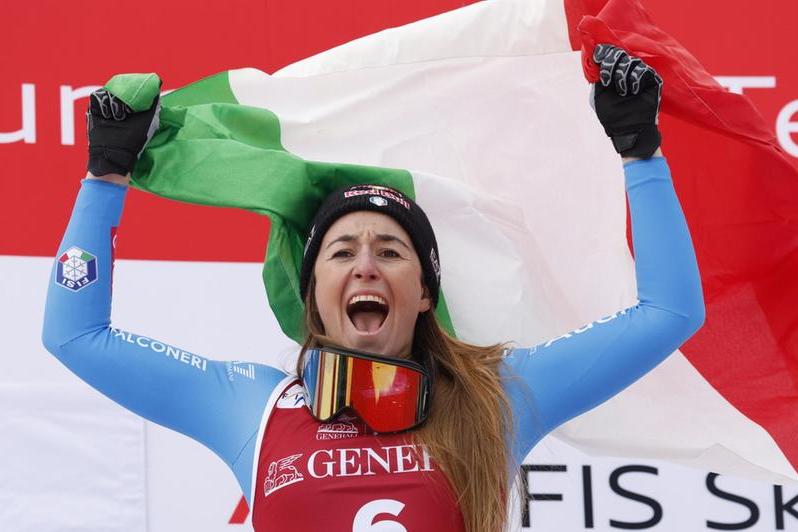

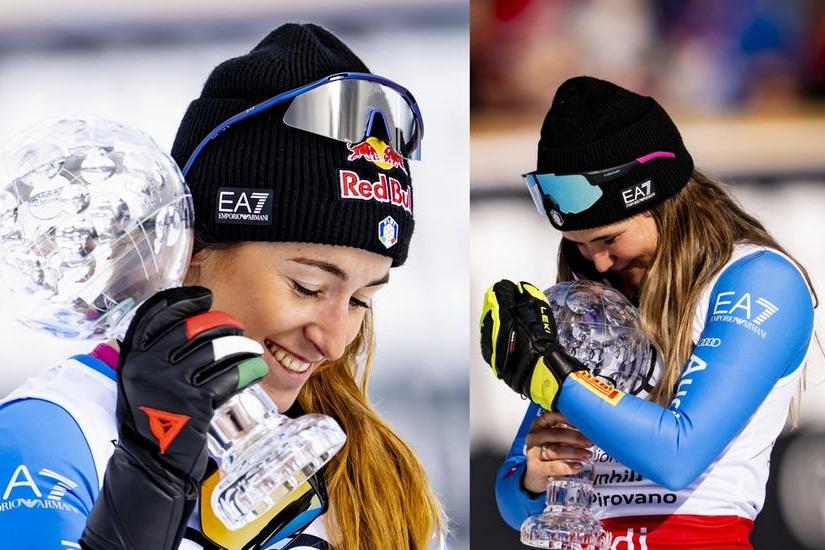



Two world cups, one in downhill, the other in Super-G, in some ways twins of those Laura “Lolli” Pirovano e Of Sofia Goggia: both found themselves playing for the result of the last race in alpine skiing, which has the bizarre characteristic of being a sport that is difficult to plan where every mistake pays off, where everything can make a difference in terms of cents: the materials, the wind, the snow, even a passing cloud. It is no coincidence that it is the characteristic that led Jannik Sinner to prefer tennis which always gives another point afterwards, unless it is match point. In alpine skiing everything is match point from start to finish. And it’s quite a challenge in terms of pressure. However, they arrived with two different pieces of luggage: Laura with a career all there on the threshold, therefore dealing with the new condition for her of last-minute favorite, but only that once. Without similar experiences behind him but with the awareness of playing there much more than a match and a Cup, but the turning point of an entire career. Sofia with the baggage of the certified champion, the one from whom everyone expects to be able and almost to win, the one who when she takes the Olympic bronze the world says: “Only third?”. As if it were simple to put the whole world behind and only two opponents in front.
Everyone has to deal with situations like this in life: an exam, a decisive job interview, a competition, a university entrance test. The difference is that in sport at this level everything happens in public: you triumph and you fail in front of millions of eyes.

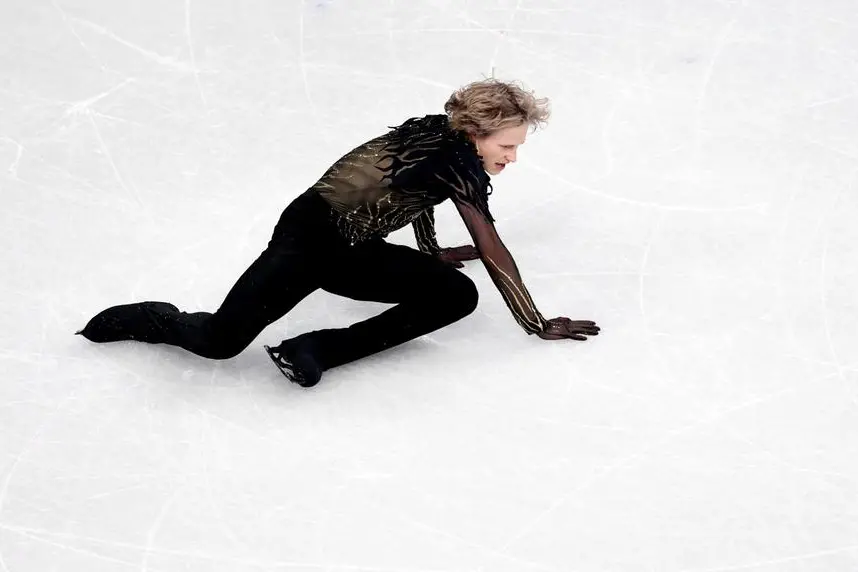
It is no coincidence that Ilia Malinin was, with that collapse, one of the most engaging stories of the Milan-Cortina 2026 Olympics, because we empathize with that fear of failure: who in life doesn’t fear ending up like this? Experts tell us that kids eternally exposed to social media’s claims of impossible perfection live eternally under pressure, fearing they won’t be up to it.
So the story of how the two champions who finally made it through the difficult pre-competition moments could also be useful to them.
LAURA PIROVANO’S STORY: «TERRIFIING ANXIETY»
Laura spoke about herself after the awards ceremony, on Teams with a relaxed smile, without euphoria, she always seems very calm, but she confided candidly: «Dfrom a mental point of view it was really very difficult to manage, especially the last two days. But I’m also a little amazed at how I managed to find a sort of calm in the end, which really allowed me to focus entirely on what I had to do during my descent.». On the eve of the last match, the one in which everything was at stake, he said he didn’t have any nightmares, «but I didn’t sleep very well. I couldn’t sleep, but not because of the nightmares, but because of the dreams: I was very, very nervous about the day that was to come, because I knew that regardless of everything it would be a tornado of emotions that I didn’t know how I would manage».
Also because in the past she had known the bitter taste of disappointment many times: «Former athletes like Nadia Fanchini, but also my family, continually told me to enjoy it and that was exactly what I wanted to do, because, despite emotions that were also quite uncomfortable to manage, because in any case anxiety before a race is never a nice thing to experience. I forced myself to think that they are unique emotions and that I am truly lucky to even be able to experience them, so I tried to enjoy even that slightly uglier part. The truth is that I had terrifying anxiety, because the wait was unnerving: I would have paid to be able to bring the race forward by a day or even a few hours. Federica Brignone and Sofia Goggia have also been examples of resilience for me in recent years, because they have gone through tough moments, serious injuries and certainly also moments where they had to manage crazy pressure.”
SOFIA GOGGIA: «I WAS AFRAID OF NOT MAKING IT»
For her part, Sofia Goggia vented all her tensions by crying into her ski gloves immediately after the finish line. He told us shortly afterwards what was in that cry: «I’ve had some moments of great pressure these days, especially in my head. And I was also afraid of not making it, perhaps due to a mistake or an exit. At the gate, however, I breathed and thought about all the beautiful things I am capable of doing. I took two risks and risked going out. However, when I crossed the finish line and saw the green light for 6 tenths of a second, I thought that there wouldn’t be many athletes able to pass me. It was a season that didn’t live up to expectations, especially downhill, an unsatisfactory season. But now I have this super-G Cup that I will place alongside the four downhill cups and for a sprinter who wants to be complete it was very important to win it.”
The most difficult moment in Val di Fassa, in the golden days of Laura Pirovano: «When you manage to win the trophy and also win the race it’s positive. The weekend in Val di Fassa wasn’t easy: I came from the Olympics and had an 84 point lead over Robinson. My expectation was to score points and arrive here in Lillehammer in Norway having already won my Cup. But me that weekend I couldn’t stand, I couldn’t ski in any way. Since then there have been another two weeks of great tension that exhausted me and were really heavy on my head. Super-G is a mix of technique, strategy, instinct: it is a very complex and very intense discipline. This year I was able to use the strategy a little better. I’m very happy, but I’m also very tried. It hasn’t been an easy season. When you feel that your skiing level is very high, but you are unable to achieve results that go beyond mediocre, everything becomes complicated. There were some peaks at the top, but it was an inconsistent season. But this Cup satisfies me.”
One would think that when everything ends and you win, all that remains is an explosion of joy and maybe that’s the case, but what it is interesting and striking in these two athletes and especially in the very expert Goggia is the ability to observe oneself even in the heat of the moment and to analyze oneself with clarity: not only with self-criticism, but also with the courage to admit one’s fears. Sofia Goggia’s motto is “Only the brave”, but admitting your fear is the first form of courage and perhaps also the first step to deal with it is not to be overwhelmed by it.
And the most interesting thing to observe and have people observe is that neither of them spoke of external pressures, but of pressures that come from within, a sign that they have a healthy environment around them capable of alleviating rather than further crushing.