




In the vast heritage of Holy Week rites in Italy, it certainly occupies a place of honor the centuries-old tradition of Sessa Aurunca, in the province of Caserta. The protagonists of the rites are the six historic brotherhoods, whose presence has been documented since the late Renaissance.
In ancient times the brotherhoods, in the absence of a public welfare system, offered various services to their members including medical assistance, donations to their daughters for the marriage dowry, free funerals and cash loans at subsidized rates. In short, religious worship, which today represents the main activity of these lay associations, was instead an accessory aspect.

The colors of the brotherhoods
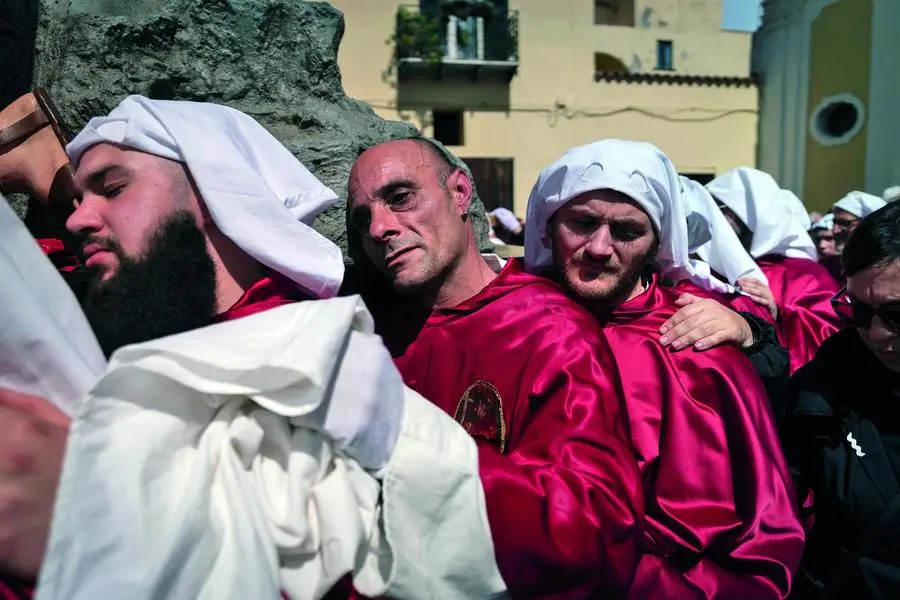
Each brotherhood had a corporate class nature: in Sessa Aurunca the archconfraternity of San Biagio, with the garnet-colored mozzette, was made up of workers and winemakers. That of the Most Holy Rosary, with a white habit and hood and black mozzetta, like those of aristocrats.
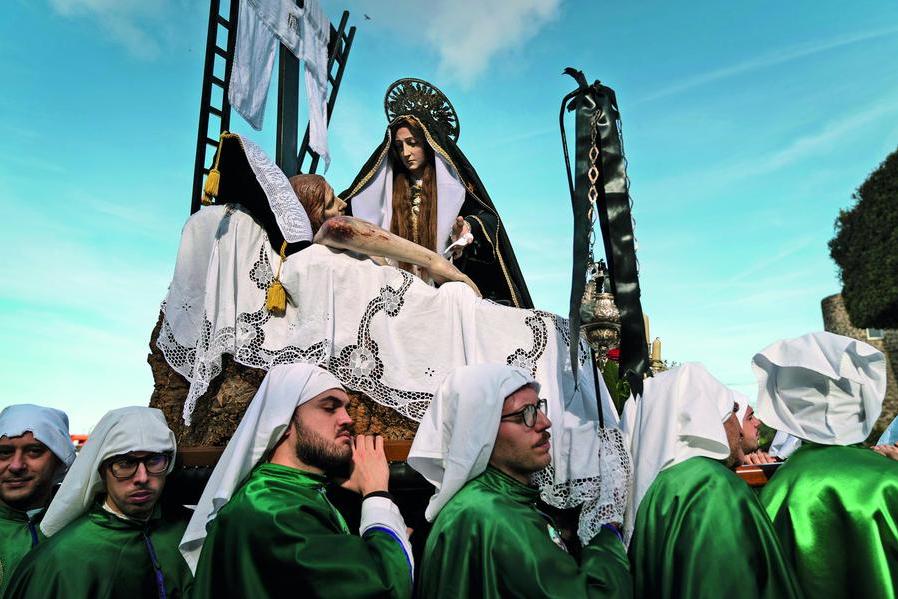
The archconfraternity of the Crucifix and Monte dei Morti, whose members wear a black habit and hood, belong to the middle-upper class. The brothers of the Most Holy Conception, with light blue capes, provided for the funeral of the poor and the assistance of widows and orphans. Those of San Carlo Borromeo, with red mozzetta, were originally laborers of the working class. Finally, the Confraternity of the Santissimo Rifugio, with the green mozzette, was made up of artisans and was responsible for assisting the prisoners.

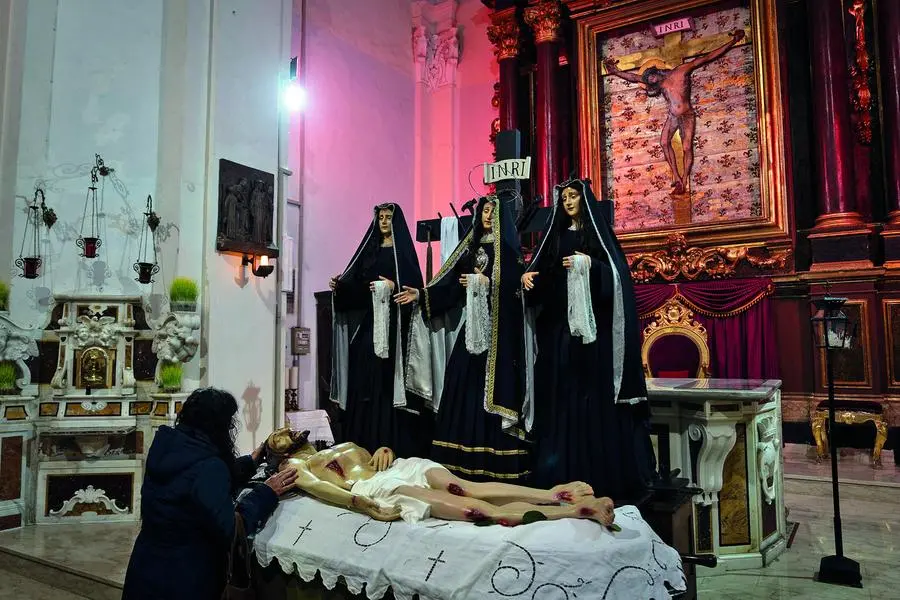
The week begins
The set of rites that make up Holy Week in Sessana as we know it today is the result of a historical stratification that took place around the middle of the eighteenth century. We leave on Holy Monday, with the penitential processions that wind along the streets of the town until Wednesday afternoon. «This period represents an opportunity for renewal and re-establishment of social ties. It is the cathartic moment in which different factors come together: religious certainly, but also cultural and emotional”, explains Don Roberto Palazzo, parish priest of Cascano di Sessa Aurunca. One of the most spiritual and evocative passages of the entire week takes place on the evening of Holy Wednesdayinside the church of San Giovanni a Villa, when the Confraternity of the Crucifix celebrates the ancient rite of the Office of Darkness, known by the people of Sessa as “earthquake”. Characterized from the progressive extinguishing of 15 candles until darkness is reached and the noise generated by the participantsthis ritual symbolizes the passion and death of Jesus.
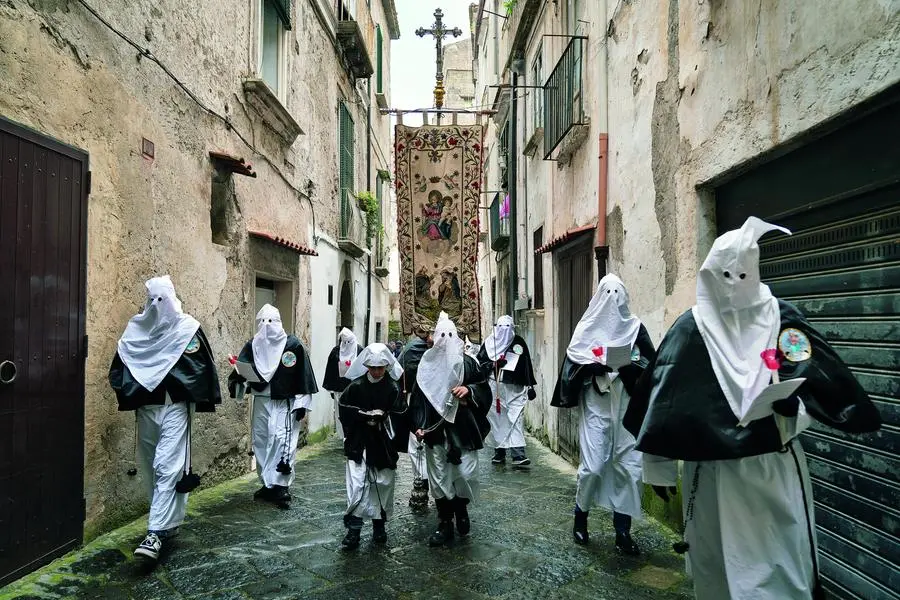
The funeral march
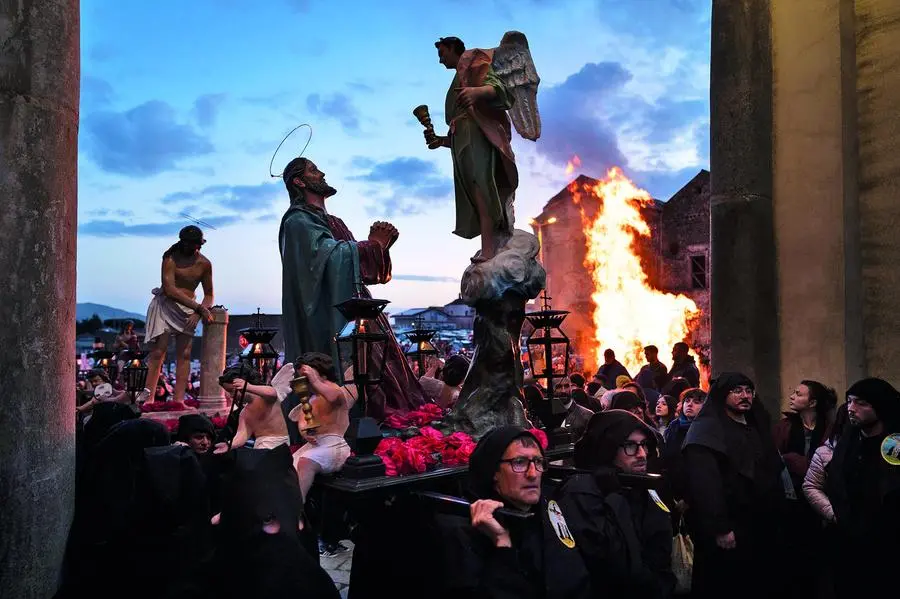
At dusk on Friday the streets of the historic centre, illuminated by the “carraciuni”, the traditional bonfires, they become the setting for a timeless Passion: the first procession of the Mysteries. The notes of the funeral march announce the imminent exit of the procession with the characteristic “cunnulella”, a swinging and synchronous movement of the body. The hooded men, holding lit torches in their hands, they make room for the groups of statues carried on their shoulders in a silence broken only by the mournful sound of a small trumpet and the Miserere. This procession, like that of the following day, is accompanied by a large number of “allutate”, women dressed in mourning, sometimes barefoot, who, as a vow or a grace received, carry votive candles following the slow pace of the “Passion”. «Forty years ago, following a difficult operation, I prayed to be able to overcome this moment and, when I received grace, I decided to make a vow out of gratitude», says Ida Papa. «It’s not just tradition, it’s the need to feel part of the Lord’s suffering». After having traveled through the entire historic center, the procession returns to the church of San Giovanni late at night. «Good Friday is my spiritual New Year, the day in which I take stock of the past year, I express resolutions for what is to come and I feel a strong bond with the people around me and with those I no longer have», says Pasquale Ago, prior of the archconfraternity of the Crucifix.
Mary’s pain
The second procession of the Mysteries of Holy Saturday, which takes place in the morning, is characterized by the meeting of the Confraternities of San Carlo and the Refuge which, together, cradle the two sculptural complexes of the Deposition and the Addolorata. «These rites, much more than the liturgy, show the human aspect of divinity and represent a liberating moment in which pain is no longer experienced as a private but a collective fact», says Gianluca Sasso, prior of the brotherhood of San Carlo Borromeo. «In contrast with the dominant values of the present, worship ceases to remain closed in the church and becomes something else».
Resurrection of joy
Holy Week can be considered definitively concluded only following the Monday in Albis procession in honor of the patron saints: Maria Santissima Avvocata del Popolo and Pope Saint Leo IX, a day of celebration in which we move from the moment of mourning to that of joy. On all these days, the entire city participates in the theatricality of its historical and cultural heritage of immense value. «Holy Week for the people of Sessa is an “ethos”, a collectivization of values with which to identify», concludes Don Roberto Guttoriello, parish priest of Sessa Aurunca. «It is true that man is projected towards the future, but the Sessans demonstrate that history is cross-eyed, which has one eye turned to the future and the other to the past, and in this synthesis we have the possibility of recovering what is our spiritual, ethical and cultural value».
In collaboration with Credere


Credere, the magazine for living the “adventure of faith”
BELIEVE is the magazine that offers you stories, characters and columns every week to inspire faith in everyday life. Already chosen as the “Official Magazine of the Jubilee of Mercy”, it is a newspaper rich in content for the spirit, with many testimonies of famous people and ordinary people and the gestures and words of the Pope, closer than ever.
Discover the magazine and subscribe »