
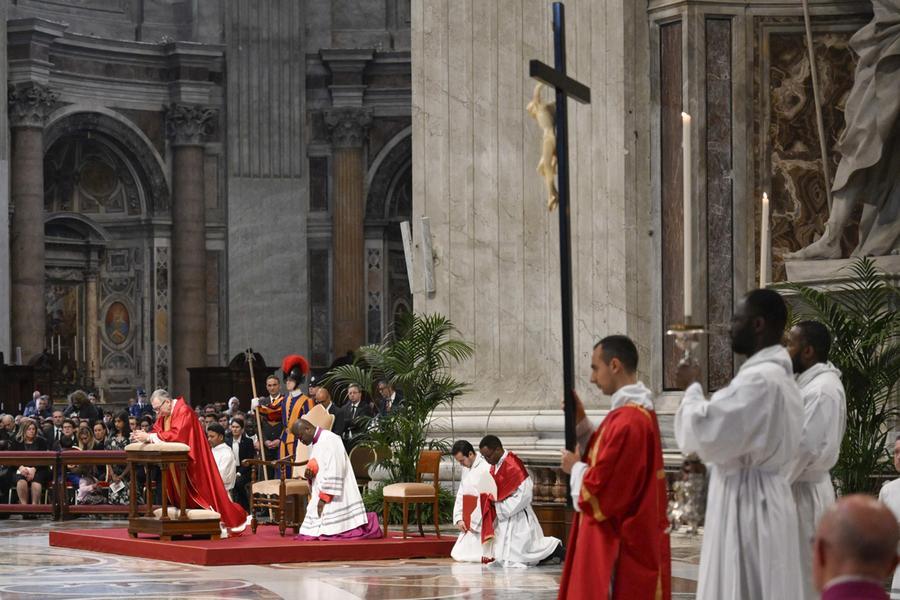




The Good Friday, the second of the Easter Triduum, is the day on which the crucifixion and death of Jesus is celebrated. On this day – the only one of the whole year – the Church does not celebrate the Eucharist but a liturgical action during which the Passion of the Lord is commemorated, composed of the Liturgy of the Word, the Adoration of the Cross and the Rites of Communion. It is a day of fasting and abstinence from meat.
The liturgical rites
On the morning of Good Friday, Eucharistic adoration continues, albeit without solemnity, at the Altar of the Reposition, set up after the evening Mass in Coena Domini on Thursday. In many cathedral churches and also in several parishes, theOffice of Readings and Morning Prayer.
In the afternoon of Good Friday, the liturgical action of the Passion of the Lord, called In Passione Domini, which has very ancient origins (7th century), and is also present in the Byzantine Rite, as one of the three types of Divine Liturgy.
This celebration is divided into three parts:
1. The Liturgy of the Word: First reading: Fourth Canto of the Servant of the Lord (Isaiah 52,13-53,12) Second reading: the salvation of Christ through the painful obedience of the passion (Hebrews 4,14-16; 5,7-9) Gospel: Passion according to John (John 18,1-19,42) The solemn universal prayer follows.
2. The Adoration of the Holy Cross.
3. The Communion with the Eucharistic species consecrated on Holy Thursday because on this day, the only one in the liturgical year, Mass is not celebrated.
In the Ambrosian Rite
Even the Ambrosian tradition, like the Roman one, commemorates the Passion of the Lord on Good Friday in a single afternoon or evening liturgy. Two moments are foreseen:
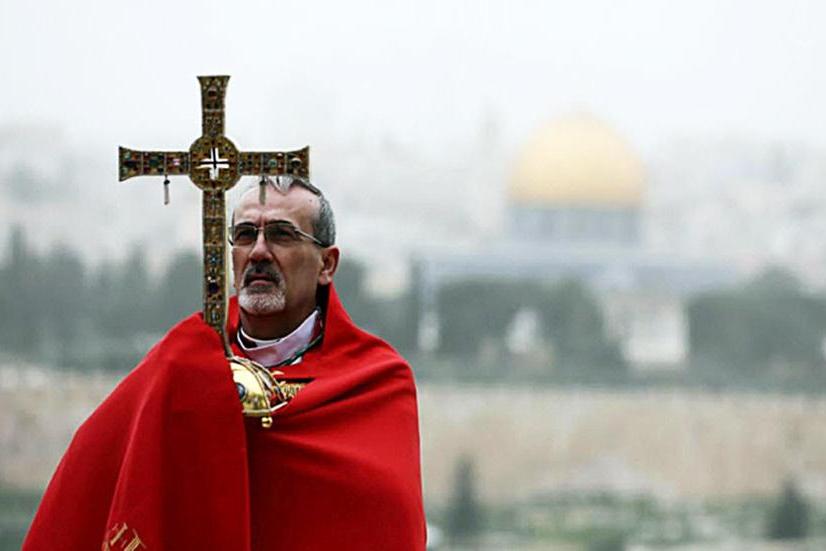
1. The celebration of the Passion of the Lord. Characterized by three strong moments: the announcement of the death of the Lord. The evening celebration of Holy Thursday commemorates the first act of the Passion of the Lord while that of Friday is its natural continuation as well as its fulfillment and finds its summit in the announcement of Christ’s death on the cross, with the reading of the passion according to Matthew from the point where it was interrupted the previous evening (see Mt 27.1-56). The adoration of the Cross. The image of the Crucifix is solemnly carried on a cushion towards the main altar: three times the cross is raised, while the antiphon “Ecce lignum Crucis in quo salus mundi pependit” (“Behold the wood of the cross, on which the savior of the world was hung”) is sung and three times everyone kneels before it in adoration. Once again the Cross, after being placed on the steps of the altar, is adored with three genuflections and with a kiss of veneration to the image of the crucifix. Universal prayer in which we pray solemnly for the needs of the Church and the world.
2. The evening celebration “in the deposition of the Lord”. It focuses on the evangelical pericope of Matthew 27,57-61. The announcement of the death of the Lord, the adoration of the holy cross and the great universal prayer create a strong ritual continuity between the profession of faith of the Roman centurion (see Mt 27.54) and the adoration of the faithful. Furthermore, two very significant passages of the proclamation of the Word deserve to be highlighted: the first and second reading of the beginning of Vespers, Is 49.24-50.10 and Is 52.13-53.12, as prophetic predictions of the Passion of Jesus. In the Ambrosian tradition, Good Friday, like all Fridays in Lent, is a liturgical day, that is, Mass is not celebrated and the Eucharist is not distributed.
The tradition of the Via Crucis and processions
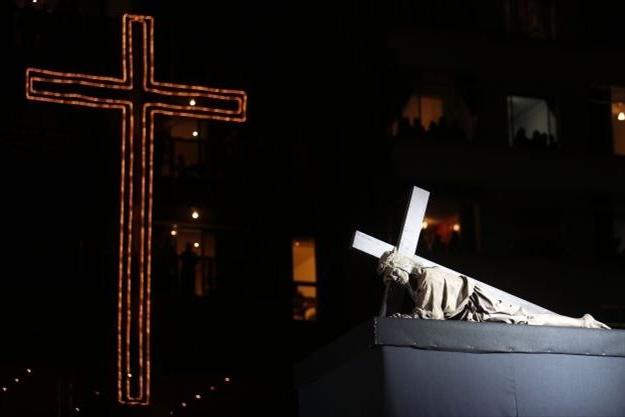
Usually in each Parish the meeting is carried out in the evening hours Via Crucis. The Pope has lived it in the suggestive setting of the Colosseum in Rome since 1965. In various Italian regions, impressive processions take place with the Crucifix, with the statues of the Dead Christ and the Madonna Addolorata, or with the statues representing the Stations of the Cross.
The silence of the bells as a sign of mourning
On Good Friday the bells do not ring:
-In the Roman Rite they play for the last time on the evening of Holy Thursday and precisely at the song of Glory during the evening Mass of the Lord’s Supper, to then return to play during the Easter Vigil, always singing the Gloryas a sign of the announcement of the Resurrection of the Lord.
-In the Ambrosian Rite the bells ring until the announcement of the Lord’s death, that is, until 3 pm on Good Friday, after which they are silent until the Easter Vigil.