




Access decisions across Greenland have begun to slow this week as uncertainty grows around negotiations with the United States, introducing hesitation into projects and discussions that depend on political alignment.
The disruption is not yet visible in prices or contracts, but it is showing up in timing, with decisions being delayed rather than advanced. For an economy where cooperation and external backing matter, delay itself has become the immediate pressure point.
The shift follows public comments from Greenland’s government reaffirming that negotiations with Washington will proceed only within clearly defined limits.
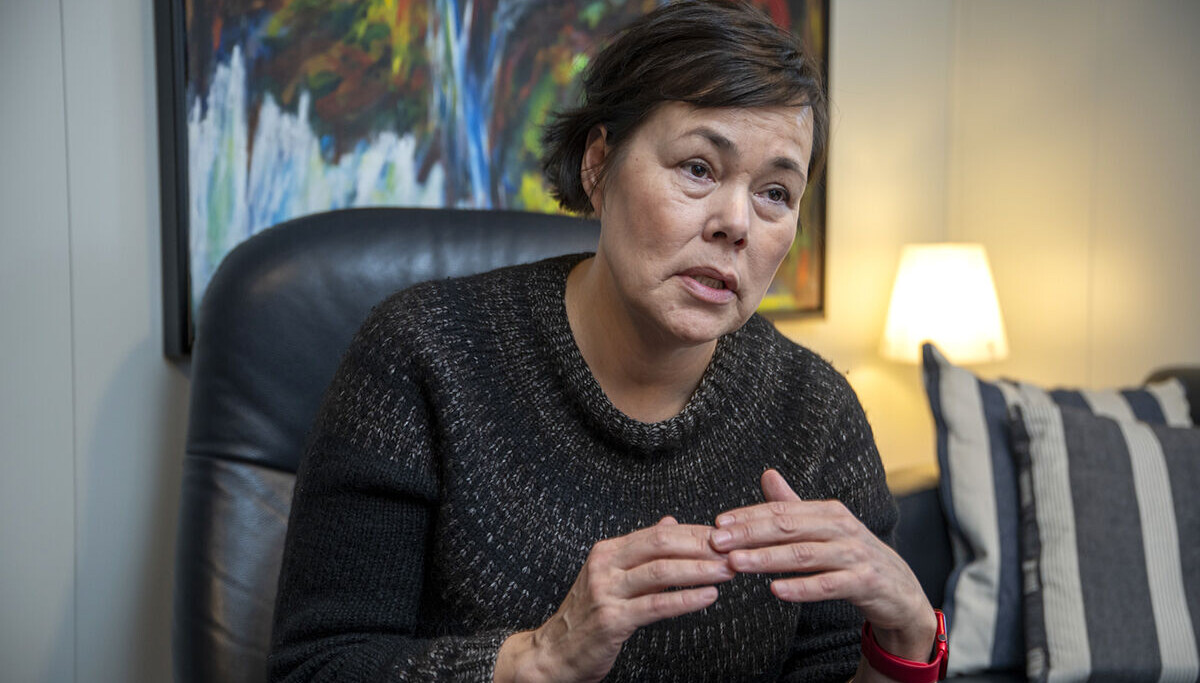
Speaking at an Arctic conference in Norway, Greenland’s foreign minister Vivian Motzfeldt said she remained hopeful about finding common ground with the United Statesbut stressed that Greenland’s red lines must be respected. The remarks did not signal a breakthrough or a breakdown, but they made clear that compromise has boundaries.
Those boundaries matter because Greenland sits at the center of growing strategic interest in the Arctic, where infrastructure, energy, and security decisions are closely tied to relationships with larger powers.
When senior officials publicly restate limits, it affects how partners assess exposure and timing, even in the absence of any formal change in policy. The uncertainty alone is enough to slow momentum.
There has been no announcement of canceled projects or withdrawn commitments. Instead, officials and partners are pausing, waiting for clearer signals before moving forward. In environments shaped by geopolitics, clarity often unlocks action, while ambiguity encourages caution. That pattern is now emerging.
Greenland is an autonomous territory within the Kingdom of Denmark, with increasing international attention focused on its location and long-term strategic value.
The United States has sought to strengthen its presence and cooperation in the Arctic in recent years, while Greenland’s leadership has repeatedly emphasized control over its own decisions.
Those positions are longstanding, but their restatement at this moment has sharpened attention.
What has changed is not policy, but posture. By underscoring red lines in public, Greenland’s government has narrowed the range of immediate outcomes. Negotiations that involve defense, access, and sovereignty rarely move quickly, and public statements tend to harden positions before they soften them. As a result, progress slows before it resumes.
The effects are practical rather than dramatic. Discussions take longer. Commitments wait. Partners hold back until they know where limits lie. Nothing has stopped outright, but very little is accelerating while talks remain unresolved.
If negotiations continue without clarity, this pattern of delay is likely to persist. If common ground is found within Greenland’s stated limits, stalled discussions could begin to move again. For now, neither path is locked in, and the absence of resolution is shaping behavior more than any formal decision.
This moment does not reflect a rupture in relationships, but it does illustrate how quickly uncertainty can translate into pressure.
When strategic talks surface publicly without conclusion, hesitation spreads outward before agreements do. In Greenland’s case, the question is not whether negotiations will continue, but how long access and cooperation remain slowed by the cost of holding firm to clearly drawn lines.