






Nicknamed “white gold of the desert”, camel milk, very different from cow’s milk, offers unique nutritional and digestive properties for the body.
Commonly consumed in regions of Africa, the Middle East and Asia, camel milk is increasingly available on the global market. What are its real nutritional contributions? Is it more digestible than cow’s milk? How to consume it and what precautions should be taken? Where to find it? We take stock.
Health benefits of camel milk
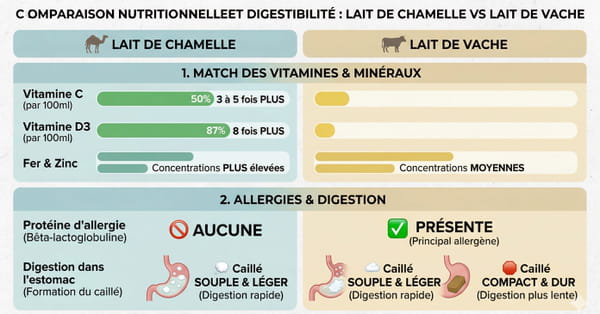
Nicknamed “white gold of the desert”, camel milk is distinguished by a composition which influences its appearance: very pure white, it does not contain carotene (the natural orange pigment found in grass and which gives a creamy shade to cow’s milk). “This milk is rich in essential vitamins (A, B, C, E), minerals (iron, zinc, magnesium) and bioactive compounds”underline researchers in Food Bioscience. The difference with cow’s milk is marked: vitamin C is three to five times more present and vitamin D eight times more concentrated. Beyond vitamins, it contains protective proteins such as lactoferrin which strengthen the immune system against infections. However, experts advise us not to consider camel milk as a miracle product. “Most research on camel milk is based on laboratory studies, animal models or short-term human trials”tempers Medical News. The data is not yet consensus and additional research is needed to definitively validate the health benefits and recommended doses.
More digestible than cow’s milk?
Camel milk may be better tolerated by people with sensitive digestive systems. “The protein composition of camel milk differs from that of cow’s milk”specifies Medical News. In fact, it does not contain beta-lactoglobulin, one of the proteins mainly responsible for allergies to bovine milk. In addition, its structure allows the formation of lighter curds in the stomach, which ensures “faster gastric emptying” and easier protein breakdown for the body. Clearly, the body digests it better, which limits bloating, especially since its lactose content is slightly lower.

Effects on diabetes
One of the most studied effects of camel milk involves sugar regulation. Camel milk naturally contains proteins which mimic the action of insulin and which have the particularity of not being destroyed by stomach acidity. According to a study published in Food, Science & Nutrition, “consumption of camel milk (500 ml per day for three months) improves glycemic control in people with type 2 diabetes by reducing fasting blood sugar and glycated hemoglobin (an indicator that measures the average blood sugar over several months)”. This metabolism is also supported by certain milk peptides which slow the absorption of sugars during digestion.
Effective against cholesterol?
Alongside its effects on sugar, camel milk seems to act favorably on fats present in the blood. Thanks to the orotic acid it contains, it helps limit the production of cholesterol by the liver. Regular consumption can lead to “modest reductions in total cholesterol and low-density lipoprotein (LDL)”often called “bad cholesterol”. Its richness in unsaturated fatty acids (omega-3) would also contribute to better protection of the cardiovascular system compared to the saturated fatty acids of bovine milk.
Price, purchase, taste: where to find it?
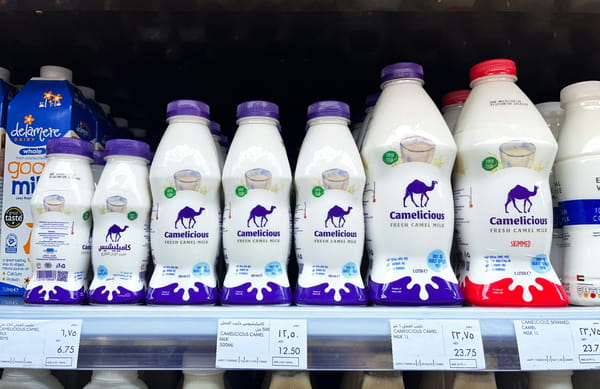
If modern science is interested in it today, nomadic populations have used it for centuries. Traditionally, camel milk is used to relieve jaundice, asthma and certain infections, according to a second article in Medical News. In these cultures, it is often left to ferment naturally to become Shubat or Garris, tangy drinks renowned for their digestive benefits. Today, in Europe, it is mainly found in freeze-dried powder or fresh (often frozen) in organic or specialized stores. However, its price remains much higher than conventional milk: a camel only produces around 6 to 9 liters per day. Finally, its taste, sweet but with a characteristic salty note, comes directly from the desert plants eaten by the animal.

Storage and precautions
Thanks to its natural antimicrobial agents, this milk keeps better than cow’s milk: placed in the refrigerator at 2°C, it retains its qualities for up to 12 days. If used for a specific health purpose, experts generally suggest consumption of 200 ml to 500 ml per day. However, a major precaution is necessary: it is not recommended to consume it raw. Scientists point out that “unpasteurized milk may contain pathogens” such as Brucellosis or Salmonella, the latter having been detected in 43% of raw samples during an analysis. It is therefore recommended to choose pasteurized versions to benefit from its benefits in complete safety.