




With the Holy Thursday ends Lentwhich began on Ash Wednesday, and with it the penitential fast also ends. The evening Mass “in Coena Domini” (“in the Lord’s Supper”) begins Easter Triduumthat is, the three days in which the Passion, Death and Resurrection of Jesuswhich has its fulcrum in the solemn Easter Vigiland ends with the second vespers of Easter Sunday.
From a liturgical point of view, the Triduum is a single celebration. Indeed:
-in the Mass “in Coena Domini” there is no farewell, but the assembly dissolves in silence;
-The Good Friday the celebration begins in silence, without introductory rites, and ends without blessing and without farewell, in silence;
-there Easter Vigil it begins with the skylight, without the sign of the cross and without greeting; only at the end of the Vigil is the final blessing and farewell found.

The morning Chrism mass
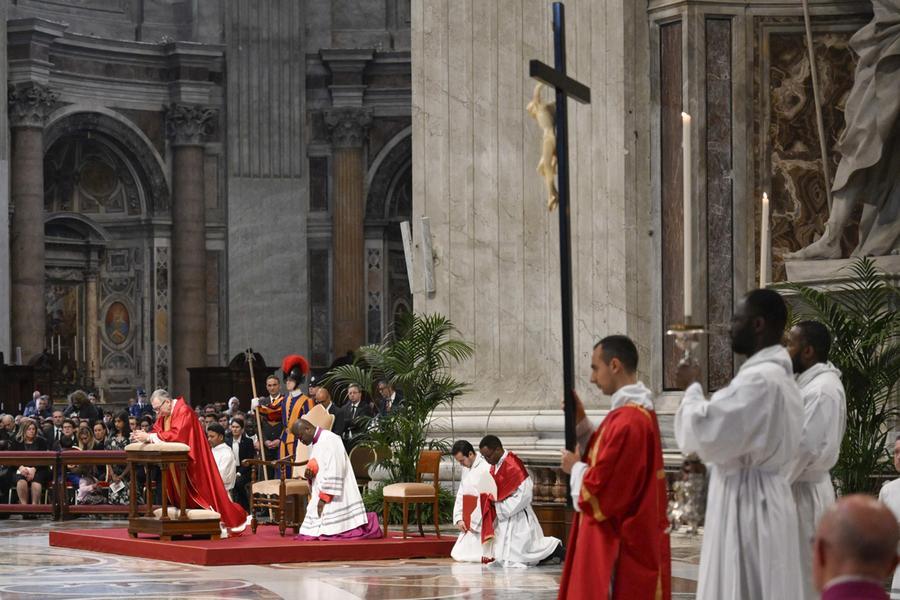
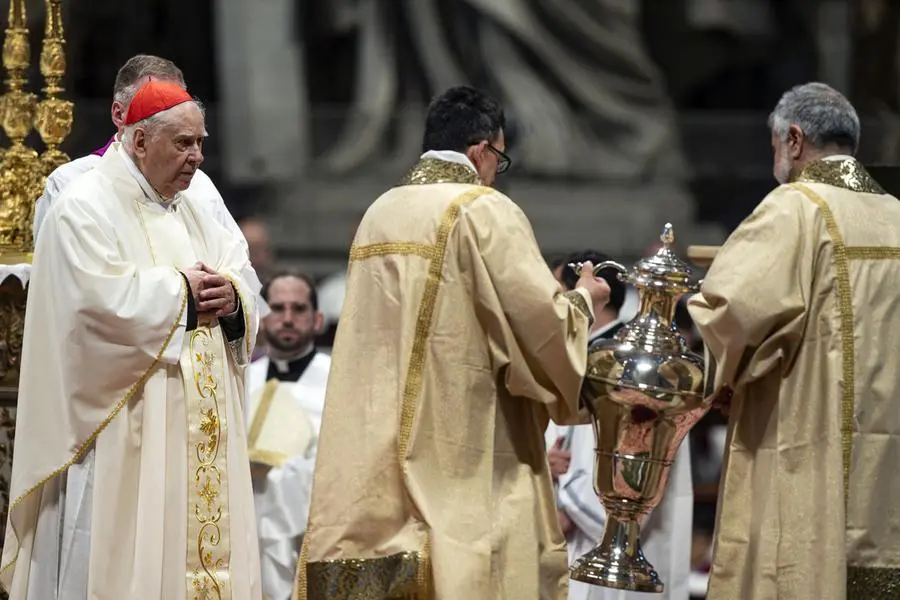
The day of Holy Thursday is reserved for two distinct liturgical celebrations, in the morning in the Cathedrals, the bishop with a solemn ceremony consecrates the sacred chrismthat is, the blessed oil to be used throughout the following year for the Sacraments of Baptism, Confirmation and Holy Orders and the other three oils used for the Baptism, Anointing of the Sick and to anoint the Catechumens. Priests and deacons participate in this ceremony, gathering around their bishop, as a visible confirmation of the Church and the priesthood founded by Christ; preparing to then participate in the individual churches and parishes, with their own liturgy, in the celebration of the last phases of the life of Jesus with the Passion, Death and Resurrection.
The evening mass “in Coena Domini”
In the late afternoon or evening in all the churches there is the celebration of the Mass in “Coena Domini”, that is, in the “Lord’s Supper”. This is the Last Supper – depicted by entire generations of artists – which Jesus held together with his apostles before his arrest and death sentence.
All four Gospels report that Jesus, as the feast approached “of the Unleavened Bread”i.e. the Jewish Passover, sent some disciples to prepare the table for the ritual dinner in the house of one of their followers.
Easter is the most solemn Jewish holiday and is celebrated with a precise ritual, which recalls the wonders performed by God in the liberation of the Jews from Egyptian slavery (Exodus 12); and its celebration has continued since 14th to 21st of Nisan (March-April).
It is consumed that night the lamb, previously slaughtered, during a meal (the Easter dinner) of which every gesture is established; in this period it is allowed to eat only unleavened bread (in Greek, “azymos”), hence the term “Unleavened Bread”. Jesus and the Apostles did not only eat according to tradition, but for the last time the Master had with him all the twelve disciples he had chosen and he gave them a speech where farewell, promise and consecration are intertwined.

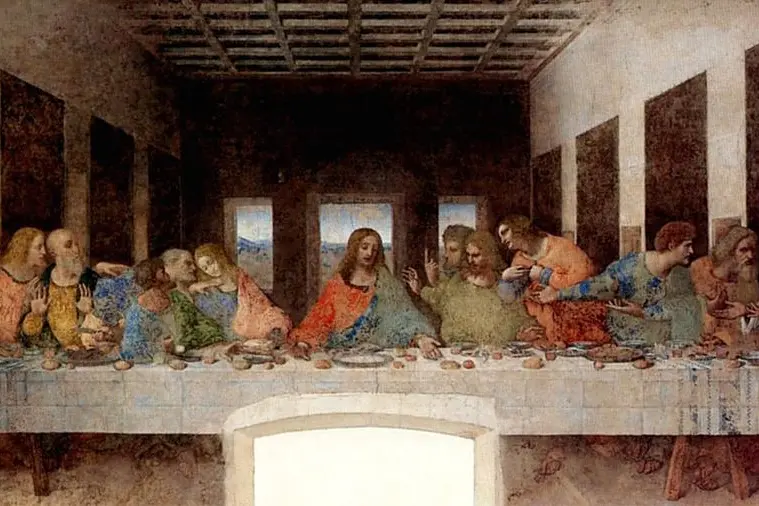
Leonardo da Vinci, Last Supper, 1494-98, Refectory of the Convent of Santa Maria delle Grazie, Milan
The washing of the feet is a symbol of hospitality
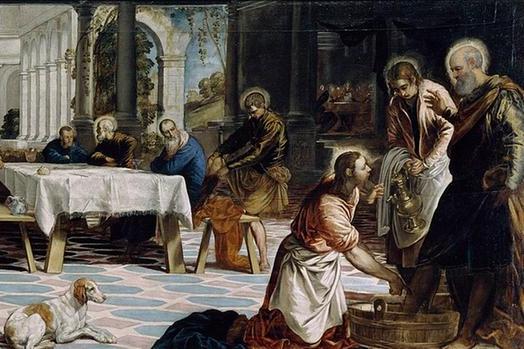
The Gospel of John, in chapter 13, tells the episode of foot washing. Jesus, writes the evangelist, “having loved his own who were in the world, loved them to the end”, and while the devil had already put the intention of betraying him in the heart of Judas Iscariot, Jesus got up from the table, took off his clothes and took a towel and tied it around his waist, poured some water into the basin and with an unprecedented gesture, because it was reserved for slaves and servants, he began to wash the feet of the Apostles, then drying them with the dryer with which he was surrounded.
It must be underlined that at that time people walked on dusty and muddy roads, perhaps dirty with animal excrement, which made their feet, worn only by sandals, in imaginable conditions at the end of the day. Foot washing was a characteristic of hospitality in the ancient world, it was a duty of the slave towards the master, of the wife towards the husband, of the son towards the father and it was carried out with a special basin and with a “lention” (dryer) which eventually became a sort of uniform for those who served at the table.
When it was Simon Peter’s turn, he opposed Jesus’ gesture: “Lord, will you wash my feet?” and Jesus replied: “What I do, you do not understand now, but you will understand later”; then Peter, who did not understand the symbolism and example of this act, insisted: “You will never wash my feet”. Then Jesus replied again: “If I do not wash you, you will have no part with me” and then Peter with his usual impulsiveness replied: “Lord, not only the feet, but also the hands and the head!”. This washing is one of the greatest lessons that Jesus gives to his disciples, because they will have to follow him on the path of total generosity in giving of themselves, not only towards the usual, hitherto pre-eminent figures of the master, the husband, the father, but also towards all the brothers in humanity, even if they are considered inferior to themselves.

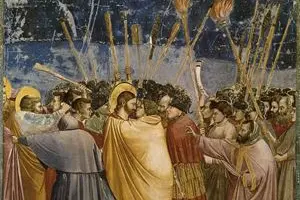
The announcement of Judas’ betrayal
After the washing, Jesus dressed and returned to sit among the twelve apostles and established a highly suggestive conversation with them, mentioning several times the betrayal that will occur on the part of one of them, causing a veil of sadness and disbelief to descend on that ritual banquet. “Truly, truly, I say to you, one of you will betray me”says Jesus. Words to which the apostles react with dismay and in various tones ask him who he was, John himself, the beloved disciple, resting his head on his chest, in a gesture of confidence, asked: “Lord, who is it?”. And Jesus, moved, replied: “He is the one for whom I will dip a morsel and give it to him” and having dipped a morsel he handed it to Judas Iscariottelling him: “What you have to do, do as soon as possible”; to the amazement of those present who continued not to understand, while Judas, having taken the morsel, got up and went out into the darkness of the night.
The Reposition of the Eucharist and the beginning of the Passion
The liturgical rites of Holy Thursday, the day on which the Church celebrates beyondinstitution of the Eucharistalso that of the Holy Order, i.e. of the Christian priesthood, concludes after the mass of the Supper with the Reposition of the Eucharist in a side chapel of the churches, festively decorated to commemorate the institution of the Sacrament; chapel which will be a destination for devotion and adoration, for the remaining evening and for the whole following day, until the afternoon rites of Good Friday begin.
The rest of the temple is darkenedas a sign of sorrow because the Passion of Jesus has begun; the bells fall silent, the altar becomes unadorned, the tabernacle empty with the small door open, the Crucifixes covered.