

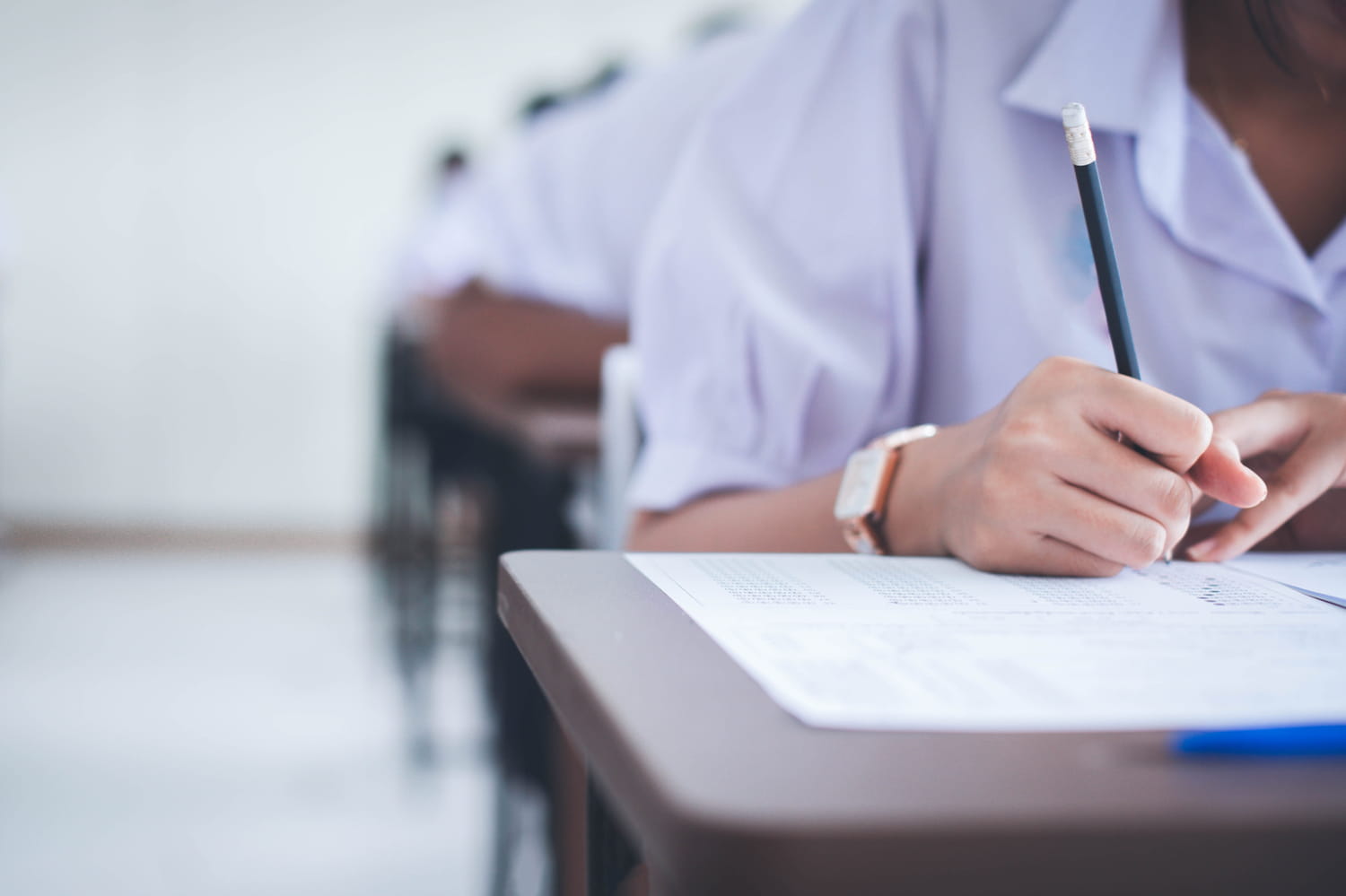



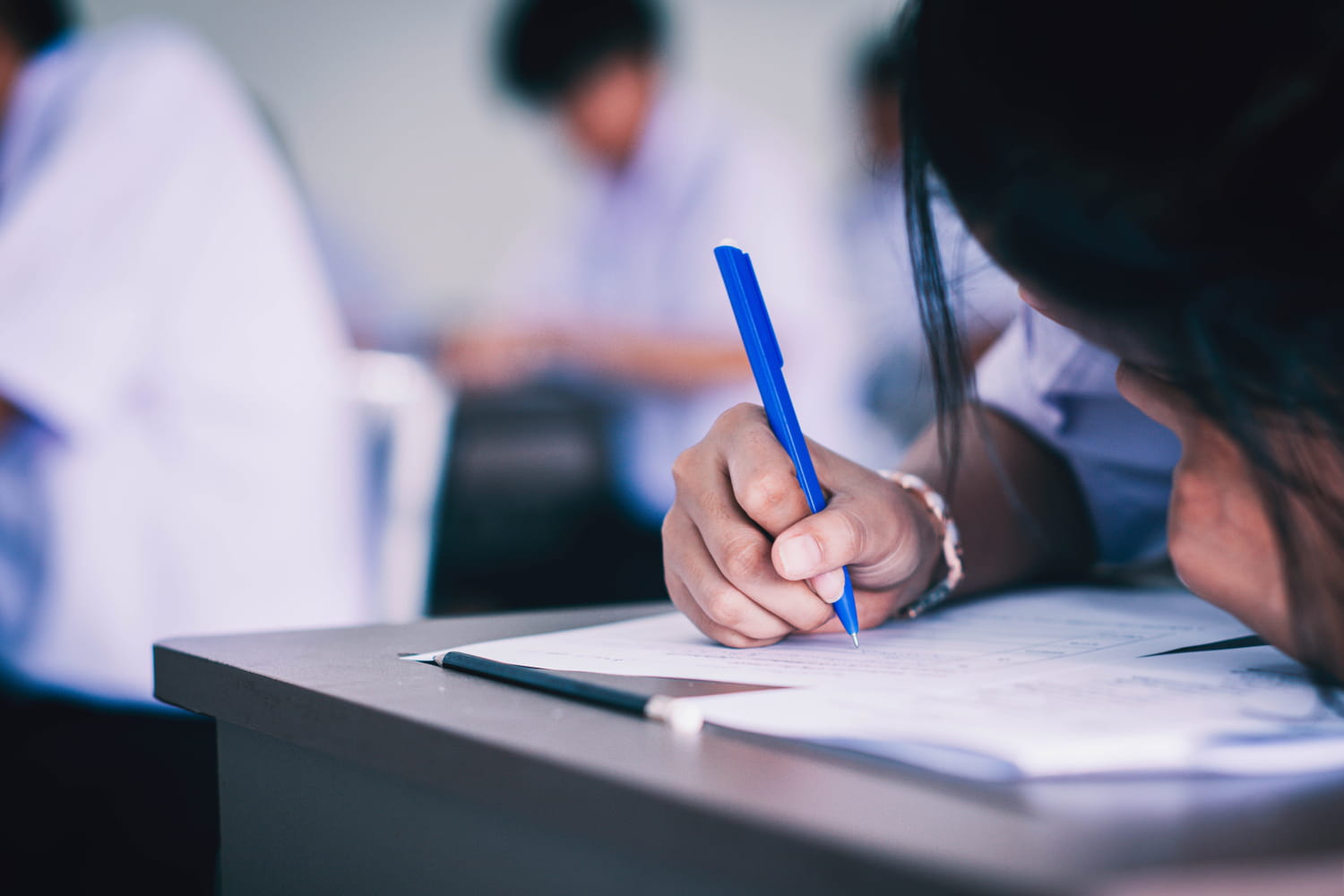
In June, first year students take part in an unmissable event: the French baccalaureate test. It takes place in two stages, with a written exam then an oral one. Calendar, works on the program… Here is the essential thing to know before the big day.
The French baccalaureate test is taken from the first grade, in order to lighten the program and revisions for final year students. It takes place in two stages: first a written exam, then a oral examination. Course of the tests, coefficients, texts on the program, subjects covered last year… Here is everything you need to remember about the 2026 French baccalaureate.
When will the anticipated French tests take place in 2026?
For general and technological baccalaureate candidates, the written French test will take place in the morning of Monday June 11, 2026from 8 a.m. to 12 p.m. The oral test will be organized from Monday June 22, 2026 : each academy is free to choose the date according to its resources and its own organization.
The French written test lasts four hours and is graded out of 20 points. Students in the general series have the choice between an essay or a text commentary, while those in the technological series have the choice between the text commentary (20 points) or a text contraction followed by an essay (10 points each).
For the text commentit is an analysis: the high school student is expected to explain the interest of the passage in question and the author’s intention. This ranges from vocabulary to figures of speech, including the structure of the text as well as its rhythm. The goal is to identify a problem, then to construct an introduction type plan + two or three parts + conclusion.
For the dissertation on the other hand, the exercise is more open: it involves responding to the problem posed in the statement of the subject, relying both on the texts of the proposed corpus, on the texts studied during the year, or even personal references if the candidate wishes. The construction of the plan is the same. Often, the two or three parts of the assignment are organized according to the thesis, antithesis, synthesis model.
There text contractionas its name suggests, aims to summarize a given text. The goal is to reformulate the proposed passage to reduce it to a quarter of its size (a text of 1000 words should therefore be no more than 250), while retaining the author’s style and structure.
The exercise ofessay somewhat resembles that of the dissertation: it is an argument based both on the candidate’s knowledge and on the text contracted in the previous test, to answer a question posed in the statement of the subject.
The French oral test for the general and technological baccalaureate consists of two parts with, beforehand, a preparation time of 30 minutes. During the first part of the test (12 minutes), the student prepares the text selected by the examiner and proposes reading aloud, then offers a linear explanation of a passage of around twenty lines. He must also respond to a grammar question relating to the chosen text. During the second part of the French oral test, the student is invited to present the work he chose from among those studied in class (over a duration of 8 minutes). The first part of the oral test is marked on 12 points, the second on 8 points, for a total of 20 points. The oral exam itself lasts 20 minutes.
What are the texts on the 2026 French baccalaureate program?
Texts being studied for the General Baccalaureate 2026
- Étienne de La Boétie, Discourse of voluntary servitude
- Bernard Le Bouyer de Fontenelle, Interviews on the plurality of worlds
- Françoise de Graffigny, Letters from a Peruvian
- Pierre Corneille, The Liar
- Alfred de Musset, We don’t mess around with love
- Nathalie Sarraute, For a yes or for a no
- Rimbaud, Douai notebook
- sponge, The rage of expression
- Hélène Dorion, My forests
- Abbot Prévost, Manon Lescaut
- Balzac, The Skin of Sorrow
- ColetteSido zt The Tendrils of the Vine
Texts under study for the technological baccalaureate 2026
- Étienne de La Boétie, Discourse of voluntary servitude
- Bernard Le Bouyer de Fontenelle, Interviews on the plurality of worldsFirst evening, Second evening, Third evening
- Françoise de Graffigny, Letters from a Peruvian
- Pierre Corneille, The Liar
- Alfred de Musset, We don’t mess around with love
- Nathalie Sarraute, For a yes or for a no
- Rimbaud, Douai notebook
- sponge, The rage of expressionfrom “Berges de la Loire” to “Le mimosa” included
- Hélène Dorion, My forests
- Abbot Prévost, Manon Lescaut
- Balzac, Memoirs of two young brides
- Colette, Sido And The Tendrils of the Vine
What were the subjects of the French written test in 2025?
In general seriesthe candidates worked, for the commentary, on the theme “The novel and the story from the Middle Ages to the 21st century”, based on an extract from chapter 1 of The Bewitched by Jules Barbey d’Aurevilly, published in 1854.
The dissertation topics focused on the subject of study “Theatre from the 17th century to the 21st century”:
- Subject A. “According to you, in comedy The Liar by Pierre Corneille, is the art of lying still mastered?”
- Topic B. “Do the characters seriously clash in We don’t mess around with love by Alfred de Musset?
- Subject C. Candidates were asked to comment on this remark from a critic: “Dialogue is always, in the end, a game in which anything goes.” “Does this quote shed light on your reading of the play Pour un oui ou pour un non by Nathalie Sarraute?”
In technology seriesthe subjects were different. The commentary was based on the object of study “Poetry from the 19th century to the 21st century”, with a poem by Richard Rognet taken from Elegies for the time of livingpublished in 2012. For the text contraction and the essay, the object of study was “Literature of ideas from the 16th to the 18th century”. Three topics were proposed:
- Topic A. The first was about Gargantua by Rabelais (chapters XI to XXIV), with a text by Martine Fournier “Learning throughout life” (Educate and train2016), and a test question: “Does a good education lead to lifelong learning?”.
- Topic B. The second topic was based on The Characters of La Bruyèrecrossed with an article by Jean-François Dortier “Empathy and benevolence” (Humanities2017) and asked the following question: “To paint men well, must we consider them with empathy?”.
- Subject C. The third proposed an extract from the Declaration of the Rights of Women and Citizens by Olympe de Gouges, associated with a speech by Françoise Nyssen delivered during the ministerial committee on gender equality in the sectors of culture and communication (February 7, 2018), and asked the candidates to reflect on this question: “Can literature and culture show the way to combat inequalities?”.
What coefficient for the French baccalaureate?
The anticipated French tests at the end of first class have a coefficient of 5 for writing, and 5 for speaking. Let us also remember that in 2026, continuous assessment accounts for 40% of the final grade, and the tests therefore account for 60%.