




2026 is a year full of electoral events. Al Jazeera calculated that more than 40 countries, representing a combined population of 1.6 billion people, will hold nationwide elections this year.
In Europe, the first to vote will be the Portuguese, called to elect the new President of the Republic on January 18th, with a possible and probable run-off scheduled for February 8th. The Portuguese presidency plays a primarily ceremonial role, but plays a key role in the country’s fragmented political landscape and holds the power to dissolve parliament and dismiss the government. All eyes will be on far-right candidate Andre Ventura, leader of the Chega party, founded in 2019 and now the second largest political force in parliament after overtaking the Socialists in May’s general election.
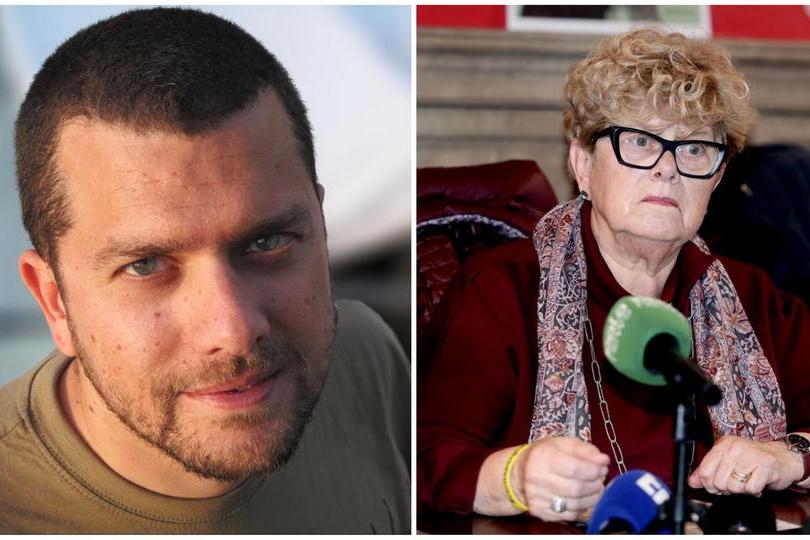
In the April parliamentary elections Hungary Prime Minister Viktor Orban (continuously in power since 2010) faces the most difficult challenge since his election, the one posed to him by Peter Magyar, a former party colleague of his who later founded the Tisza party. The outcome will determine Hungary’s political balance and its position between the European Union and Russia, with broader implications for European stability and the war in Ukraine. A defeat for Orban could represent a weakening of the conservative front within the Union.
Parliamentary elections will take place between September and October in two Northern European countries: Sweden and Denmark. Prime Minister Ulf Kristersson wrote in X that “when Sweden goes to the polls, we will do so in a serious security situation that we will have to take into account.” The fear is that of foreign interference and Russian-inspired cyber attacks. In Denmark, the first polls are not favorable for Prime Minister Mette Frederiksen, who is leading a government coalition that appears increasingly fragile. There will also be parliamentary elections in Latvia and Slovenia, probably also in Bulgaria, a country that entered the Eurozone on January 1st, but which suffers from chronic political instability.
Local elections scheduled in various countries will be of particular interest. The Spanish socialist prime minister, Pedro Sanchezwho was defeated in the December elections in Extremadura, will be put to the test in the vote in Aragon (8 February), Castilla y Leon (15 March) and Andalusia (30 June). Several scandals linked to corruption and even alleged sexual abuse have weakened the socialists. The People’s Party is seeking recovery in view of the 2027 parliamentary elections, but is threatened by the far right of Vox, whose support it would like to be able to do without.
The rise of the far right is the theme that also accompanies the regional elections in Germany: Baden-Württemberg and Rhineland-Palatinate in March, Saxony-Anhalt, Berlin and Mecklenburg-Vorpommern in September. The disturbing growth of the AfD (Alternative for Germany) party and right-wing extremist movements in Germany has been well described in the well-documented investigative book “The Plague” (Feltrinelli) by the journalist Tonia MastrobuoniBerlin correspondent of Republic. These state elections will measure the rise of the far right not only in the former deindustrialized East Germany, but also in richer West Germany. The vote will also be a test for Chancellor Merz, who took office in May 2025. According to a survey published at the end of December by the newspaper Welt am Sonntag, over a third of Germans expect the collapse of the “grand coalition” led by Merz in 2026.
The municipal elections of 15 and 22 March in increasingly unstable France will instead and above all be a test to measure the strength of the parties in view of the 2027 presidential elections, in which the successor to the unpopular Macron will be decided.
The November 3 midterm elections in the United States will put all 435 seats in the House and 35 of the 100 seats in the Senate up for grabs. They will therefore determine control of Congress and significantly influence the power that Donald Trump will be able to exercise for the remainder of his term.
A month earlier, on October 4th, there will also be a vote in Brazil. Brazilians will vote to elect the president, Congress and state governments amid economic uncertainty, rising violent crime and strained relations with the United States. Incumbent president Lula is running for re-election and will face several challengers, including Flavio Bolsonaro, son of former president Jair Bolsonaro, currently in prison.
In Latin America, the presidential elections will also be followed Colombiascheduled for the end of May, in which the current president Gustavo Petro will not be able to appear again.
In the March elections in Nepal It will be seen whether the young people of Generation Z who brought down the government last September now have the chance to transform their movement into a force of political influence to shape the future of their country.
In the Middle East there will be a vote for the renewal of parliament in Lebanonprobably in May, and it will be interesting to see the role that Hezbollah can still play in a country with an always unstable political life. Polls also open in Israelin theory at the end of October, but Prime Minister Netanyahu could play the early voting card to try to stay afloat despite accusations of corruption, the disaster of October 7, 2023 and the war crimes committed in Gaza.
Parliamentary elections are also expected to take place in September Russia. A foregone conclusion in favor of Putin in a country without press freedom and with a voiceless opposition.