






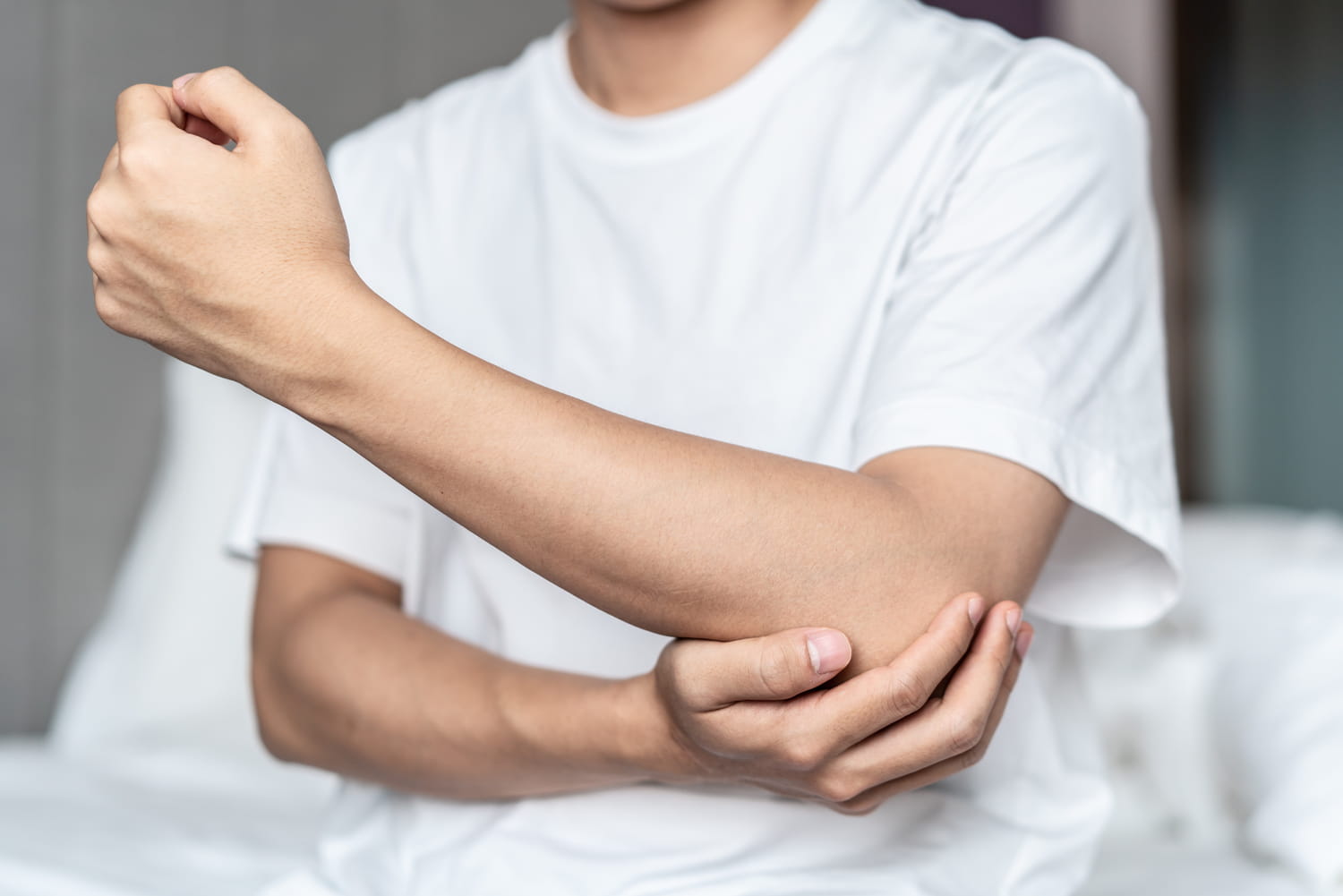
Shoulder, elbow or Achilles tendon: how to treat tendonitis sustainably? Alexandre Prims, physiotherapist, explains that strict rest is often a mistake. Here is the most effective solution to relieve this inflammatory pain and avoid chronic recurrences.
Tendonitis is an inflammation of the tendon, this solid “rope” that attaches muscle to bone. According to physiotherapist Alexandre Prims, it often appears when we ask too much of our body without giving it enough time to recover. If pain in your shoulder, elbow or Achilles heel “it doesn’t matter” in itself, as the expert points out, it can quickly become chronic and spoil everyday activities. But then, how to get out of it? If shock waves or ultrasound are known, our expert reveals the other key to a cure “long term” based on his experience.
Tendonitis is the result of poorly measured effort. “The tendon becomes inflamed because we ask too much of it in relation to its capacity to make an effort, it does not have time to adapt”, continues the physiotherapist. The cause: repetitive movements or too intense a return to sport. The trap is to ignore the first signs. In the early phase, pain is typically “present cold, so in the morning when you wake up”, then it fades with the movement to “reappear after exercise”. If we do not react, the pain sets in and becomes chronic. However, the longer we wait, the longer the path to healing becomes, because the tendon-muscular complex loses its strength.
For the physiotherapist, it is crucial to treat the pain of tendonitis very early to prevent it from setting in. It starts with “small massages and prolonged stretches lasting more than 30 seconds”. Generally speaking, tendinitis should not be allowed to rest but rather should be put into motion. To put all the chances on your side of getting rid of tendinitis for good, Alexandre Prims recommends isometrics, that is to say static bodybuilding. The goal here is to maintain a contraction position without moving.
For example, for Achilles tendonitis, raise yourself onto your toes, hold for 10 to 20 seconds, and repeat 4 times. The effectiveness of the solution lies in the frequency because “the body prefers small, regular stimulations rather than one big stimulation or two during the week”. You may feel some discomfort, but the pain should not exceed “a scale of 3 out of 10”. This movement relearns the tendon to support the load. It’s up to you to adapt this type of exercise to the painful part of the body (elbow, shoulder, etc.). A physiotherapist can give you isometric exercises adapted to your tendinitis.
A healthy lifestyle also plays a crucial role in healing tendonitis: “A diet too rich in carbohydrates (sugars) will be conducive to creating inflammation.” The physiotherapist also advises avoiding cigarettes, “very harmful to the tendons”, to ensure sleep and ensure sufficient vitamin C intake. If, despite your efforts, the pain persists for several weeks, do not wait: “The sooner we see a healthcare professional, the less likely tendonitis will take hold”insists the expert. Finally, be aware that women are more exposed to the risk of tendinitis because “they generally have weaker tendons”hence the importance of preventive muscle strengthening and mobility.