





They were born in the digital age, but seem to have lost essential faculties. Beyond the drop in academic level, a school teacher reveals to us these daily actions, once banal, that students now struggle to accomplish.
This is a logical observation, but one that often hides deeper problems: today’s children are very different from those of the past. The rise of smartphones, social networks, artificial intelligence or even “positive parenting”… As always with a new generation growing up to the rhythm of changes in society, the education of children no longer has anything to do with what their elders may have known in the (not so) distant past. And teachers are the first to say it: students these days struggle to develop certain basic skills, which nevertheless seem essential to adults. Roxane, a teacher in an elementary school in the Paris region, confides to us her concerns about the shortcomings of children from the alpha generation.
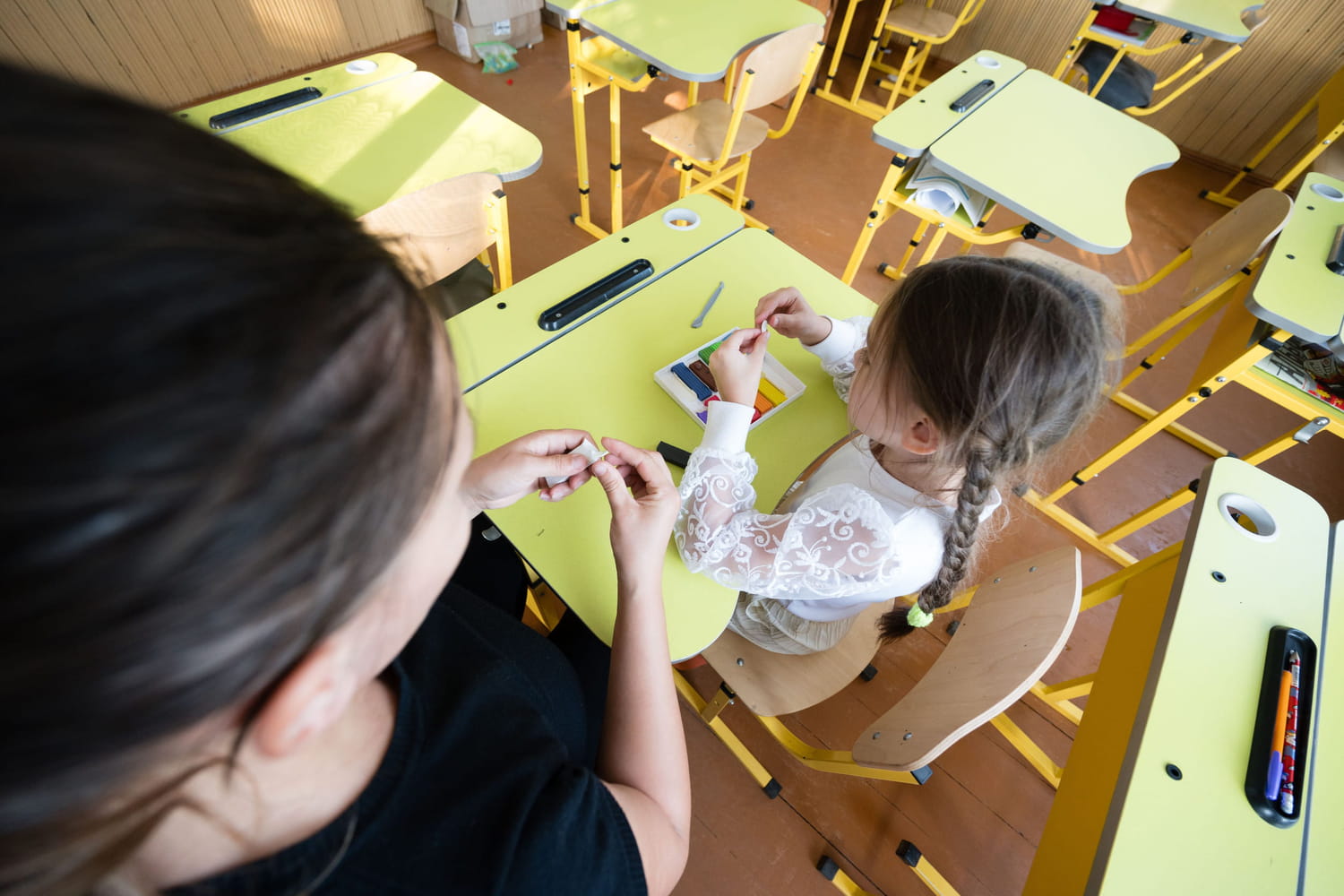
We all know that screens have a huge impact on the development of young people. But for the school teacher, this has daily repercussions on the basic abilities that CE1-CE2 students, aged 7 to 9 years old, should have. “Children no longer play enough manipulative games at home, like board games or even Lego. And it shows: they are far behind in terms of fine motor skills”deplores Roxane. She gave us some examples of skills that her students lack, but which should logically be acquired from nursery school.
“I notice it in particular with graphic gestures, that is to say writing. More and more children have difficulty holding a pencil, and many have to call on psychomotor therapiststhe teacher explains to us. We also see language delays, they learn to speak later and later, also because parents communicate less at home because they themselves are on screens.” But for Roxane, “most shocking”lies in learning… shoelaces : “I have a lot of children who still can’t tie their shoelaces in CE1, or even CE2. So it’s up to me to do it for them, but I can’t tie the shoelaces of 24 children several times a day!”
Overall, the Yvelines teacher regrets an increasingly marked lack of autonomy among the children of new generations. Some don’t know how to put on their coat alone, don’t know how to sit at the table, or even aren’t quite potty trained at primary school yet. “From a young age, we must make them more independent, and this also applies to work.”underlines Roxane. Because if it reminds us that it is important to be “behind them” for homework, it is just as crucial to let them begin the exercises without help, then to intervene if necessary.
“The problem is that they no longer learn on their own. In my class, I have students who still do not master numbers up to 20. Whereas at this age, they generally know how to count to 100 and are starting to learn multiplication or division”regrets Roxane. These skills are of course developed at school, but also and above all at home, where all these notions of motor skills and autonomy first come into play. An essential reminder that academic success does not depend solely on what happens in class, but begins with simple gestures and daily attention within the home, far from technological distractions.