



Death threats are never “outbursts”. They are a crime. And before that I’m a civil failure.
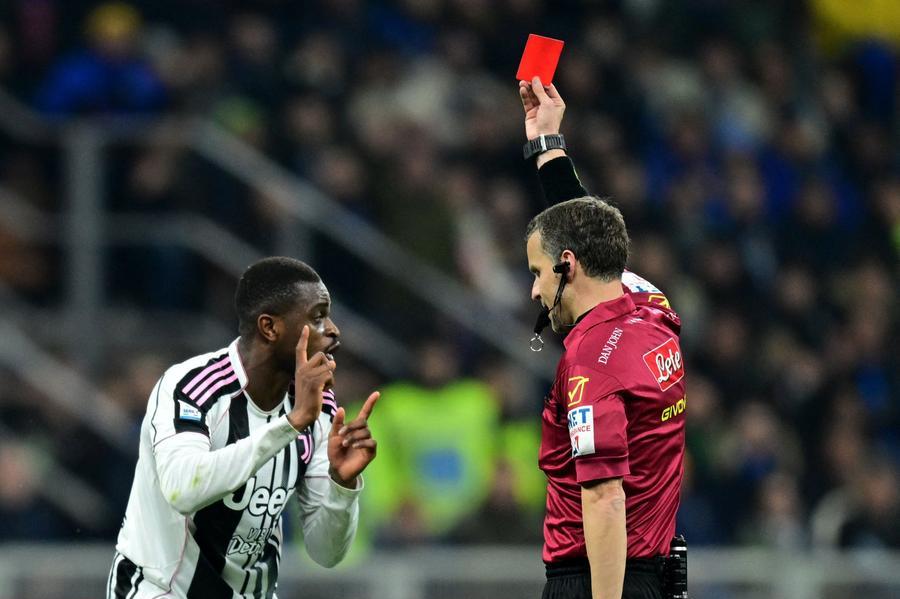
After the Italian derby between Inter and Juventus on Saturday night, the sporting tension degenerated into something much more serious. Let’s summarize: during the first half the Nerazzurri defender Alessandro Bastoni he fell to the ground simulating a contact (very slight, to be honest), causing the Juventus player to be sent off Kalulu who was already booked and was sent off by referee La Penna. The episode, which left Juve 10 against 11 for the entire second half, sparked controversy on social media and among the media, with criticism of the player’s gesture and the referee’s role in managing the situation. It was in La Penna, a lawyer, husband and father of two little girls, that messages such as “I’ll shoot you”, “I’ll kill you”, “We know where you live” arrived.
Words that have nothing to do with criticism, even harsh, of a race director. Scary words. It is no coincidence that he collected everything and filed a report with the postal police, who invited him and his family not to leave the house out of caution.
Very serious threats via social media have also reached Alessandro Bastoni, the defender of Inter and the national team on the pitch on Saturday evening, and to his wife, with death wishes even addressed to his daughter. Both were forced to disable comments under their official accounts.

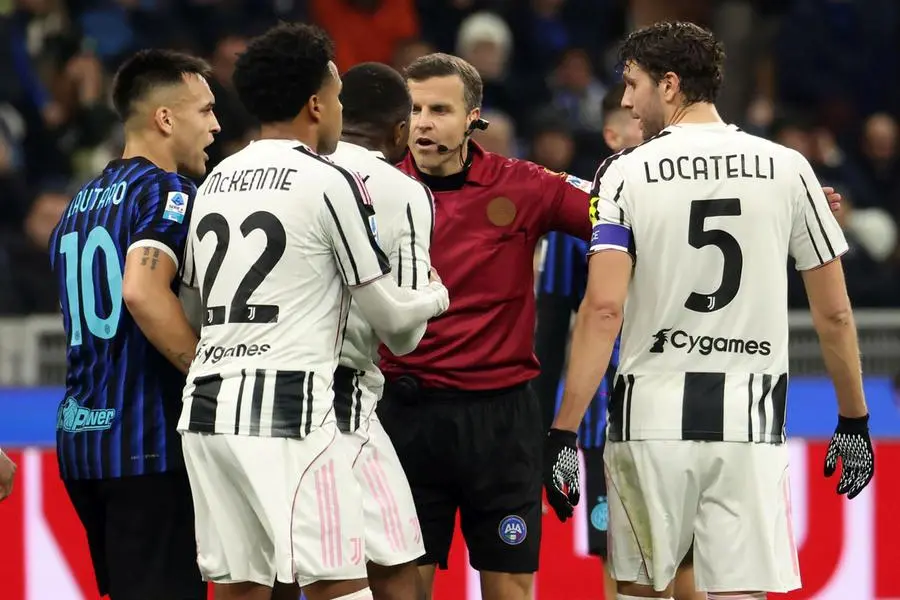
It’s a leap into the dark that questions everyone: managers, fans, media. Because when public language becomes poisoned, when the adversary becomes an enemy, when the error turns into absolute moral guilt, the step towards hatred is very short. And social media – we know it well – is the perfect stage for insulting and threatening. With the real risk that some exasperated people will turn from words to deeds.
The president of Inter, Giuseppe Marotta, was right to recognize that there had been a mistake: «There was a mistake by a young player, it’s true, but who hasn’t made one?». And again, with greater clarity: «Certainly Bastoni’s was exaggerated and deplorable». Important words, which mark a boundary. Because simulation, even if someone considers it “ordinary” or part of the “malice” of those who take the field, rThis is “a gesture that does not comply with the principles of loyalty”, as Marotta himself admitted, asking for “an assumption of responsibility” and also calling for a tightening of sanctions.
Many have intervened in the debate over the last few days. Among these also the former Prime Minister Enrico Letta, who hypothesized Bastoni’s exclusion from the national team as a strong signal on an educational level. It is a divisive proposal, but which arises from a shared concern: the blue jersey is not just a technical achievement, it is a symbol. And whoever wears it is called upon to represent a role model, especially for younger people.
At the same time, the story brings to the center the need for reform and increasingly effective use of VAR. Because since football is an industry, business, turnover, stock market shares, every company does not want to be damaged because the mistake suffered on the pitch translates into an economic loss. Be careful, however: technology can never totally eliminate human error but can only reduce it, nor can it eliminate the discretion of judgment which is always the result of a decision of those who are called upon to make a decision. Clearer rules, protocols applied consistently, understandable public communications: these are essential steps (and, in part, already taken) to defuse controversies which, otherwise, risk turning into hate campaigns. If VAR had been able to intervene on the Bastoni-Kalulu contact, all these controversies would not have arisen. It being understood that a referee can also make mistakes.
Precisely in the days in which the Milan-Cortina Winter Olympics are taking place, Italian sport is called upon to take on additional responsibility and not to give the spectacle it is giving after this match where many, even strangers to the world of football, have competed to fuel the fire of controversy. Competitiveness cannot be separated from ethics. Winning cannot become the only criterion. And the mistake – of a referee or a footballer – can never justify hatred and death threats.
We need a firm and shared word: threats are not cheering, they are violence. They are not passion, they are barbarism. Defending the dignity of people – referees, players, managers – even when they make mistakes also means defending the deepest meaning of sport. And, ultimately, of civil coexistence.