

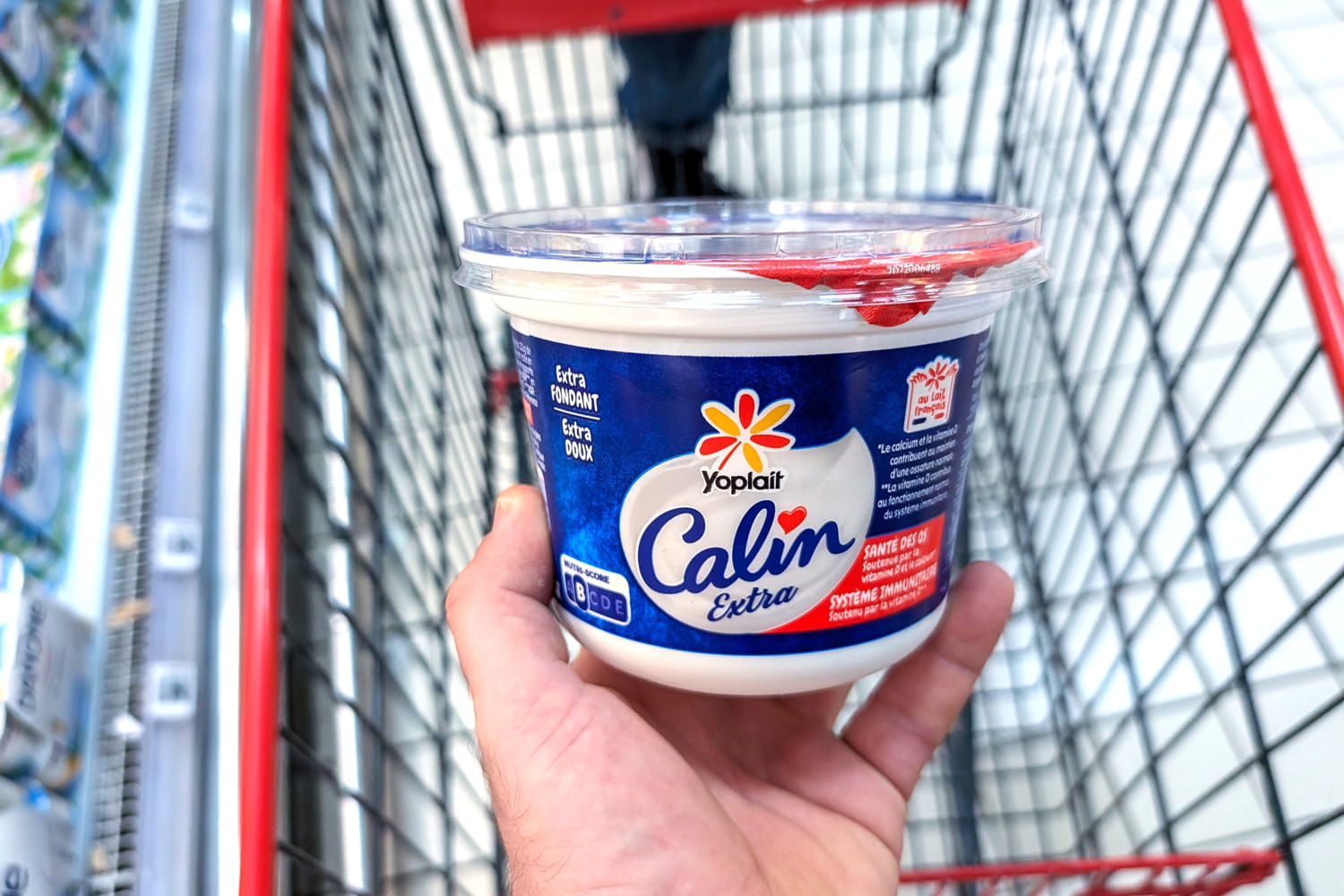


French flags, mountain landscapes… The yogurt packaging competes with imagination to reassure us about their origin. A small symbol, often unknown to consumers, allows you to uncover marketing tricks and know, at a glance, where the yogurt really comes from.
Did you think your yogurt was 100% local because the brand displays a tricolor flag or a mountain landscape? Make no mistake, it could actually come from another country. Fortunately, there is a small, discreet symbol that never lies. This code, imposed by the European Union, allows you to know the true origin of a yogurt and not to be fooled by marketing. We explain how to find it easily and read it correctly.
On a yogurt pot, this symbol does not necessarily try to hide, but it often blends in with the mass of nutritional information. Result: almost no one notices. In 99% of cases, it can be found on the lid (lid) of the yogurt. This is the most common location. The code is often printed in black ink, right next to the Best Before Date (BBD) and the lot number. Sometimes it’s on the side of the jar where it’s etched directly into the plastic or printed on the paper label, often near the barcode or ingredients list. More rarely, it is located under the pot, because some manufacturers choose to mold the stamp directly into the bottom of the plastic container. If you buy yogurts sold in packs of 4, 8 or 12, the code is sometimes absent from the individual pots but must appear on the cardboard packaging that groups them together, close to the barcode.
This oval symbol is officially called a “sanitary stamp” (or health mark). It is, in a way, the veterinary identity card of the product. Here’s how to decipher it line by line. On the first line, there are two letters which indicate the country where the factory which manufactures, pots and packages the yogurt is located. For example: FR means that the yogurt was made in France, BE that it was made in Belgium, ES in Spain, IT in Italy, explains the Ministry of Agriculture on its site. On the second line, we find a series of 8 numbers separated by 2 points. Let’s take the example: 59,043,030. Here, the first two numbers are 59, which corresponds to North.
The next three digits are 043, which corresponds to the official nomenclature (INSEE code) of the city of Bailleul. The last three digits correspond to the order number of the establishment. Here, the “030” designates the Danone factory (the list of factories is accessible on the website of the Ministry of Agriculture). On the third line, we find the CE or EU symbol which means that the factory has received health approval from the State services. This proves that the establishment complies with the hygiene and food safety standards imposed by the European Union.
This code allows consumers to check several things in store. First, “made in France”. Sometimes a package is covered in blue-white-red flags, but the oval reads DE (Germany). This means that the milk may have come from France, but the yogurt was made and potted in Germany. Then, if the consumer finds exactly the same code (for example: 85.133.001) on a branded yogurt and on a “low price” yogurt, this is irrefutable proof that they come from the same factory. The consumer simply pays more for marketing even though it is the same product. The last point which interests the authorities more: in the event of a health alert (bacteria, manufacturing defect), it is thanks to this code that they know exactly which factory must stop production and which batches must be removed from the shelves.
This oval symbol is strictly obligatory for all yogurts and dairy products sold in France, whether produced locally or imported. This is a European food safety standard: no product of animal origin can be marketed without this health stamp, because it guarantees that the factory of origin is approved by the veterinary services and allows immediate removal from the shelves in the event of a health problem.