




We can no longer keep track of the number of deaths. Israel’s offensive in Lebanese territory, which has now also expanded to the north of the Litani river, continues to cause victims, especially among civilians. On the afternoon of May 31st the French Foreign Minister, Jean-Noel Barrot announced that he had «requested an emergency meeting of the United Nations Security Council because while recognizing Israel’s right, like that of all countries, to self-defense, to defend itself from Hezbollah’s attacks, nothing can justify the continuation of Israeli military operations in Lebanon and its growing occupation of Lebanese territory». Barriot added that this invasion «is a serious mistake for Israel, because this advance on Lebanese territory is not only contrary to the commitments undertaken by Israel, given that a ceasefire has been in force in Lebanon since April 17, and to international law, but it is also contrary to the interests and security of Israel”. In fact, “every village bombed, every village occupied, every civilian killed strengthens Hezbollah” and “they also undermine the potential agreement between the United States and Iran, which provides for the cessation of hostilities on all fronts, including the Lebanese one.”
But perhaps the declared imminent agreement between the USA and Iran is pushing Netanyahu to strike ever harder so as to make it difficult to return the Lebanese portion acquired in the meantime. The Israeli Prime Minister’s declaration of wanting to acquire would also support this thesis 70 percent of the territory of Gaza and the operations that the IDF army is conducting against the already exhausted population of the Strip. As if the Israeli government wanted to close the game by appropriating territories that are not its own and repeatedly violating international law while the waters are still troubled and public opinion is accustomed to the drama.
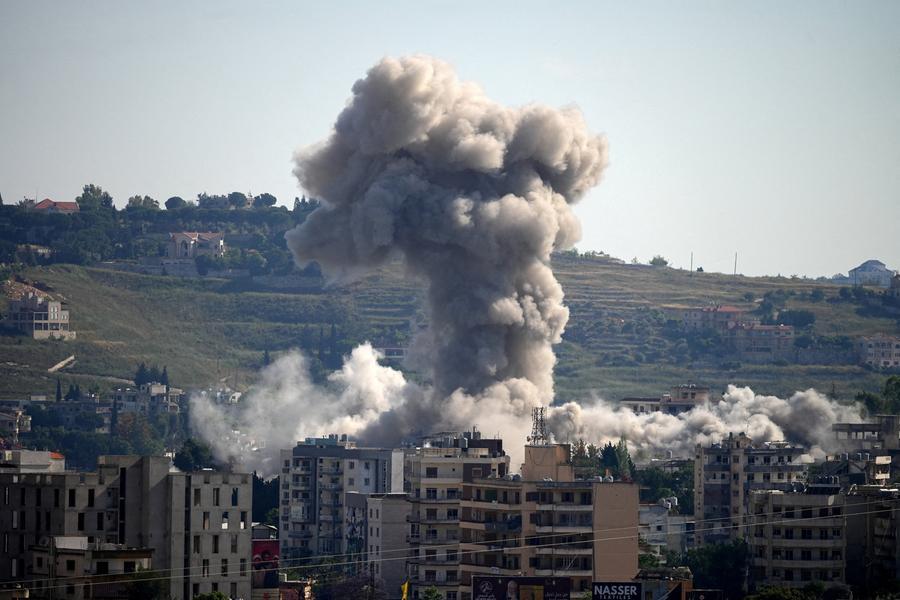
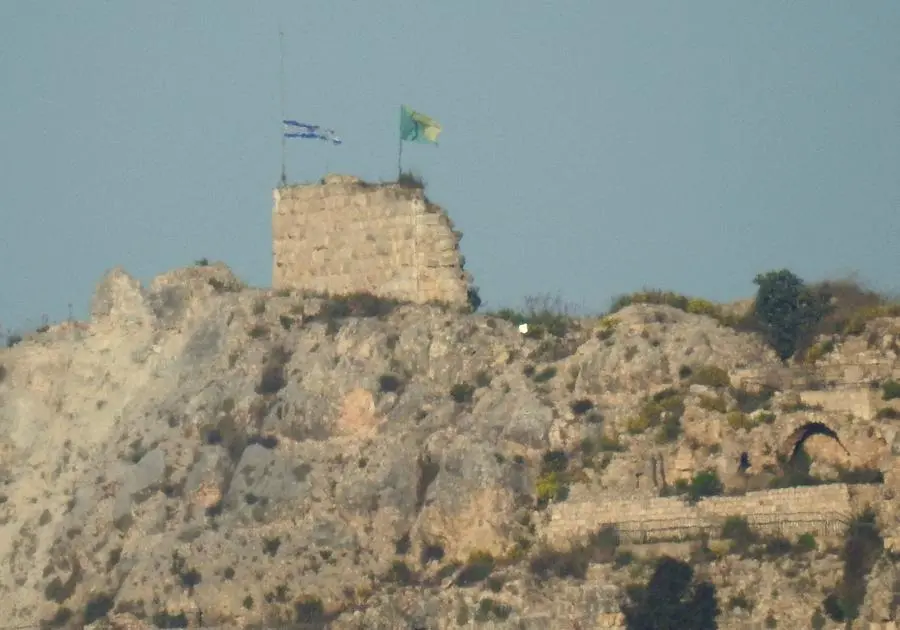
And so, awaiting the conclusion of the talks between Israel and Lebanon which should take place between 2 and 3 June in Washington, the Israeli bulldozers and tanks, between Saturday 30 and Sunday 31 May 2026, despite the ceasefire theoretically still in force, penetrated deep into Lebanese territory. Israel launched a series of air and artillery raids, while ordering mass evacuations. After already on May 29, as Netanyahu had announced, Israeli troops had having crossed the Litani river, the soldiers expanded the “buffer zone” by pushing towards the Zahrani river. The operations were justified to «eliminate direct threats to the cities of the northern Galilee». Israeli raids targeted at least a dozen locations. An airstrike in the village of Ansar killed a paramedic and injured four other people. Another targeted attack saw an Israeli drone hit a Lebanese military vehicle near Nabatiyeh, seriously wounding two soldiers. In total, at least three people were killed in these raids. Hezbollah responded by firing rockets into northern Israel and sounding sirens in Karmiel and Safed for the first time since the ceasefire.. On the morning of May 31, the Israeli army further expanded its ground operations. The bombing concentrated on the areas of Tyre, Nabatieh and around the Beaufort castle, then conquered by the Israelis on Sunday 31 May. The Tel Aviv army raised its flag above the castle, this ancient medieval fortress, a UNESCO heritage site, located about 15 kilometers from the border. Israeli Defense Minister Israel Katz celebrated the event as a historic return, comparing it to the 1982 Lebanon war.

The total death toll, since March 2 exceeded 3,300 people killed and more than one million displaced, although the Lebanese authorities have declared that they struggle to constantly update the data of the victims because they rise by the hour.
The Lebanese government, through the prime minister Nawaf Salam, accused Israel of pursuing a “scorched earth policy and collective punishment” to the detriment of the civilian population. The Lebanese presidency denounced the destruction of homes and historical sites, while the army reported the presence of Israeli armored vehicles operating in various villages. Despite this, President Joseph Aoun and Prime Minister Salam himself have agreed to participate in the next round of negotiations scheduled in Washington on 2 and 3 June.
Meanwhile, while UNESCO and the Lebanese Minister of Culture continue to raise the alarm about the risk of destruction of the castle, already undermined by the Israelis when they conquered it in the 1980s, the Tel Aviv army has issued evacuation orders for hundreds of thousands of civilians towards the north.
The United Nations expressed “deep concern” about the escalation and the UN has also denounced the danger for the Unifil contingents present in the area. On the humanitarian front, Unicef has raised the alarm for the fate of minors: in the last week alone, at least 77 children have been killed or injured in attacks.
With the latest operations, Israel seems to have lost all restraintnot only shattered any illusion of truce, but brought the war to a new level of intensity by putting pressure on densely populated areas such as Tire and Nabatieh. And pushing Lebanon to the brink of an almost unprecedented humanitarian and political crisis.
In this context the Lebanese Christian community, the largest in the Middle East composed mainly of Maronites, Greek Orthodox and Melkites, is on the front line. In particular, Christian villages in the south, some of which date back to the dawn of Christianity, are trying to resist. Around ten thousand inhabitants of the South made the courageous choice to remain in their homes despite the bombings and evacuation orders, fearing that if they left their land they would never be able to return. The villages, which have been isolated, receive help in a drop of quantity thanks to the Church and the Unifil mission. Meanwhile, the Israeli army has damaged or destroyed some churches, the Christian schools, which once welcomed over 10,000 students, hospitals, civilian homes and public offices. Despite the tragic situation and the blood tribute such as that of Father Pierre El-Raï, the parish priest killed while bringing aid to his parishioners, the Church continues, however, to mobilize, with material and moral aid. To be, despite everything, a bastion of humanity in the midst of chaos.